Ukraine War06 December, 20251 min read
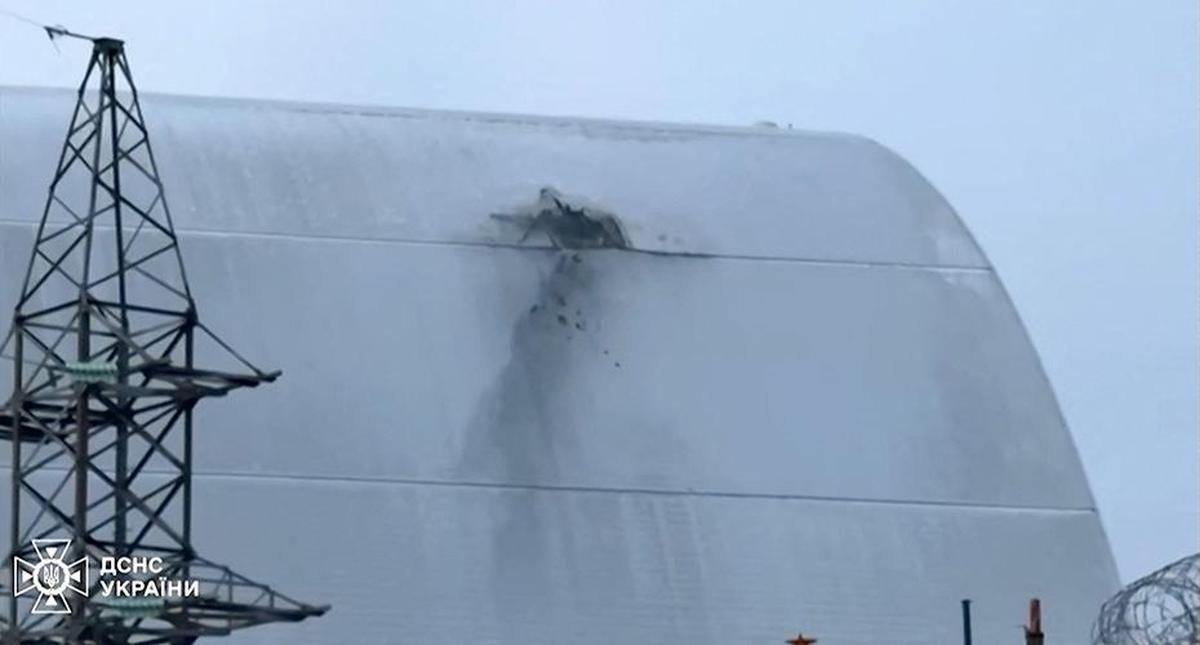
Russia Destroys Chornobyl New Safe Confinement in Drone Strike, Renders Site Unable to Contain Radiation
This article is an automated aggregation of coverage from news outlets. Our editorials offer in-depth analysis curated by the NewsCord team.
February drone strike damaged the New Safe Confinement; Ukraine blames Russia. IAEA found the shelter can no longer contain radiation after a hole in its cladding.

7 outlets told this the same way.
Chornobyl shelter damage update
The International Atomic Energy Agency (IAEA) conducted an inspection in December. The inspection found that a drone strike in February degraded the New Safe Confinement built over Chornobyl’s reactor 4. The strike caused the structure to lose its primary safety functions, including its confinement capability.
“An IAEA inspection found the impact had degraded the structure and caused it to lose its primary safety functions, including its confinement capability, though its load-bearing structures and monitoring systems showed no permanent damage.”
However, the IAEA reported that load‑bearing structures and monitoring systems showed no permanent damage. Some temporary repairs have been made to the facility. The IAEA warned that comprehensive restoration is still required to ensure long‑term nuclear safety.

Drone strike incident summary
Ukrainian authorities blamed Russia for the February drone strike. They said the munition, which the U.N. reported was fitted with a high-explosive warhead, started a fire and damaged exterior cladding.
Russia denies responsibility. The IAEA and Ukrainian officials reported that radiation readings remained normal and there were no leaks following the incident.

Chornobyl inspection and context
The inspection at Chornobyl took place as part of a wider IAEA and U.N. survey into wartime damage to Ukraine’s electricity infrastructure. Reports recall that Russian forces occupied the site early in the 2022 invasion. The strike is placed within nearly four years of conflict during which both sides have been accused of actions that risk nuclear sites.
“The inspection occurred alongside a country-wide survey of war damage to Ukrainian electricity substations; Russian forces had occupied the plant early in the 2022 invasion.”
Media coverage differences
Coverage differs in tone and emphasis across sources. Western mainstream reporting (The Guardian) stresses the shelter's cost and cleanup role and foregrounds technical IAEA findings. West Asian reporting (Al Jazeera) frames the damage within the ongoing conflict and notes diplomatic efforts and wider power-grid impacts.
Asian outlets (ThePrint, The Hindu, The News International) reiterate the IAEA's language, quote officials such as IAEA Director General Rafael Grossi, and highlight the U.N.'s note about a high-explosive warhead. None of these outlets independently confirm attribution to Russia, and all report Moscow's denial, leaving responsibility contested.