Ukraine War14 January, 20262 min read
Russia Launches Third Major Drone Strike on Kyiv, Knocks Out Power to 6,000 Buildings Amid -19°C Freeze
This article is an automated aggregation of coverage from news outlets. Our editorials offer in-depth analysis curated by the NewsCord team.
Russian forces launched a mass drone attack on Kyiv, with explosions and air defenses active Strikes cut power and heating to about 6,000 buildings across Kyiv

5 outlets told this the same way.
Mass drone attack on Kyiv
Russian forces launched a mass drone attack on Kyiv in the early hours of Jan. 12.
“Ukrainian air defenses engaged over Kyiv Wednesday morning as Russian forces launched a mass drone attack — the third major strike in five days — with multiple explosions heard downtown.”
It was the third major strike in five days.

Multiple explosions were heard across the city as Ukrainian air defenses engaged incoming drones.
Kyiv officials reported a fire in the Solomianskyi district.
Social media showed large blazes and vehicle fires.
Authorities initially had no immediate details on casualties.
Local and national officials said the strikes further damaged critical infrastructure during an already difficult recovery from earlier strikes.
Kyiv winter power outages
City leaders and energy officials described severe outages amid bitterly cold temperatures.
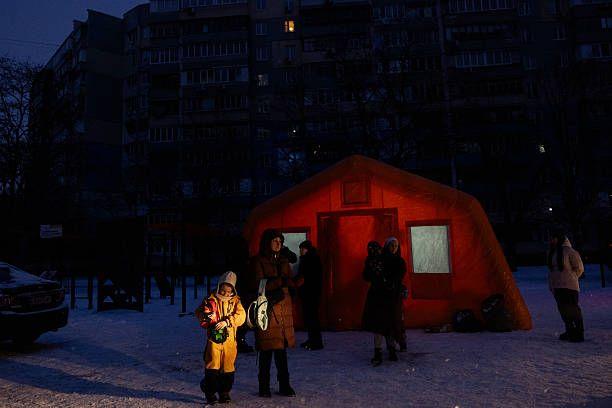
Kyiv Mayor Vitali Klitschko said roughly 6,000 buildings — about half the city — lost power, and the state operator had earlier reported a 70% loss of Kyiv’s electricity after a prior attack.

The Kyiv Independent noted that as of Jan. 11 more than 1,000 buildings lacked heat from the Jan. 9 strikes, and the BBC reported residents getting only minutes of electricity and homes becoming cold in -12 to -16°C weather.
Officials warned that outages amid subzero conditions have forced some residents to temporarily leave the city.
Energy infrastructure attack reports
Ukrainian officials and leaders said the strikes deliberately targeted civilian energy infrastructure. UPI quoted Deputy Energy Minister Mykola Kolisnyk saying Russia was "going all in" to destroy Ukraine's energy infrastructure. UPI also reported President Zelensky and other senior officials saying the strikes "have no military value and are intended to break Ukrainians' will by depriving them of heat."
“Ukraine’s Air Force warned of further drone waves around 3 a.m.”
The Kyiv Independent emphasized immediate operational warnings, noting that Ukraine's Air Force warned of further drone waves. The BBC concentrated on the humanitarian and logistical consequences of repeated hits on the grid rather than explicitly attributing motive.
Differences in reporting
Reporting differs on the human toll and immediate casualty details.
The Kyiv Independent cites the Jan. 9 strike as killing at least four people, injuring 25, and severely damaging critical infrastructure, and places the Jan. 12 wave amid that recovery.
UPI and the BBC both emphasize infrastructure damage and outages.
UPI highlights the scale of power loss, noting an earlier cited 70% loss.
The BBC foregrounds personal accounts of cold homes and the technical difficulty of repairs in icy conditions.
Energy supply and outages
Reports show differing practical consequences and official responses.
“Prime Minister Yuliia Svyrydenko said major energy-supply improvements are expected by Jan. 15.”
The Kyiv Independent cited Prime Minister Yuliia Svyrydenko saying major energy-supply improvements were expected by Jan. 15 and Mayor Klitschko urging residents to leave if possible.
The BBC warned that the grid would be fragile when power is restored and advised avoiding high-consumption devices to prevent surges.
UPI relayed officials' warnings that Russia was going all in on infrastructure and cited large-scale power losses.
Together these accounts paint a picture of repeated strikes causing rolling outages, strained repair efforts, and differing timelines for restoration.