Full Analysis Summary
Nuclear Testing and Ukraine Conflict
The Independent reports that former US President Donald Trump announced the United States will break a 30-year moratorium on nuclear weapons testing.
He asserted that rivals like China and Russia are conducting secret tests.
This announcement has raised fears of a renewed global arms race.
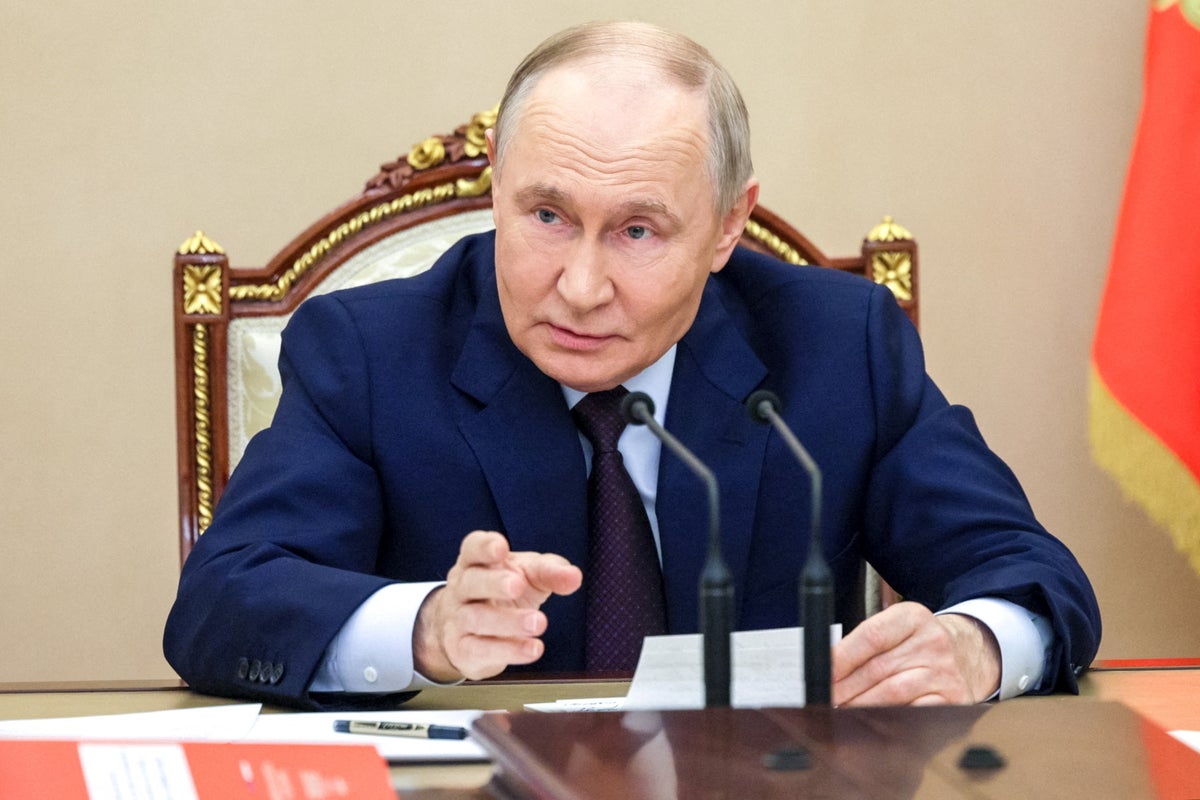
In response, Russian President Vladimir Putin has ordered preparations for nuclear testing.
El Mundo, while not addressing nuclear policy, depicts a war-zone reality of artillery shaking rooms and drone-threatened roads in eastern Ukraine.
This offers a frontline backdrop to Russia’s escalatory posture described by The Independent.
Coverage Differences
missed information
The Independent (Western Mainstream) reports policy-level developments—Trump’s move to break a 30-year moratorium and Putin ordering nuclear test preparations—while El Mundo (Western Mainstream) does not discuss nuclear testing or the moratorium at all, focusing instead on battlefield conditions.
tone/narrative
The Independent (Western Mainstream) frames developments through global security and arms-race risk, whereas El Mundo (Western Mainstream) uses a visceral, ground-level narrative of artillery and drones, emphasizing immediate danger rather than nuclear policy.
Russia's Drone Warfare Response
According to The Independent, Russia’s response includes increased defense measures such as protecting oil refineries from Ukrainian drone attacks and deploying reservists.
The country is also urgently preparing for full-scale nuclear tests, potentially at the Arctic site of Novaya Zemlya.
El Mundo highlights the drone threat from a different perspective, reporting warnings for people to flee at night because drones target vehicles.
The report describes destroyed vehicles and a drone operator’s claim of hundreds of enemy deaths, emphasizing the lethality of the drone warfare that The Independent links to Russia’s protective actions.
Coverage Differences
narrative
The Independent (Western Mainstream) links Russia’s nuclear preparations with state-level defense steps, while El Mundo (Western Mainstream) centers on human exposure to drones and battlefield destruction, not institutional defense planning.
missed information
The Independent (Western Mainstream) specifies Novaya Zemlya as a potential nuclear test site; El Mundo (Western Mainstream) provides no nuclear program details, remaining focused on frontline dynamics.
Global Security and Conflict Updates
The Independent reports that security experts warn any resumption of nuclear testing by a major power would destabilize global security.
Such testing would likely prompt reciprocal tests by other nuclear nations, increasing arms-race tensions.
The report also highlights Bulgaria’s decision to take control of a Russian-owned oil refinery to protect it from Western sanctions.
This move signals broader geopolitical and economic consequences.
El Mundo, on the other hand, does not address sanctions or the risk of global nuclear escalation.
Instead, it focuses on the immediate threats of artillery blasts and drone attacks around contested cities in Ukraine.
Coverage Differences
missed information
The Independent (Western Mainstream) reports expert warnings about global destabilization and reciprocal nuclear testing, and mentions Bulgaria moving to control a Russian-owned refinery under sanctions pressure; El Mundo (Western Mainstream) does not cover these broader geopolitical or economic angles.
tone/narrative
The Independent (Western Mainstream) uses a strategic risk lens—arms-race, sanctions, reciprocal testing—whereas El Mundo (Western Mainstream) focuses on the human and tactical immediacy of the battlefield.
Russia's Military and Nuclear Developments
El Mundo uniquely situates the timeline pressure on Russia’s battlefield objectives by reporting an attempt to seize Pokrovsk and Myrnograd before a November 15 deadline set by Putin.
The report highlights an imbalance of resources suggesting that the eventual capture of these locations would come at a high cost.
The Independent, meanwhile, focuses on the nuclear aspect, noting Trump’s moratorium break and Putin’s order to prepare nuclear tests.
This source does not address the specific frontline deadlines or cities mentioned by El Mundo.
It remains unclear from the available reporting whether Russia’s nuclear test preparations are directly linked to the battlefield timetable described by El Mundo, as the sources do not make that connection explicit.
Coverage Differences
unique/off-topic coverage
El Mundo (Western Mainstream) uniquely highlights a Putin-set November 15 deadline to capture Pokrovsk and Myrnograd and the likely high-cost fall of these cities, a detail absent from The Independent (Western Mainstream).
missed information
The Independent (Western Mainstream) details nuclear testing and global arms-race concerns but does not cover frontline city deadlines; conversely, El Mundo (Western Mainstream) does not cover the moratorium break or nuclear testing orders.