Full Analysis Summary
Mariupol theatre reopening
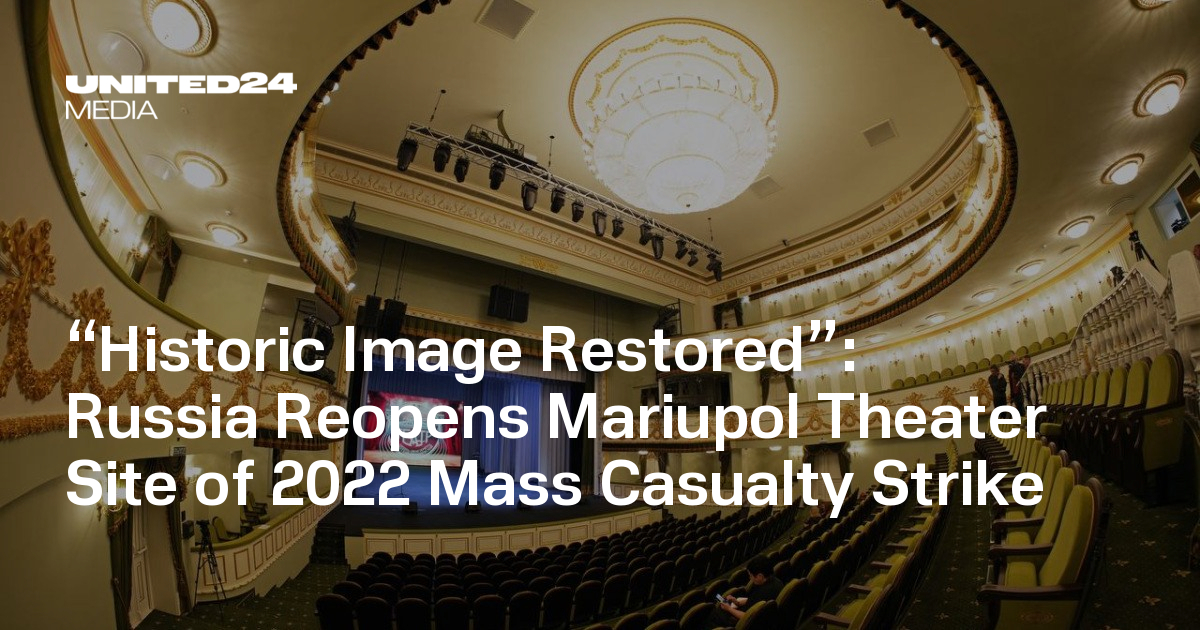
Russian-installed authorities have declared the Mariupol drama theatre reopened, prompting immediate controversy.
The theatre was bombed on March 16, 2022, when Russian forces struck a building where civilians were sheltering and the word 'Children' was painted outside.
UNITED24 Media reported the reopening and reiterated the theatre's association with that deadly 2022 strike.
Folha de S.Paulo placed the reopening in the wider context of Russian-funded reconstruction projects in Mariupol.
Folha noted a rebuilt theatre paid for by Saint Petersburg authorities and said this signals a shift in the city's on-the-ground reality under occupation.
Coverage Differences
Tone / Emphasis
UNITED24 Media (Other) emphasizes the human tragedy and the provenance of the strike (date, ‘Children’ painted outside, and the reopening by Russian-installed authorities) and highlights controversy tied to civilian deaths. Folha de S.Paulo (Latin American) emphasizes the political and reconstruction context — funding, costs, and what the rebuilt theatre signals about control of the city — rather than detailing the bombing itself. UNITED24 Media reports the bombing and reopening directly, while Folha frames the reopening as part of broader Russian-funded reconstruction. This reflects UNITED24 Media's focus on the specific attack and its legacy versus Folha’s focus on strategic and financial implications.
Casualties and reconstruction reports
Casualty figures remain disputed and incomplete.
UNITED24 Media cites Ukraine's Donetsk regional prosecutor's office saying more than 1,000 people were inside at the time, with about 600 killed and 400 wounded.
The same office warned that an exact toll cannot be confirmed while the city remains under occupation.
Folha does not recount exact casualty figures in its snippet but highlights the scale of reconstruction investment and demographic change, implying that the city's future is being reshaped even while human-loss accounting remains unresolved.
Coverage Differences
Missed information / Emphasis
UNITED24 Media (Other) reports specific casualty claims from Ukraine’s prosecutor (numbers and a caveat about confirmation under occupation). Folha de S.Paulo (Latin American) omits casualty numbers in the provided snippet and instead focuses on reconstruction funding and demographic changes, thereby underlining different editorial priorities: immediate human toll versus infrastructural and political implications. UNITED24 Media reports the prosecutor’s claims directly, including the caveat, while Folha’s reporting emphasizes funding and long-term change without repeating the casualty details.
Theatre reconstruction coverage
Snippets present reconstruction differently, with Russian-backed officials praising restoration and new equipment while local Ukrainian bodies and observers call the rebuild an imitation and part of a wider russification effort.
UNITED24 Media reports Denis Pushilin saying the theatre’s 'historic image' has been restored and that 'modern equipment' has been installed, and it notes Suspilne’s report that reconstruction began in July 2023 and that basement areas were filled with concrete.
Folha highlights financial backing from Saint Petersburg’s government, provides an estimated cost, and frames the reconstruction as both a symbol and an instrument of Moscow’s changing control.
Coverage Differences
Narrative / Source of reconstruction
UNITED24 Media (Other) relays quotes from Russian-backed leaders (reports Pushilin’s comments) and reports Ukrainian criticism (city council). Folha de S.Paulo (Latin American) emphasizes the funding source and the monetary scale (Saint Petersburg government, estimated cost). Together they show a split: UNITED24 Media foregrounds competing claims about restoration and memory, while Folha foregrounds who is paying and what that implies about permanent change to the city’s governance and demographics.
Strategic and symbolic reopening
Observers place the reopening within broader strategic and demographic shifts.
Folha de S.Paulo emphasizes Mariupol’s strategic value as a land link between Russia and annexed Crimea and says large-scale, funded reconstruction — including the theatre — suggests there is little realistic expectation the city will return to Ukrainian control in foreseeable peace scenarios.
UNITED24 Media’s excerpt does not analyze strategy but states the reopening is intended for Russian performances and is controversial among local Ukrainian bodies, highlighting competing narratives about control and memory.
Coverage Differences
Analytical focus / Omission
Folha de S.Paulo (Latin American) provides geopolitical analysis (land link to Crimea, implications for future control) that is not present in the UNITED24 Media (Other) snippet, which focuses on the event, the death toll claims, and local criticism. That indicates Folha’s coverage leans into strategic interpretation, while UNITED24 Media emphasizes memorial and local-political disputes and reported statements from occupying authorities.
Obstacles to rebuilding efforts
Practical and symbolic obstacles to reconstruction remain.
Folha flags the Azovstal steelworks, a vast complex occupying nearly 10% of the city and littered with explosives placed by both sides, as a major obstacle to broader rebuilding efforts.
UNITED24 Media highlights criticism that the restored theatre imitates the original and is being repurposed for Russian performances, a move many see as part of russification and as disrespectful to the site's victims.
Together, both sources underline that rebuilding is not only an engineering or financial task but also a contested political and moral choice in an occupied city.
Coverage Differences
Unique / Off-topic coverage
Folha de S.Paulo (Latin American) uniquely spotlights Azovstal and the physical, explosive hazards that complicate reconstruction, a detail not present in the UNITED24 Media (Other) excerpt. UNITED24 Media uniquely centers local condemnation and the moral controversy around using the site for Russian performances. These omissions reflect different coverage priorities: Folha on reconstruction obstacles and strategy; UNITED24 Media on memory, casualties, and occupation-era decisions.