Full Analysis Summary
Russia-Myanmar military pact
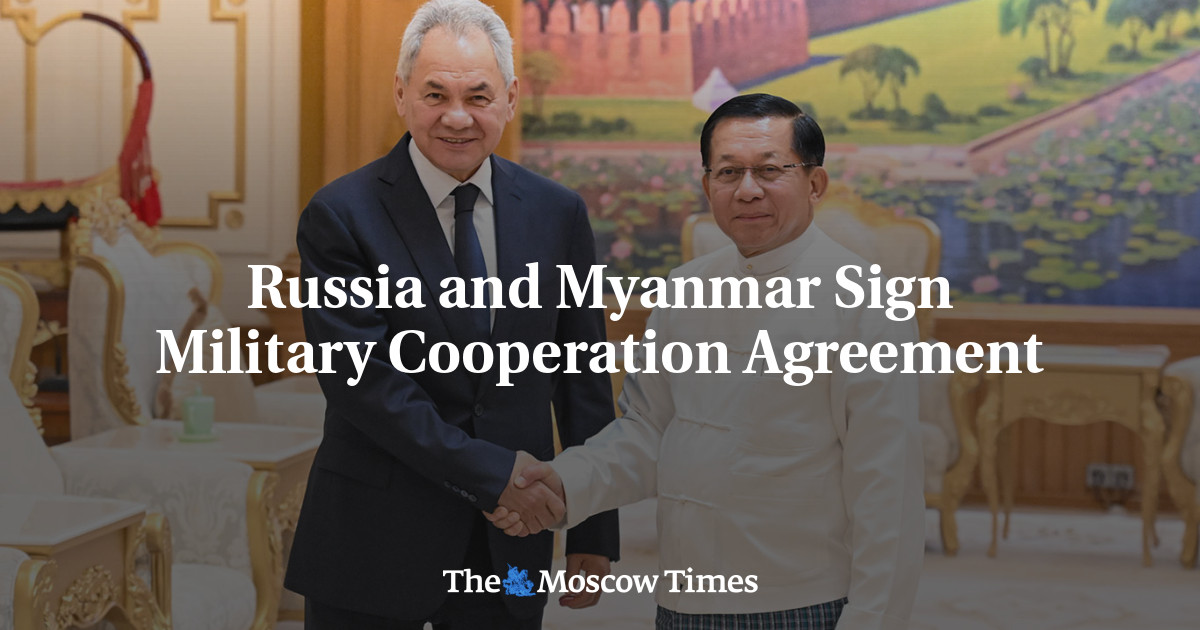
Russia and Myanmar have signed a five-year military cooperation agreement running until 2030.
The deal was announced after Russian Security Council Secretary Sergei Shoigu visited Yangon.
Moscow said it would provide "comprehensive assistance," including backing in international forums.
Both governments released few specifics about the pact.
The Moscow Times reports the deal and Shoigu’s pledge, describing Moscow’s support in those terms.
CNA notes the agreement was announced on Feb. 3 after Shoigu’s visit and quotes Shoigu pledging continued support against Western pressure.
Coverage Differences
Tone / Emphasis
The Moscow Times (Western Alternative) frames the announcement with a straightforward report of the pact and Shoigu’s promise of "comprehensive assistance," and also includes an editorial-style appeal about its own legal status in Russia; CNA (Asian) frames the announcement similarly but emphasizes Shoigu’s pledge as resistance to Western pressure. Both report few specifics, but CNA adds context about the announcement date and explicitly frames Shoigu’s pledge as pushing back against the West.
Myanmar-Russia pact implications
Analysts and reporting say the pact bolsters the junta that seized power in the 2021 coup.
Both sources say the military government has relied on Russia and China to keep its forces supplied during the ongoing civil war.
CNA cites analysts who say Russia has been crucial in providing jets used in strikes that have hit rebel-held areas and civilians.
CNA also reports monitors alleging Myanmar has sent equipment to Russia for its war in Ukraine.
The Moscow Times argues the agreement further strengthens a junta already dependent on foreign backers.
Coverage Differences
Narrative / Detail
Both sources agree the pact strengthens the junta, but CNA (Asian) provides more concrete allegations from analysts about Russian-supplied jets being used in strikes that "frequently hit civilians," and it reports monitors' allegations of Myanmar sending gear to Russia. The Moscow Times (Western Alternative) emphasizes the pact "bolsters the junta" and reliance on Russia and China, but gives fewer operational details about weapon use or allegations of transfers to Russia.
Post-election pact reactions
The pact comes as the junta concluded a contested, month-long election that excluded large rebel-held areas and kept Aung San Suu Kyi jailed.
Both sources describe the vote as widely criticised and skewed toward the military-aligned Union Solidarity and Development Party, and they suggest the vote does little to end the civil conflict.
CNA is explicit that rebel groups rejected the result and that the lopsided outcome makes an end to the civil war unlikely.
The Moscow Times notes the election’s contested nature but provides fewer details on the rejection by insurgents.
Coverage Differences
Missed information / Emphasis
CNA (Asian) gives more explicit detail on the election fallout—stating the vote "produced a lopsided victory for the military-aligned Union Solidarity and Development Party, and was rejected by rebel groups—making an end to the ongoing civil war unlikely." The Moscow Times (Western Alternative) also reports the election was "contested" and excluded rebel areas and jailed Suu Kyi, but it omits the same level of detail about the election result and rebel rejection.
Media coverage differences
The two pieces differ in tone and additional content.
The Moscow Times adds an explicit note about its own legal and operational difficulties in Russia, saying it has been labelled a 'foreign agent' and declared 'undesirable,' which it says criminalizes its work, and otherwise reports the pact with fewer operational allegation details.
CNA adopts a more analytical stance, quoting analysts and monitors about weapons use and alleged transfers and framing the alliance as resistance to Western pressure.
Both sources nonetheless report that few specifics were released about the pact itself.
Coverage Differences
Tone / Source-specific context
The Moscow Times (Western Alternative) includes an editorial-style message about being labelled a "foreign agent" and "undesirable" by Russian authorities—this is unique, outlet-specific context that affects tone. CNA (Asian) does not include that outlet-specific context and instead focuses on analysts' and monitors' claims about weapons use and alleged transfers to Russia.