Full Analysis Summary
Drone strikes across Ukraine
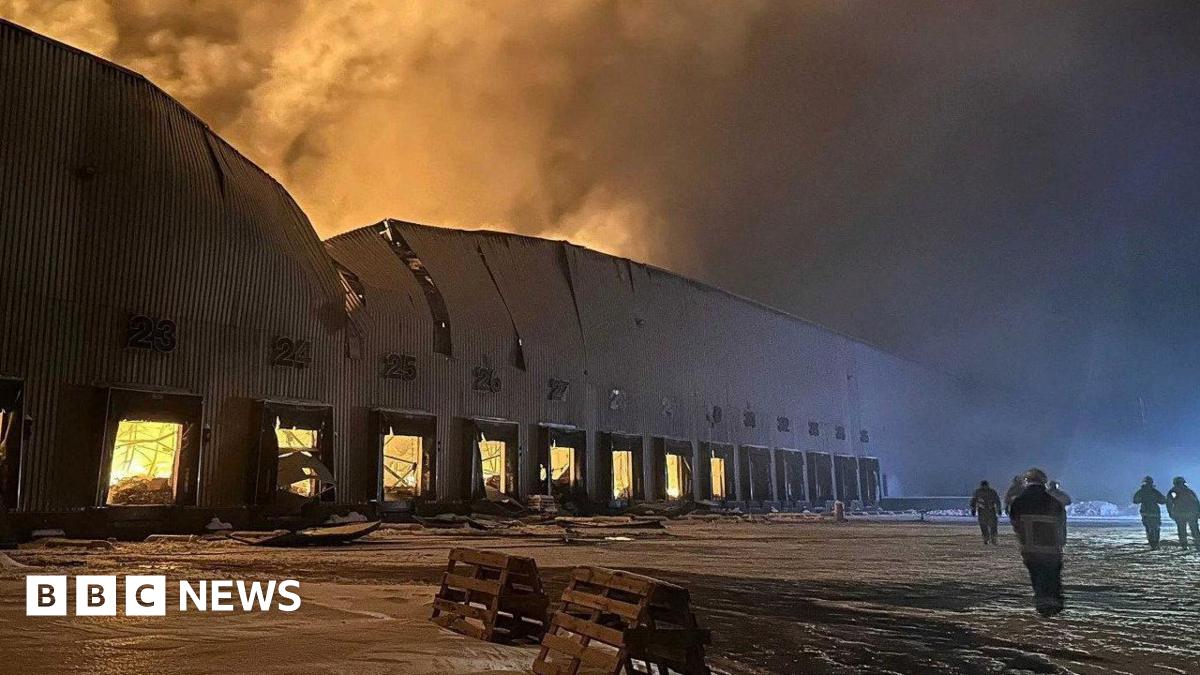
A drone strike in Yahotyn ignited a fire at a warehouse complex amid renewed waves of attacks across Ukraine, Ukrainian emergency services told the BBC.
The report places the Yahotyn strike within a broader pattern of attacks that have hit regions including Rivne and Zaporizhzhia, with officials reporting damage to homes and critical infrastructure.
The BBC describes the incident as part of an escalation that forced Kyiv residents to shelter in metro stations during outages and left at least one person dead in Rivne.
Note: only the BBC snippet was provided for this briefing, so all details below derive from that single source (BBC, Western Mainstream).
Coverage Differences
missed information / single-source limitation
Only the BBC (Western Mainstream) snippet is available for this event. Because no other source texts were provided, I cannot compare narratives, tone, or factual differences across other source types (e.g., West Asian, Western Alternative). The following paragraph therefore reports BBC's account verbatim where possible and notes where the BBC itself cites other outlets (e.g., Reuters) rather than offering independent corroboration.
Civilian and infrastructure impacts
Local officials and emergency services described human and infrastructural impacts alongside the Yahotyn warehouse fire.
The BBC noted casualties and damage elsewhere, reporting at least one death in Rivne and injuries in Zaporizhzhia.
The BBC quoted Oleksandr Koval describing damage to homes and to critical infrastructure.
The report highlights the strain on civilians in Kyiv, who sheltered in metro stations amid power and heating outages.
One resident told Reuters they were living inhumane lives without heating or electricity.
These details underscore the civilian hardship accompanying the strikes as reported by the BBC.
Coverage Differences
single-source reporting / inability to cross-check
BBC (Western Mainstream) reports specific casualty and hardship details (Rivne death, Zaporizhzhia injuries, Kyiv outages and a Reuters-quoted resident). Because no other provided sources are available for comparison, I cannot state whether alternative outlets emphasize different casualty figures, use stronger language, or provide additional eyewitness accounts; the account below follows BBC's presentation.
Yahotyn strike and responses
The BBC situates the Yahotyn strike within reciprocal actions and accusations.
Kyiv reported strikes inside Russia, saying they hit a missile-fuel components factory in Tver and an oil depot in Saratov, according to Ukrainian sources.
Moscow has not commented, the BBC says.
The outlet also reports a diplomatic and rhetorical exchange over ceasefire efforts and an episode involving the shooting of a Russian general, which Moscow blamed on Ukraine.
The BBC ties these developments to a recent pattern of renewed Russian attacks after a brief pause that US President Donald Trump said he requested, a timeline Kyiv disputes.
Coverage Differences
narrative/context emphasis
BBC (Western Mainstream) emphasizes cross-border strikes and reciprocal accusations (Ukraine reporting strikes inside Russia; Moscow's non-comment) and includes political framing about a pause requested by President Trump that Kyiv disputes. Without additional source texts, I cannot contrast whether other outlets prioritize different causation narratives, assign blame differently, or include alternative timelines; the BBC's narrative is the only one available for this compilation.
Impact of recent strikes
Officials and companies highlighted the scale and consequences of the strikes.
Ukraine's President Zelensky reiterated that Russia must be prevented from using the cold as leverage.
The BBC reported his statement and quoted casualty figures he provided, saying some 55,000 Ukrainian soldiers have been killed since the 2022 invasion.
The BBC also reports its own confirmation of nearly 160,000 Russian-side deaths and cites DTEK, an energy company, calling the latest missile and drone strikes the most powerful blow to infrastructure so far this year.
These figures and corporate statements, as presented by the BBC, emphasize the human and infrastructural cost but should be treated with caution in the absence of additional sourcing and verification.
Coverage Differences
verification / figures and framing
BBC (Western Mainstream) reports high casualty figures and quotes an energy company characterizing the strikes as the 'most powerful blow.' Without other sources to compare, I cannot determine whether alternate outlets give differing casualty estimates, challenge the figures, or use different descriptive language (e.g., 'catastrophic,' 'devastating,' or 'limited'). The BBC's tone conveys seriousness and significant damage; any cross-source differences cannot be assessed here because other texts were not provided.