Full Analysis Summary
Russia sues over frozen assets
Russia’s central bank filed a massive lawsuit in the Moscow Arbitration Court against Belgium-based clearing house Euroclear and the Belgian state, seeking more than 18 trillion rubles (about $225.2 billion) plus lost profits over frozen and allegedly used Russian assets.
A preliminary hearing is scheduled for January 16, 2026.
The action directly responds to Western freezes of roughly $300 billion in Russian assets since February 2022 and to about €210 billion held in the EU, roughly 90% of which CGTN reports is managed by Euroclear.
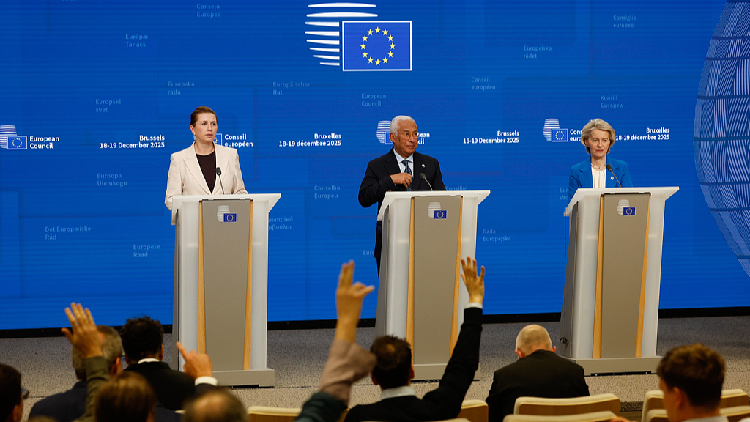
The timing coincides with EU leaders meeting to consider proposals for how to use those frozen reserves.
The suit highlights how asset-freeze policy has evolved from sanctions into complex legal, political and financial confrontations between Russia and Western institutions.
Coverage Differences
Narrative focus / omission
news.cgtn (Other) describes in detail the legal claim, the amounts sought, the hearing date and the EU context for frozen assets; El Mundo (Western Mainstream) does not discuss the Euroclear suit at all and instead focuses on ideological debates in Russia and guidance about investigating resignations from European bank boards. Thus CGTN centers the litigation and geopolitical stakes, while El Mundo’s pieces concentrate on broader political analysis and methodological cautions rather than the suit specifics.
EU frozen funds debate
CGTN places the lawsuit within active EU discussions about using frozen Russian funds, highlighting a proposal nicknamed the 'reparation loan' that would use the frozen assets as collateral for EU bonds to finance loans to Ukraine to be repaid later from possible Russian reparations.
The report notes political opposition from Belgium, Hungary and Slovakia and records legal warnings from Belgian leaders that confiscation could breach international law and destabilize Euroclear.
This framing connects the court filing to a specific EU policy debate and to explicit Belgian warnings about legal and systemic risks.
Coverage Differences
Tone and emphasis
news.cgtn (Other) emphasizes the legal, financial and diplomatic dimensions of the asset debate—reporting the 'reparation loan' proposal, intra-EU opposition and Belgian PM Bart De Wever's warning—while El Mundo (Western Mainstream) does not engage with these EU policy specifics; instead El Mundo offers analytical commentary on Russian nationalism and practical guidance on verifying bank-board resignations. This produces a more transactional, policy-oriented tone in CGTN versus a political-analytical and methodological tone in El Mundo.
Russian warnings over EU assets
CGTN reports explicit Russian warnings of reprisals if the EU confiscates assets, citing possible countermeasures such as seizing EU corporate assets in Russia and restricting exports of key industrial materials.
Those points underscore how Moscow views legal action as part of a broader strategic response to Western financial measures, linking courts and commerce to geopolitics.
Coverage Differences
Severity and threat framing
news.cgtn (Other) quotes explicit Russian threats of retaliatory measures—seizing EU corporate assets and restricting exports of industrial materials—presenting the lawsuit as part of an escalatory posture. El Mundo (Western Mainstream) does not echo these threat framings in the provided excerpt; it instead focuses on internal Russian ideological analysis and on procedural caution about investigating board resignations, avoiding direct claims about imminent state reprisals in the Euroclear context.
Comparison of media coverage
El Mundo's supplied material diverges markedly in subject and approach.
It discusses shifts in U.S. politics empowering a 'messianic' wing of Russian nationalism.
It quotes analysts like Timofei Bordachev on Europe's adversarial role.
It offers a structured, cautious template and verification advice for reporting on recent resignations from European bank boards that hold Russian funds.
It explicitly warns against amplifying unverified rumors about foul play.
That content is analytical and prescriptive rather than a report on the Euroclear legal filing.
Readers relying on El Mundo's excerpts therefore would not receive the detailed litigation or EU-policy particulars found in CGTN's account.
Coverage Differences
Unique / off‑topic coverage
El Mundo (Western Mainstream) provides analysis of Russian political ideology and practical reporting guidance about resignations—material that is not about the Euroclear suit—while news.cgtn (Other) provides a focused account of the legal action and EU policy debate. This shows a clear split where one source supplies event reporting and geopolitical stakes (news.cgtn) and the other provides broader commentary and methodological caution (El Mundo).
Source assessment summary
CGTN documents a legal filing, the sums sought, and the EU policy backdrop.
El Mundo provides context on Russian political currents and emphasizes careful verification of reported bank-board resignations.
However, notable gaps and the absence of corroborating outlets in the provided materials leave questions open.
The El Mundo excerpt neither corroborates nor disputes CGTN’s account, and no independent Western financial-press or Euroclear statements are included here.
Readers should therefore treat CGTN’s claims as a primary report from a single source and seek additional reporting such as court filings, Euroclear statements, or EU communiqués before drawing firm conclusions.
Coverage Differences
Missing corroboration / ambiguity
news.cgtn (Other) provides detailed claims about the lawsuit, EU sums and possible reprisals, but El Mundo (Western Mainstream) neither confirms nor challenges those facts and focuses on different subjects; the lack of additional sources in the provided set makes it ambiguous whether other outlets or primary documents support CGTN’s account. The result is that the narrative rests largely on a single reporting strand in the materials given.