
DR Congo · 11 December, 2025 · 3 min read
Rwanda-Backed M23 Rebels Seize Uvira, Refugees Say Rebels Killed Neighbors and Displaced Thousands
M23 rebels seized the strategic eastern Congolese city of Uvira Seizure occurred days after U.S.-brokered peace accord, challenging Rwanda's pledge to stop rebel support
10 outlets told this the same way.
Outlets did split on Drone Strike in Goma Kills French UN Aid Worker; M23 Blames Congolese Forces, Kinshasa Denies →
10outlets compared
Uvira capture reports
Rwanda-backed M23 rebels said they captured the strategic eastern Congolese city of Uvira after a rapid offensive. Rebel spokespeople urged displaced residents to return while residents and officials reported chaotic fighting and retreats by government forces. The Associated Press reported that spokesperson Lawrence Kanyuka urged displaced residents to return after the offensive began earlier this month.
“Rwanda-backed M23 rebels said they captured the strategic eastern Congolese city of Uvira (South Kivu) after a rapid offensive that began earlier this month; spokesperson Lawrence Kanyuka urged displaced residents to return.”
Al Jazeera reported that the rebels have captured the lakeside city of Uvira and described residents returning cautiously amid a heavy rebel presence. The Globe and Mail said M23 captured Uvira after a rapid offensive that ended when Congolese forces withdrew to avoid urban combat.
Arise News said control of Uvira was unclear, noting an M23 spokesperson declared it 'liberated' while residents reported ongoing gunfire and orders to stay indoors. Букви added that the communications minister did not explicitly confirm the city's fall.
Humanitarian toll and displacement
The offensive has produced a heavy humanitarian toll, but figures vary across reports. Multiple outlets report large displacement, with AP and CBC noting that the broader eastern DRC conflict has displaced over 7 million people overall and more than 200,000 in the province since December. The Guardian and The Globe and Mail say about 200,000 people were displaced within days of the Uvira push.
Casualty counts differ: Congo's communications minister told AP the offensive killed more than 100 people, while The Guardian and The Globe and Mail cite Reuters figures that the latest advance killed at least 74. Al Jazeera reports a substantially higher regional toll, citing regional officials who say more than 413 civilians, including women and children, have been killed since the recent escalation began in early December. Reports also record cross-border flight, with CBC saying roughly 30,000 refugees crossed into Burundi within a short period.

Rwanda and M23 allegations
International actors and experts are sharply divided over Rwanda's role and the regional political fallout. Several Western outlets cite U.N. experts and Congolese authorities accusing Kigali of backing M23. AP reports that the U.S., U.N. and Kinshasa accuse Rwanda of backing M23, which Kigali denies, while U.N. experts say M23 has grown to about 6,500 fighters and estimate up to 4,000 Rwandan forces in the region.
“The U.S., U.N. and Kinshasa accuse Rwanda of backing M23; Rwanda denies this, though U.N. experts say M23 has grown to about 6,500 fighters and estimate up to 4,000 Rwandan forces in the region.”
CBC reports that U.N. experts allege M23 is backed by roughly 4,000 Rwandan troops. The Guardian says analysts and U.N. experts claim Rwanda provides troops, supplies and logistics to secure mineral-rich areas, while noting Kigali rejects those claims and accuses Kinshasa of colluding with Hutu FDLR fighters. Modern Diplomacy and other outlets link the surge to recent high-level meetings and a U.S.-brokered accord, underscoring diplomatic strains as the deal's signatories now accuse each other of violating it.
Uvira offensive implications
Observers warn the Uvira push has immediate strategic and regional implications, since control of the lakeside city gives M23 access to Lake Tanganyika, potential routes into mineral-rich areas and proximity to Burundi's capital. The Globe and Mail says reaching Lake Tanganyika puts M23 within striking distance of mineral-rich Katanga province and under 30 km from Burundi's capital, Bujumbura. Modern Diplomacy warned that capturing Uvira could destabilize the wider Great Lakes region.
The Guardian and human rights groups emphasize the risk to civilians and the possibility of serious violations. The Guardian quotes Human Rights Watch as warning that dismantling and forcible transfers could amount to war crimes. Al Jazeera's on-the-ground reporting described fighters sweeping the streets to eliminate remaining Congolese forces and allied 'Wazalendo' militias, illustrating both military consolidation and severe civilian cost.
Diplomatic responses to conflict
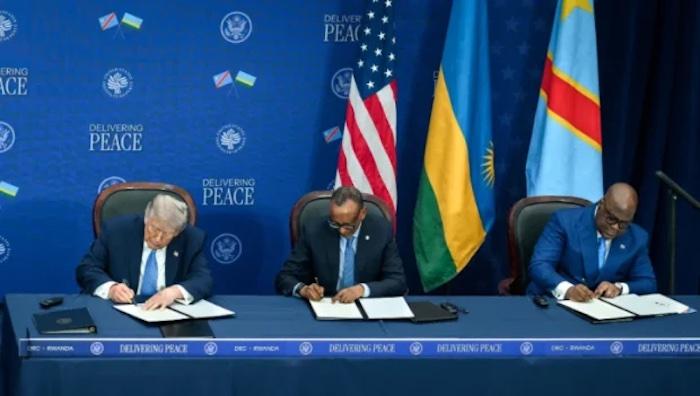
International responses are mixed, and the diplomatic framework brokered days earlier is under strain.
“The U.S. Embassy urged an end to offensive operations and a Rwandan withdrawal; Rwanda blamed Congolese forces for violations.”
The Associated Press reports that the U.S. Embassy urged an end to offensive operations and a Rwandan withdrawal, while Rwanda blamed Congolese forces for violations.
CBC and other outlets emphasize the limits of the Washington-brokered accord, noting it did not include rebel groups who are negotiating separately.
The Guardian records Congolese calls for stronger action, including US sanctions.
Modern Diplomacy and Arise News describe the broader diplomatic fallout.
They report that meetings and accords have been publicly reaffirmed but are now blamed by both sides for failing to stop the fighting, heightening regional tensions and prompting international alarm.