Full Analysis Summary
Honduras election update
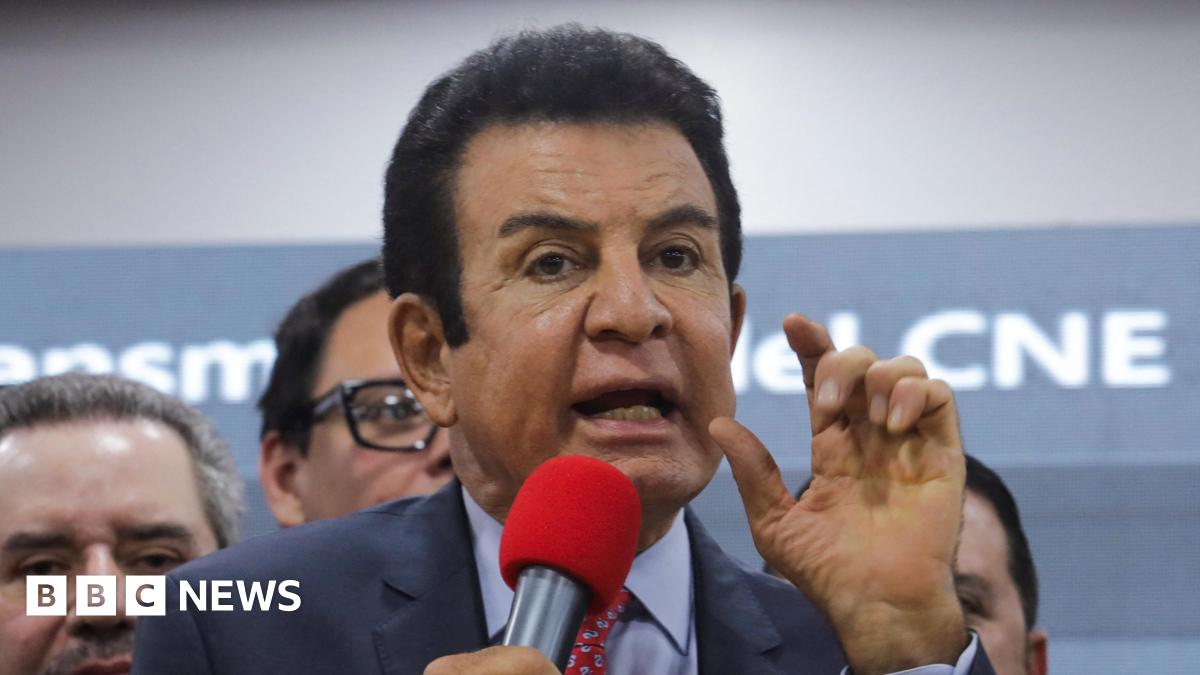
With just over two-thirds of ballots counted, former vice‑president Salvador Nasralla held a narrow, potentially decisive lead over conservative ex‑Tegucigalpa mayor Nasry Asfura in Honduras’ presidential vote.
The BBC reports the close count and notes that Asfura’s National Party insists it still has the numbers to claim victory, underscoring how unsettled the outcome remained as returns continued.
AnewZ likewise frames Nasralla as the centrist Liberal candidate who has taken a razor‑thin lead over a conservative, U.S.-backed Asfura, emphasizing the tightness of the race while using slightly different shorthand to describe the rivals and their affiliations.
Coverage Differences
Tone/narrative emphasis
BBC (Western Mainstream) emphasizes the procedural details of counting and the National Party’s insistence that it still has the numbers, and explicitly reports U.S. involvement allegations; AnewZ (Other) summarizes the contest by labeling Nasralla as 'centrist' and Asfura as 'U.S.-backed', which emphasizes external backing rather than the contested counting process. The BBC quotes and context frame the uncertainty in electoral mechanics and domestic reactions, while AnewZ uses a concise label that highlights geopolitical alignment.
U.S. influence in Honduras
The international dimension quickly became part of the domestic narrative when the BBC reported that in Washington President Donald Trump had openly backed Asfura and was reportedly hinting at withholding aid and accusing Honduran authorities of fraud.
Many in Honduras saw those moves as heavy-handed U.S. interference, a detail that underscores how foreign statements were shaping perceptions of legitimacy.
AnewZ’s phrasing, calling Asfura "U.S.-backed," reflects the same theme in a more condensed form and does not reproduce the BBC’s reported detail about suggested aid cuts or direct accusations of fraud, showing a difference in the level of reported specifics about U.S. actions.
Coverage Differences
Detail and attribution
BBC (Western Mainstream) reports specific reported actions and reactions — that President Trump openly backed Asfura and was reportedly hinting at withholding aid and accusing Honduran authorities of fraud — and it attributes the perception ("many in Honduras see") to local reaction, including a named analyst. AnewZ (Other) uses the descriptor 'U.S.-backed' for Asfura but omits the BBC’s specific reported claims about Trump's hints to withhold aid or accusations of fraud, making AnewZ less detailed on U.S. actions while still signaling foreign influence.
Honduras election framing differences
Domestic actors and analysts added sharper, more critical framing.
The BBC quotes political analyst Josué Murillo likening the pressure on Honduras to Cold War-era treatment and warning that no government should treat Honduras 'as a banana republic'.
That language conveys strong domestic unease about foreign influence and the broader stakes for Honduran sovereignty.
AnewZ’s summary omits Murillo’s quote and the Cold War framing, instead focusing on candidate descriptions and the tightness of the vote and presenting a comparatively neutral, compact account of the contest.
Coverage Differences
Tone and quoted severity
BBC (Western Mainstream) includes a direct quote from political analyst Josué Murillo comparing pressure to Cold War‑era treatment and invoking 'banana republic' imagery, conveying a severe and critical tone about foreign pressure; AnewZ (Other) omits this quoted, severe language and focuses on succinct candidate labels and the vote margin, resulting in a less emotionally charged presentation.
Election coverage comparison
Taken together, the coverage across the two sources paints a picture of a tight, uncertain election where both domestic count disputes and international interventions shape perceptions.
The BBC provides more granular reporting on vote-count progress, local reactions, and quoted analysis that frames U.S. statements as potential interference.
AnewZ compresses the story into a clear label of centrist versus conservative, U.S.-backed, and emphasizes the razor-thin margin.
This contrast reflects variations in focus and depth between a Western mainstream outlet and a shorter aggregator-style source.
The immediate consequence is continued uncertainty about the ultimate outcome and how both domestic institutions and external actors will influence the final result.
Coverage Differences
Depth and focus
BBC (Western Mainstream) offers more detail on counting status, domestic reactions and direct reported claims about U.S. involvement (naming Trump’s backing and reported hints about aid), whereas AnewZ (Other) offers a concise summary that emphasizes candidate labels ("centrist" and "U.S.-backed") and the narrow lead. The two approaches produce complementary but differently textured narratives: BBC foregrounds process and reaction, AnewZ foregrounds candidate positioning.