Technology and Science18 April, 20267 min read
Sam Altman’s World Expands Proof-Of-Human Verification With Tinder, Zoom, and Docusign
This article is an automated aggregation of coverage from news outlets. Our editorials offer in-depth analysis curated by the NewsCord team.
World ID verification expands to Tinder with iris scan, enabling 'World ID Verified' profiles. Zoom adds World ID verification to meetings to validate participants and deter deepfakes.
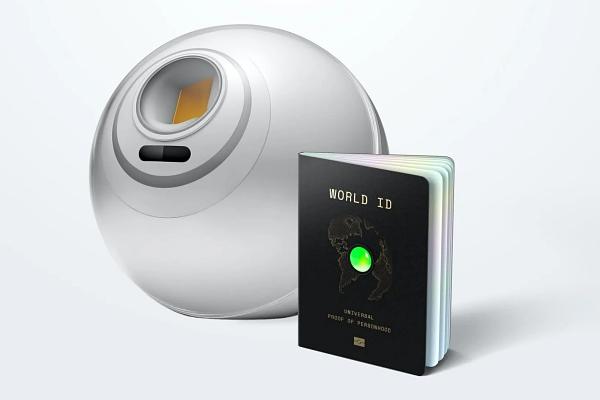
World ID expands beyond crypto
Sam Altman’s World, formerly Worldcoin, used a San Francisco event to unveil a major expansion of its “proof-of-human” verification system, starting with Tinder and then widening into other parts of public life. Tools for Humanity, the company behind World, announced Friday plans to integrate its verification technology into dating apps, event and concert ticketing systems, business organizations, email, and other arenas of public life, according to TechCrunch. The BBC described the same effort as Tinder and Zoom offering “proof of humanity” eye-scans to combat AI, with users able to scan their irises to earn a “proof of humanity” badge attached to their profile or name.
World’s approach centers on an Orb, a spherical digital reader that scans a user’s eyes and converts their iris into a unique cryptographic identifier described as a verified World ID, as TechCrunch and the BBC both explain. The Verge adds that Tinder users who prove they’re a real person by visiting an identity-verifying orb will soon be able to get five free boosts in the app, and that the orb-powered World ID app can verify Tinder profiles, Zoom calls, and Docusign documents.
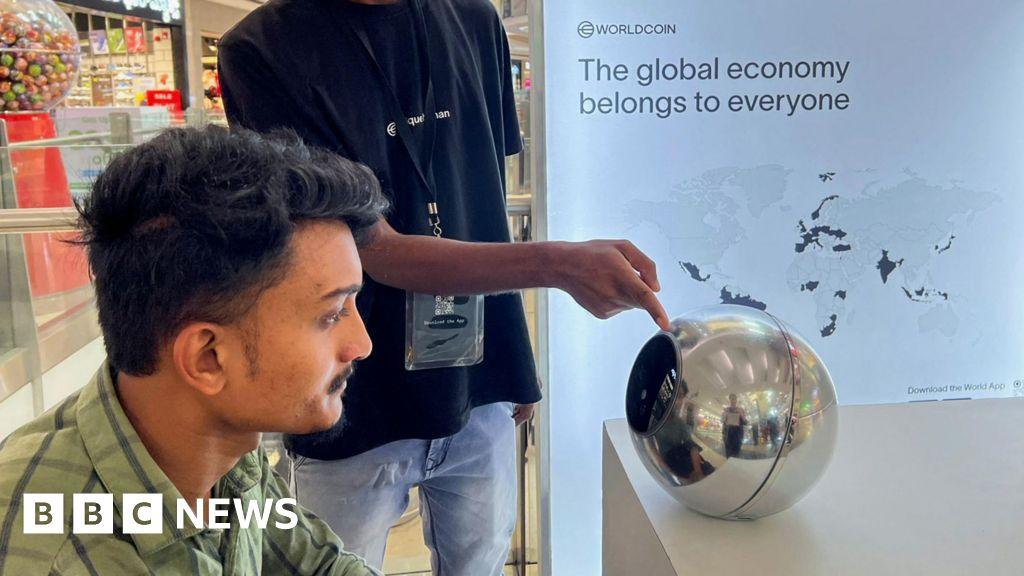
World also introduced a dedicated World ID app for managing and using proof-of-human verification across the internet, with Decrypt describing it as a shift from a previous wallet-integrated approach. In parallel, Worldcoin’s network has reached 18 million verified humans across 160 countries, Decrypt reports, and the BBC says World has verified 18 million people through World ID so far and that they have used their verification 450 million times.
How the system works
World’s expansion is built around a verification stack that starts with iris scanning and then connects that result to third-party services. TechCrunch explains that World distinguishes itself by offering the ability to verify that a real, living human is using a digital service while still protecting that person’s anonymity, and it describes the cryptographic mechanism as “zero-knowledge proof-based authentication.” The BBC similarly says that once a person is confirmed as human by the technology they receive a unique identification code stored on their smartphone and considered their World ID.
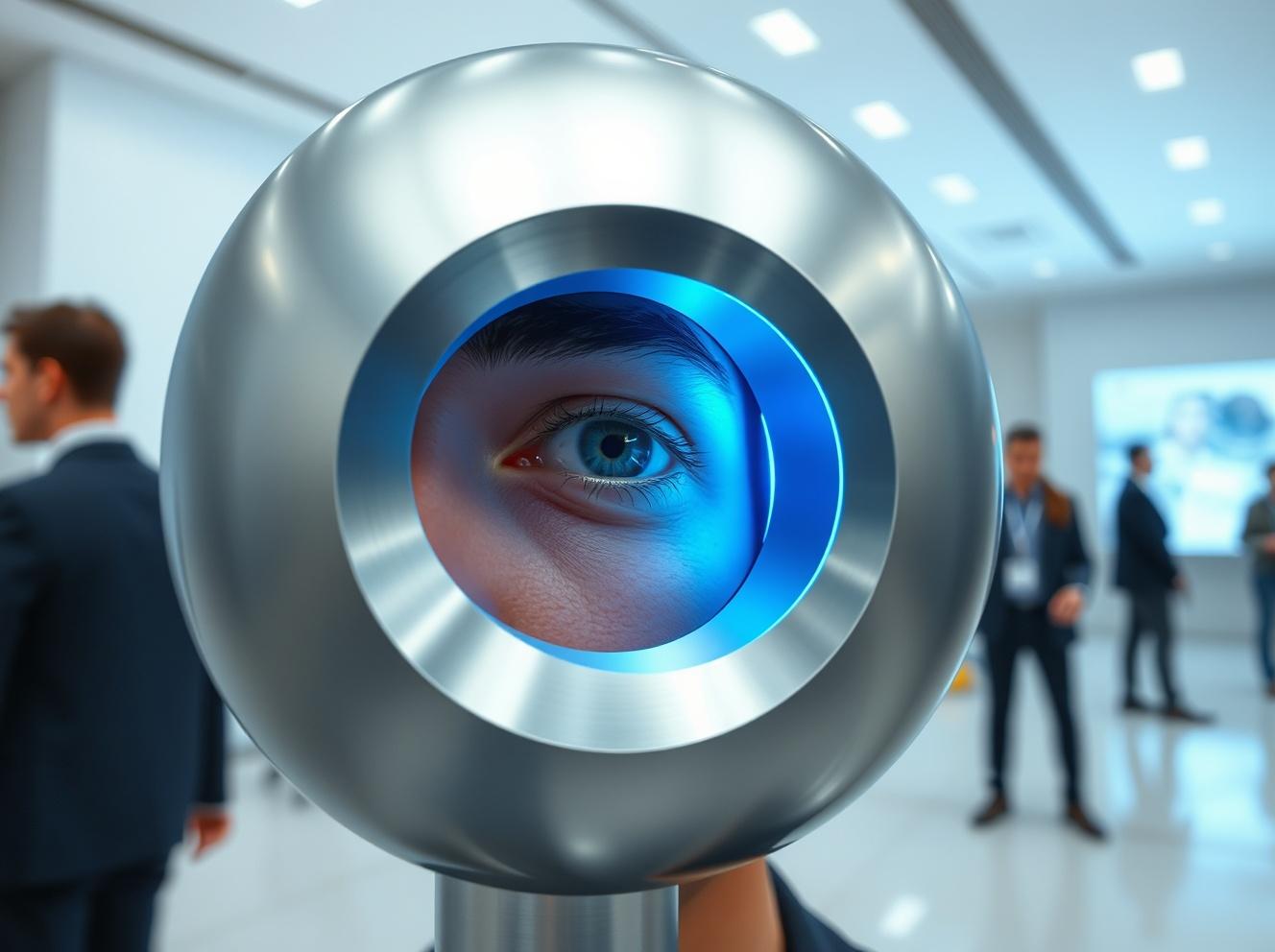
Multiple outlets describe the Orb as the key hardware element, with TechCrunch calling it a spherical digital reader that scans a user’s eyes and converts their iris into a unique and anonymous cryptographic identifier. The Verge adds detail about what happens during verification, saying the orb “takes pictures of your face and eyes, then encrypts and stores them on your phone so that only you control them by default.”
Decrypt describes World ID as a dedicated experience for managing and using proof-of-human verification across the internet, and it says the standalone application represents a shift from the company’s previous wallet-integrated approach. The DigitalToday report says the World app can also be used without Orb verification, and it describes the first area to be applied as dating apps, with Tinder expanding globally including the United States.
Partnerships with Tinder, Zoom, DocuSign
World’s expansion is explicitly tied to partnerships that bring “proof of human” verification into mainstream apps and workflows. TechCrunch reports that World is starting with Tinder, and it says the company’s presentation included integrations for dating apps, event and concert ticketing systems, business organizations, email, and other arenas of public life. The BBC says Tinder and Zoom will let users prove they are human and not robots by bringing advanced eye-scanning technology to the app, and it adds that users can scan their irises to earn a “proof of humanity” badge attached to their profile or name.
Decrypt describes Tinder as expanding verification to U.S. users, while Zoom is integrating Deep Face technology to try to spot fakes, and it says Docusign is adding identity verification. The Verge states that the orb-powered World ID app can verify your Tinder profile, Zoom calls, and Docusign documents, and it describes the World ID app as distinct from the World super app announced earlier.
WIRED adds that Tinder users who verify with their World ID will receive five free “boosts,” and it says Zoom says users can now require other participants to verify their identity with World before joining a call, while Docusign will allow users to require World’s identity verification technology. The BBC also ties the effort to a broader trust-and-safety problem, saying Tinder and Zoom have encountered more problems with fake or malicious accounts and users over the last two years as improving AI technology has made it easier to impersonate human speech, voice and likeness.
Voices: Altman and trust leaders
At the center of the rollout, Sam Altman framed the move as a response to an internet increasingly dominated by AI-generated content and uncertainty about whether interactions are with machines or people. TechCrunch quotes Altman saying, “The world is getting close to very powerful AI, and this is doing a lot of wonderful things,” and it also includes his remark that “We are also heading to a world now where there’s going to be more stuff generated by AI than by humans.” In the same TechCrunch account, Altman described the confusion users face, saying, “I’m sure many of you [have had moments] where you’re like, ‘Am I interacting with an AI or a person, or how much of each, and how do I know?”
The BBC reports that Altman said there will soon be “more stuff made by AI than is made by humans” online, and it includes his follow-up: “I'm not afraid for the future as long as we can tell between the two.” Match Group’s trust and safety lead Yoel Roth is quoted by the BBC, saying, “Partnering with World ID is a natural next step” for Tinder to help users “know the person on the other end is real.”

Decrypt quotes Tom Lee saying, “Proof of human and verified human identity vaulted to a critical priority for social networks and banking and financial systems as AI and agentic-AI capabilities experienced an exponential step forward in the past few months,” and it also notes his disclosure about being an investor in Dastan. WIRED quotes Tiago Sada saying the company sees major platform partnerships as key to helping World become a mainstream identity-verification technology, and it adds that Sada is “especially interested in working with social media companies in the future.”
Debate, scaling, and what comes next
As World pushes into mainstream consumer and enterprise settings, the sources also show how the rollout is tied to both scaling constraints and ongoing skepticism about biometric verification. TechCrunch says it had been difficult for World to scale due largely to the verification process itself, describing how “you had to travel to one of its offices and have your eyeballs scanned by an Orb,” and it notes that World has made moves to increase ease and incentive structure by distributing Orbs into big retail chains and offering Worldcoin to some members who signed up. The DigitalToday report says World is strengthening scalability by significantly increasing Orb deployments in New York, Los Angeles and San Francisco, and it also says it introduced a model that brings an Orb to a requested location.
WIRED adds that World says the company still offers crypto as an incentive when new users sign up, and it also describes that World is launching a tool called Concert Kit and that it will test the feature on the upcoming Bruno Mars World Tour featuring Anderson .Paak, who is scheduled to play a verified-humans-only show under his alias DJ Pee .Wee in San Francisco on April 17. Decrypt says World launched Concert Kit, a tool powered by World ID that enables artists to reserve tickets for verified humans, aiming to combat bot-driven ticket scalping by requiring human verification for event access.
At the same time, the BBC provides a concrete example of how AI-driven impersonation and scams affect users, quoting that romance scams saw people in the US lose more than $1bn last year, according to the Federal Trade Commission, and it also describes Tinder’s bot problem and the rise of “bots” used to scam people out of money or their personal information. WIRED also points to resistance from governments around the globe that have probed the company over suspected violations of data protection laws, and it says the governments of Kenya, Spain, Portugal and other countries temporarily banned World’s operations to investigate the startup over privacy concerns.