Technology and Science18 April, 20267 min read
Trump Signs Executive Order To Fast-Track Psychedelic Drug Research, Including Ibogaine
Trump signed an executive order directing the FDA to expedite psychedelic drug reviews, including ibogaine. The order commits $50 million in federal funding to advance psychedelic research.

Order to Fast-Track
President Donald Trump signed an executive order on Saturday directing the federal government to “dramatically accelerate access to new medical research and treatments based on psychedelic drugs,” including ibogaine, a psychedelic drug that is currently banned under the federal government’s most restrictive category for illegal, high-risk drugs.
“‘Today I'm pleased to announce historic reforms to dramatically accelerate access to new medical research and treatments based on psychedelic drugs,’ Trump continued.”
In the Oval Office, Trump said, “Today I'm pleased to announce historic reforms to dramatically accelerate access to new medical research and treatments based on psychedelic drugs,” and he added that the directive will help “dramatically accelerate” access to research and treatments on psychedelic drugs.
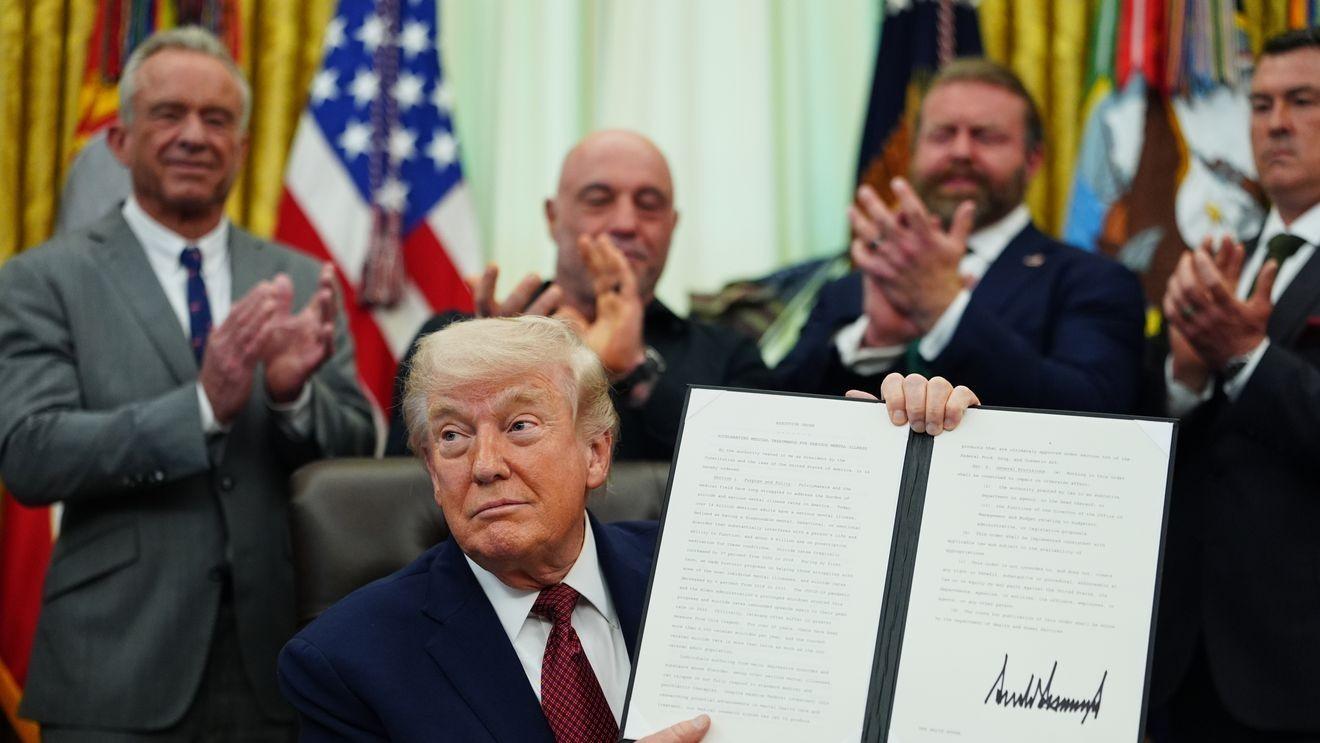
Trump also framed the move as a response to severe mental illness and depression, saying, “In many cases, these experimental treatments have shown life-changing potential for those suffering from severe mental illness and depression, including our cherished veterans.”
The order directs the Food and Drug Administration to expedite review of certain psychedelics already designated as breakthrough therapy drugs, and it is described as the first time the FDA has offered fast-tracking to any psychedelics.
The FDA is also taking steps to clear the way for “the first-ever human trials of ibogaine in the United States,” with CNBC reporting that the FDA next week will issue national priority vouchers for three psychedelics.
Multiple outlets tied the policy shift to the mental health crisis, with NPR quoting the order’s language that “Today, over 14 million American adults have a serious mental illness,” and it also states “about 8 million are on prescription medication for these conditions.”
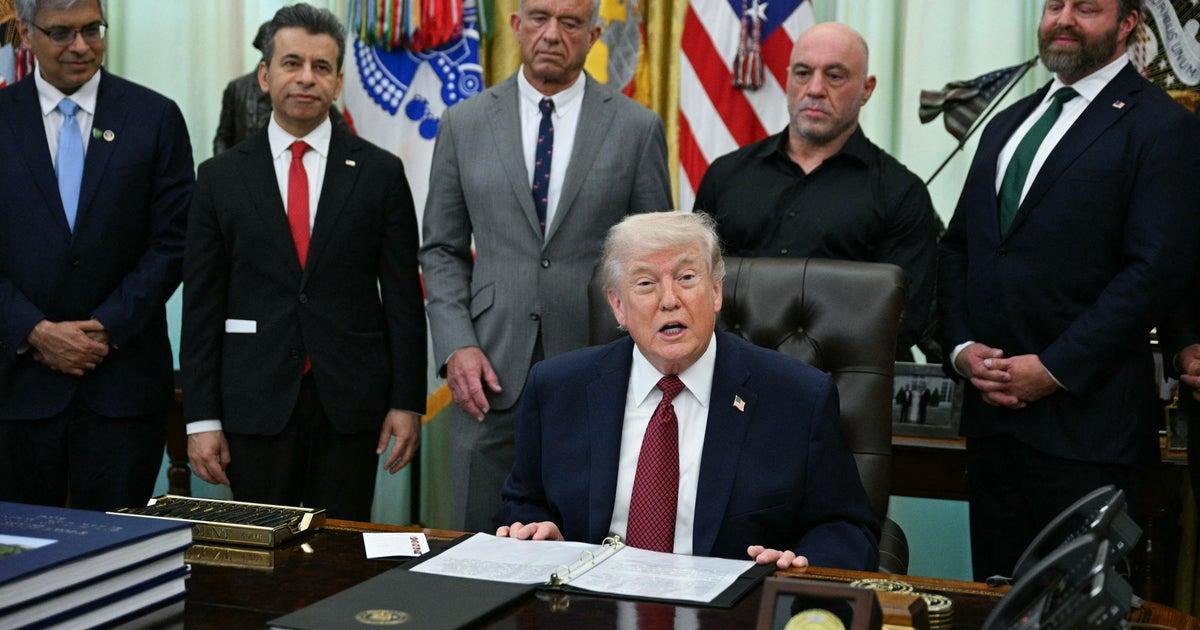
At the signing, Trump was joined by Health and Human Services Secretary Robert F. Kennedy Jr., Dr. Mehmet Oz, podcaster Joe Rogan, and former Navy SEAL Marcus Luttrell, and NPR reported Rogan told Trump about ibogaine and Trump responded, “Sounds great. Do you want FDA approval? Let's do it.”
Funding, Vouchers, and Trials
The executive order pairs fast-tracking with new federal funding and specific administrative steps aimed at moving psychedelics into clinical research. CNBC reported that “The Food and Drug Administration, next week, will issue national priority vouchers for three psychedelics,” and it quoted FDA commissioner Marty Makary saying the vouchers would allow certain drugs to be approved quickly “if they are in line with our national priorities.” NPR similarly said, “Next week, the FDA will issue national priority vouchers to three psychedelics,” and it added that Makary said the review could be approved quickly “– perhaps in just weeks.”
Multiple outlets also described a $50 million federal investment tied to psychedelic research, with LiveNOW from FOX stating that “the Department of Health and Human Services will invest $50 million to research psychedelic therapies, including Ibogaine,” and Marijuana Moment saying the order directs HHS to accelerate research, approval, and access. STAT described the order as directing $50 million in funding for states developing programs to further psychedelic treatments for mental illness, and it said the order also calls on federal agencies to rethink enforcement for drugs proving promising in clinical research.

The order also includes a pathway for patients under the “Right to Try law,” with LiveNOW from FOX quoting Trump: “We're also opening a pathway for ibogaine to be administered to desperately ill patients under the right to try law,” and Marijuana Moment describing it as “opening a pathway for the substance to be administered to desperately ill patients under the Right to Try law.” In addition, the order directs coordination for rescheduling after late-stage evidence, with Marijuana Moment quoting that “the Attorney General shall, in consultation with HHS, initiate and complete review of any product containing a Schedule I substance that has successfully completed Phase 3 clinical trials.”
Voices: Veterans, Officials, Advocates
The signing event featured direct testimony and remarks from veterans, health officials, and a prominent podcast host, with each voice linking the policy shift to mental health outcomes and urgency.
“Sounds great. Do you want FDA approval? Let's do it.”
NPR reported that Rogan told Trump about ibogaine and Trump responded, “Sounds great. Do you want FDA approval? Let's do it,” while Luttrell told Trump, “You're going to save a lot of lives through it. It absolutely changed my life for the better.”
LiveNOW from FOX quoted Trump describing the stakes for veterans and mental health, saying, “The suicide epidemic among veterans is a national tragedy,” and it added that “Since 9/11, we've lost over 21 times more veteran lives to suicide than on the battlefield.”
Kennedy’s remarks tied the order to the mental health crisis and the need to remove legal impediments, with Marijuana Moment quoting him saying the executive order will “remove legal impediments that block American researchers, scientists, physicians and clinicians from properly studying these medicines and, where appropriate, establishing protocols for their safe therapeutic use.”
In the same event, Dr. Mehmet Oz called the action “a paradigm shift for mental health treatment,” and he said he was “Grateful to work alongside leaders who refuse to accept ‘no’ when lives are on the line,” according to Marijuana Moment.
STAT described the order’s political and policy framing as a push to “reverse the crisis of serious mental illness in America,” and it quoted Trump saying, “They’re having a hard time,” referring to veterans, and “We’re bringing them new hope.”
The order also drew attention to the scientific process and the need for continued study, with STAT quoting Jay Bhattacharya saying, “this is something that we’re still studying, and we have to keep studying,” and it quoted him adding, “We have to figure out the right way to … administer it, that it’s safe.”
Diverging Accounts and Emphasis
While the core policy action is consistent across outlets—Trump’s executive order to fast-track psychedelic research and review—coverage diverges in what it emphasizes, what timelines it highlights, and how it frames the risk-benefit debate. CNBC foregrounded the safety controversy around ibogaine, noting it is “known to sometimes trigger potentially fatal heart problems,” and it quoted Frederick Barrett saying, “It's been incredibly difficult to study ibogaine in the U.S. because of its known cardiotoxicity.” CNBC also reported that the National Institutes of Health “briefly funded research on the drug in the 1990s” before discontinuing due to “cardiovascular toxicity,” and it cited the Multidisciplinary Association for Psychedelic Studies saying ibogaine has been linked to “more than 30 deaths.”
By contrast, NPR focused more on the mental health scale and the FDA mechanism, quoting the order’s figures about “over 14 million American adults” and “about 8 million,” and it highlighted that the FDA fast-track is “the first time the FDA has offered to fast-track any psychedelics.” STAT emphasized the policy mechanics and enforcement shift, describing the order as directing agencies to “rush access” and “reevaluate their status as controlled substances,” and it quoted Marty Makary saying “three priority review vouchers would be given to three serotonin 2a agonists, psychedelics.”
CBS News, meanwhile, described a different stage of the process, saying sources told it the White House is drafting an executive order and that “The Trump administration doesn't plan to reclassify the drug for medical use at this time — it will remain a Schedule I drug,” even as it said the action is meant to open the door to federal funding. The outlets also differ on what they say about timing: CNBC said the FDA next week will issue vouchers, NPR said perhaps in “just weeks,” and STAT said decisions could be expected “later this summer.”
Risks, Evidence, and Next Steps
The policy shift comes with explicit warnings about ibogaine’s safety risks and the limited evidence base, even as officials and advocates argue for faster research. CNBC said ibogaine is known to sometimes trigger “potentially fatal heart problems,” and it quoted Frederick Barrett describing the difficulty of studying the drug due to “cardiovascular toxicity.” CBS News provided a detailed risk framing, saying “The most serious risk is to the heart,” and it reported that a 2023 review of 24 studies involving 705 people found heart toxicity and risk of death were “worrying,” with “At least 27 people have died after taking ibogaine, the 2023 report showed.”
“The most serious risk is to the heart.”
CBS News also described a small study of 30 veterans where ibogaine paired with intravenous magnesium showed no serious cardiac events, but it emphasized the evidence limits by noting the study had “only 30 people and no placebo group.” The same CBS News report said Americans have been traveling to “unregulated clinics, often in Mexico or the Caribbean,” and it described the lack of oversight, stating there is “no standardized heart screening, no required monitoring protocol and no obligation to report adverse events.”

Even within the policy push, the order’s rescheduling mechanism depends on late-stage trials, and Marijuana Moment quoted the order requiring the Attorney General to initiate and complete review after “successful Phase 3 clinical trials” for a Schedule I substance. STAT also described the enforcement and approval pathway, quoting Trump saying rescheduling of approved drugs would go “very quickly,” and it said the DEA and Department of Justice will begin rescheduling reviews after successful phase-three trials.