
Technology and Science · 04 May, 2026 · 9 min read
Samuel Alito Temporarily Pauses Louisiana Ruling Restricting Mifepristone Mail Access
Justice Samuel Alito temporarily pauses Louisiana ruling, preserving nationwide mail access to mifepristone. Administrative stay lasts until May 11, 5 p.m. ET.
Whether access disruption is primarily about safety risks or about “chaos/coercion” tactics.
11 of 12 outlets skipped it: matthew Kacsmaryk is described as an ultraconservative Texas judge whose past rulings on immigration and trans issues are highlighted as part of his background in the abortion-pill litigation..
13outlets compared
Same story, two versions
tap a side to read it in full
USA Today
““Advocates for legal abortion have called the review a sham, saying the science behind the agency’s previous decision is solid.””Read the original ↗
ABC News
““Some abortion opponents who say the GOP-led federal government hasn’t done enough to ban the pills …””Read the original ↗
USA Today highlights a specific allegation of bad-faith (“sham”), while ABC reframes the broader political dispute without endorsing the “sham” characterization; this affects reader perception of agency credibility and intent.
Mifepristone in the courts
The U.S. Supreme Court’s handling of mifepristone has returned the abortion pill fight to the center of American politics and litigation, with multiple outlets describing a sequence of emergency and merits-adjacent moves that keep access in flux.
“Danco Laboratories and GenBioPro, two companies that manufacture the abortion pill mifepristone, came to the court on Saturday and asked the justices to pause a ruling by the U.S. Court of Appeals for the 5th Circuit”
SCOTUSblog reports that on Saturday, Danco Laboratories and GenBioPro asked the justices to pause a ruling by the U.S. Court of Appeals for the 5th Circuit in a lawsuit by Louisiana that reinstated the requirement that the drug be dispensed only in person, and that on Monday Justice Samuel Alito agreed to do so temporarily.

SCOTUSblog adds that “Responses from Louisiana and the FDA to the companies’ requests are due on Thursday, and the temporary stay will expire on May 11,” and that the court also released orders from the justices’ private conference on Friday.
USA Today frames the same development as a question of whether “abortion by mail still legal,” noting that “Justice Samuel Alito paused until May 11 the restrictive ruling by a lower court while the full court decides what the rules for mifepristone should be amid a Louisiana challenge to expanded access.”U
France 24 places the broader stakes in time, saying the Supreme Court announced on “Wednesday, December 13” that it would hear the legal battle surrounding mifepristone and that it was expected to issue its decision “by the end of June 2024.”
Le Monde adds that on “Thursday, June 13,” the Supreme Court struck down a judicial decision that had reinstated restrictions on access to mifepristone, and that the nine justices unanimously denied the plaintiffs’ standing.
Across the coverage, the same drug—mifepristone—appears as the focal point, with courts and emergency stays shaping whether telehealth and mail-order access remain available while the litigation continues.
What the stays changed
Multiple reports describe the immediate effect of the Supreme Court’s emergency pause as preserving remote and mail-order access for a limited period while the justices consider the underlying dispute.
The Guardian says the Supreme Court “temporarily reinstated nationwide access to mifepristone, blocking a ruling that threatened to upend accessibility of an abortion pill involved in nearly two-thirds of pregnancy terminations across the country,” and it specifies that on Monday “Justice Samuel Alito signed an order pausing a fifth US circuit court of appeals ruling.”
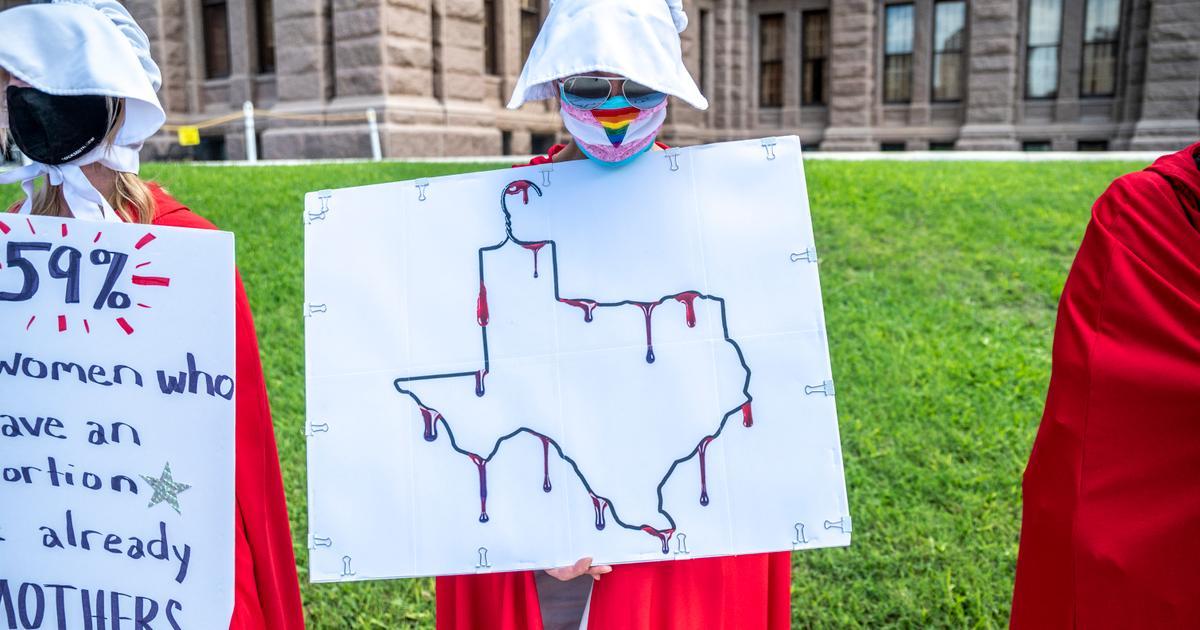
The Guardian further states that the Friday restrictions “called on preventing abortion providers from prescribing mifepristone through the mail,” and that Alito’s order “would remain in effect until at least 5pm ET on 11 May.”
MS NOW similarly reports that the Supreme Court “granted a temporary pause to an appeals court ruling that blocked the telehealth provision and mailing of the abortion pill mifepristone nationwide as litigation continues,” and it identifies the administrative stay as “until May 11 at 5 p.m. ET.”
WNYT, covering the issue in New York, describes the Friday May 1 ruling from the 5th U.S. Circuit Court of Appeals in Louisiana as requiring that “mifepristone must be given only in person and at clinics,” while also saying that “the Supreme Court has put the lower court’s decision on hold for about another week.”
HuffPost describes the same procedural disruption from the perspective of patients and providers, saying that on Friday the Fifth Circuit Court of Appeals “handed down a decision temporarily banning the mailing of the abortion medication mifepristone and requiring that the abortion pill be distributed only in person and at clinics,” and that the Supreme Court issued a stay “restoring access for at least another week.”
Presspublications adds a Maine-specific angle, saying “Maine abortion providers can continue prescribing mifepristone remotely for now after the U.S. Supreme Court on Monday temporarily paused a lower court ruling that would have blocked mail delivery of the abortion medication nationwide.”
Across these accounts, the same pattern repeats: a lower-court restriction on in-person dispensing and mail delivery is paused by the Supreme Court, with the pause tied to a deadline of May 11 and a time-of-day reference of 5 p.m. ET.
Voices on access and safety
The reporting includes sharply different reactions from reproductive-rights advocates, providers, and anti-abortion groups, with each side framing the court’s actions in terms of patient impact and political urgency.
““While mifepristone access returns to where it was on Friday morning, the whiplash and chaos that patients and providers are navigating have already had real consequences for real people’s lives and futures.””
In the Guardian, Alexis McGill Johnson, president of Planned Parenthood Action Fund, said, “While mifepristone access returns to where it was on Friday morning, the whiplash and chaos that patients and providers are navigating have already had real consequences for real people’s lives and futures.”
The Guardian also quotes Julia Kaye of the ACLU Reproductive Freedom Project saying, “While this is a positive short-term development, no one can rest easy when our ability to get this safe, effective medication for abortion and miscarriage care still hangs in the balance.”
USA Today quotes Planned Parenthood and other voices through its framing of confusion and telemedicine access, while ABC News describes advocates on both sides strategizing for a midterm election year, including abortion-rights groups “hoping it will sway voters their way.”
ABC News also includes an anti-abortion warning from SBA Pro-Life America’s president Marjorie Dannenfelser, who called it “a five-alarm crisis” for the pro-life movement and for the GOP, adding, “The GOP cannot win without its base and simply will not get the enthusiasm that drives turnout without leadership from the top.”A
WNYT quotes Chelly Hegan, president and CEO of Upper Hudson Planned Parenthood, saying after the May 1 5th Circuit ruling that “What I believe it’s really doing is a larger overarching desire by this administration and those who support it to cause chaos in the ability for people to access abortion. It doesn’t actually do anything,” and she later adds, “All it does is make a complicating factor for someone trying to seek care.”
Presspublications quotes Nicole Clegg, president and CEO of Planned Parenthood of Northern New England, saying, “It’s maddening to think when we have the best and most effective regimen that the Fifth Circuit could somehow intervene and make that less available for people,” and it also quotes Olivia Pennington of Maine Family Planning saying, “This ruling out of the Fifth Circuit court, has nothing to do with mifepristone safety and everything to do with coercion and control of pregnant people.”
HuffPost adds a provider perspective from Dr. Angel Foster, who told the outlet, “There wasn’t a lot of time to be sad about the decision,” and she described the immediate reaction as “It was mainly disgust and anger and then, OK, now we need to get stuff done.”
Together, these quotes show how the same procedural pause is treated as either a temporary restoration of access or a continuation of a broader fight over safety, regulation, and political leverage.
How outlets frame the same fight
While the underlying court actions are consistent across coverage, outlets emphasize different angles—political stakes, regulatory process, patient confusion, and the mechanics of Supreme Court procedure.
ABC News frames the rulings as a midterm-election issue, saying “Back-to-back court rulings on abortion pill access are thrusting a contentious political issue back into the spotlight ahead of this year’s midterm elections,” and it describes the Supreme Court’s Monday action as “temporarily restored broad access to the drug on Monday while it further considers the case.”A

USA Today similarly centers the question of legality and access, asking “Is abortion by mail still legal?” and stating that “Telemedicine for abortion pill changes cause confusion,” while also noting that “The Trump administration's FDA is now reviewing the safety of the drug.”
HuffPost focuses on operational and patient-facing disruption, describing Dr. Angel Foster “answering questions from panicked and confused patients” and quoting her reaction that “It was mainly disgust and anger and then, OK, now we need to get stuff done.”
The Guardian, by contrast, emphasizes the nationwide scope and the “whiplash and chaos” experienced by patients and providers, while also detailing the Friday restrictions and Alito’s timing, including “until at least 5pm ET on 11 May.”
SCOTUSblog highlights procedural sequencing and deadlines, reporting that “Justice Samuel Alito, who handles emergency requests from the 5th Circuit, agreed to do so temporarily,” that “Responses from Louisiana and the FDA… are due on Thursday,” and that “the temporary stay will expire on May 11.”
France 24 and Le Monde provide a longer arc, with France 24 discussing the Supreme Court’s expected decision timing and Le Monde reporting the June 13 merits-adjacent outcome, including that the Court “denied the plaintiffs' standing” in a unanimous decision.
Even when discussing similar consequences—such as whether mail delivery is blocked—each outlet’s narrative emphasis differs: ABC News ties it to electoral strategy, USA Today to confusion and FDA review, HuffPost to patient logistics, and SCOTUSblog to the court’s procedural posture.
The result is that readers encounter the same legal dispute through different lenses, with each publication foregrounding the aspect it chooses to treat as most consequential.
What happens next
The sources describe an extended timeline of responses, expirations, and potential further litigation, with multiple outlets emphasizing that the Supreme Court’s temporary actions do not settle the dispute permanently.
“Responses from Louisiana and the FDA to the companies’ requests are due on Thursday, and the temporary stay will expire on May 11”
SCOTUSblog states that “Responses from Louisiana and the FDA to the companies’ requests are due on Thursday,” and that “the temporary stay will expire on May 11,” while USA Today similarly notes that Alito paused until May 11 as the full court decides what the rules should be.U

HuffPost adds that “The high court’s temporary stay on the Fifth Circuit Court’s mifepristone ruling expires at 5 p.m. EST on May 11,” and it explains that at that point the Supreme Court could “extend the stay or lift it until the court takes on the case.”
MS NOW describes the administrative stay as halting the lower court ruling “for now,” and it quotes Mary Ziegler saying, “This doesn’t really tell us a lot — it just means they think it’s important enough that they don’t want to let the 5th Circuit cause all the chaos before they’ve had a chance to read the filings.”
Presspublications and WNYT both highlight how providers adjust during the uncertainty, with Presspublications saying Maine providers switched to “a misoprostol-only drug formula” after the Fifth Circuit’s ruling late Friday and then “switched back to prescribing mifepristone remotely due to the Supreme Court’s temporary stay.”
WNYT reports that for now, “women across the country can still get the medication at pharmacies or through the mail without an in-person visit to a doctor,” even as it notes the lower court decision is on hold “for about another week.”
Beyond the immediate May 11 deadline, France 24 and Le Monde place the dispute in a longer legal arc, with France 24 saying the Supreme Court was expected to issue its decision “by the end of June 2024,” and Le Monde reporting that on June 13 the Court struck down the reinstated restrictions by denying plaintiffs’ standing.
Even SCOTUSblog’s account of the Court’s broader docket underscores that the justices are managing multiple issues at once, noting that “No new cases were taken up, but several petitions for review were denied,” and that the Court granted a request to finalize its opinion in “Louisiana v. Callais” to allow Louisiana to draw a new map in time for the 2026 elections.
Taken together, the sources depict a situation where access is preserved temporarily, but the legal questions remain open, deadlines are approaching, and providers and patients continue to navigate uncertainty while the Supreme Court considers next steps.