China21 April, 20267 min read
Sanae Takaichi Sends Masakaki Offering to Yasukuni Shrine, Angering China and Regretting South Korea
This article is an automated aggregation of coverage from news outlets. Our editorials offer in-depth analysis curated by the NewsCord team.
Sanae Takaichi sent a masakaki ritual offering to Yasukuni Shrine. China expressed anger and alarm over the offering.
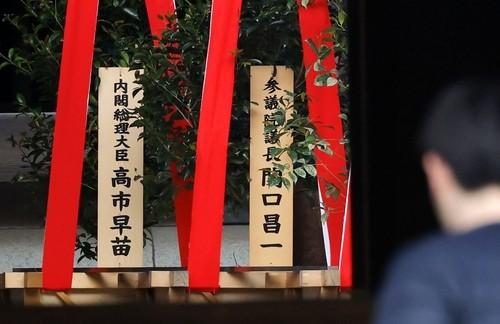
Offering at Yasukuni
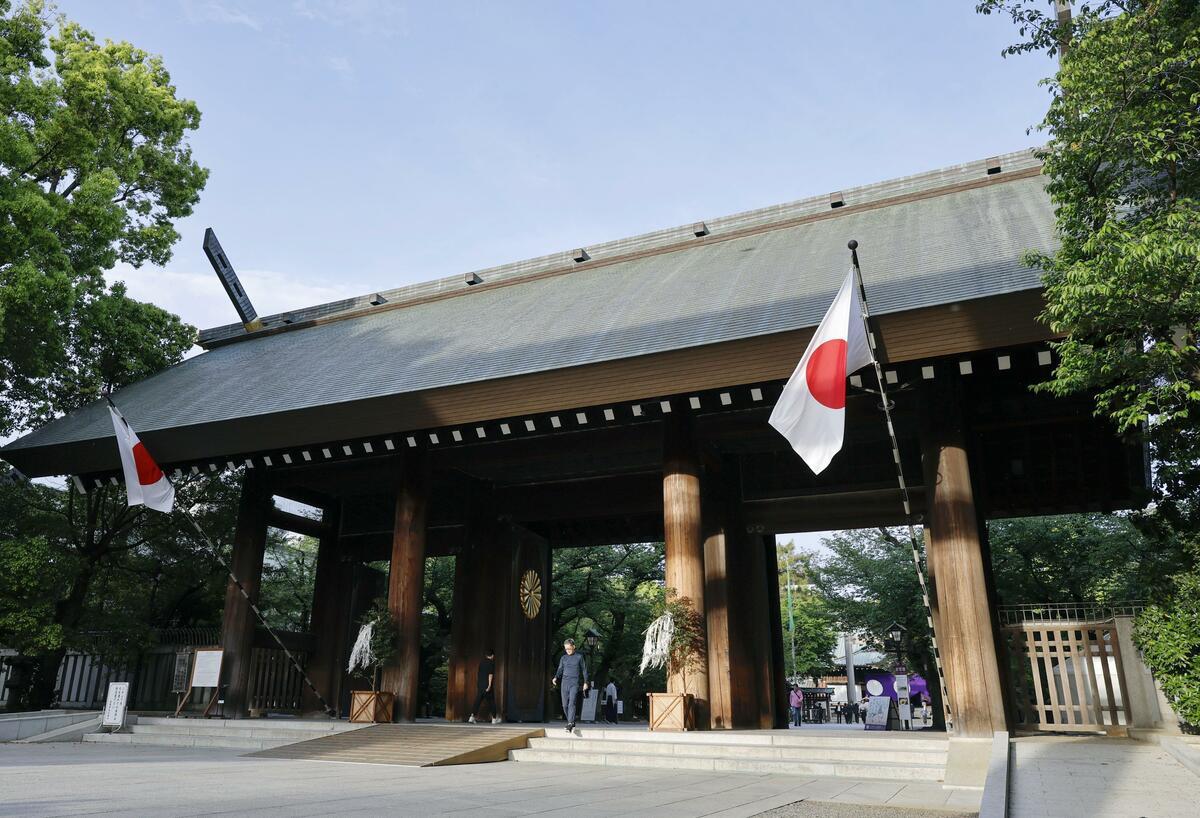
Japanese Prime Minister Sanae Takaichi sent a ritual offering to the Yasukuni Shrine in Tokyo as the shrine began its spring festival, a move that drew anger and alarm in China and regret in South Korea. Global Times said Takaichi sent a ritual tree called "masakaki" in the name of "Prime Minister Sanae Takaichi" in conjunction with the start of the spring festival at Yasukuni Shrine in Kudankita, Tokyo, citing Kyodo News. Kyodo News’ Japan Wire reported that Takaichi sent a "masakaki" evergreen twigs offering to the shrine for the biannual event under her name as prime minister, following the practice of her predecessors in recent years.
“Takaichi sent the offering to the Yasukuni Shrine honoring Japanese war dead, including 14 Class A criminals convicted by the Allies in international tribunals for their roles in World War II, on the occasion of the annual spring festival.”
Multiple outlets described the offering as occurring on the first day of a three-day ceremony, with Kyodo News saying the shrine started its three-day spring festival and Jiji Press reporting the festival began the same day. The Korea Times said Takaichi sent a "masakaki" tree offering while refraining from visiting it, and it noted that a Japanese prime minister has not visited the shrine since 2013.

The dispute centers on what the shrine represents to neighbors: Global Times described it as a symbol of Japanese militarism and wartime aggression, while CGTN said it honors Japan's war dead, including 14 Class-A WWII war criminals. In South Korea, Yonhap reported that Takaichi’s offering to the Yasukuni Shrine honoring Japanese war dead—including 14 Class A criminals convicted by the Allies in international tribunals—was made on the occasion of the annual spring festival.
Timeline and precedent
The offering was framed by Japanese and Chinese reporting as part of a pattern tied to the shrine’s festival calendar and to Takaichi’s own prior behavior before taking office. Global Times said Kyodo News reported that the move was "the first regular festival since the launch of the Takaichi cabinet in October last year," and it added that "Previous prime ministers have also offered "masakaki" at the regular festival, and her response "follows that precedent."" Kyodo News’ Japan Wire similarly said Takaichi regularly visited the shrine before taking office last October, but it reported she is unlikely to do so during the festival this time, citing a source close to her.
Jiji Press said Takaichi plans to skip a visit to the Shinto shrine during the three-day festival through Thursday, and it described the offering as made in her capacity as prime minister. The Korea Times reported that Takaichi sent the offering while refraining from visiting it, and it said the shrine is dedicated to 2.5 million war dead, mostly Japanese, who have perished in conflicts since the late 19th century.

Yonhap added that Takaichi’s offering was her first offering to the shrine since taking office in October, and it said her key Cabinet members and other lawmakers either visited or planned to visit the shrine in person. Global Times also tied the decision to the festival period running through Wednesday, saying Kyodo News cited people familiar with the matter as saying Takaichi "is expected to forgo visiting the shrine during the festival period, which runs through Wednesday."
Chinese anger and official line
Chinese coverage emphasized public reaction on social media and reiterated the Chinese Foreign Ministry’s stance on the shrine.
Global Times said related topics drew widespread attention on Chinese social media, with more than 11 million views as of press time on Tuesday morning, and it reported that the hashtag "Takaichi sent a ritual offering to Yasukuni" was among the most-viewed topics on Sina Weibo, with more than 11 million views.
It quoted netizen "GeeLaowang" saying, "truly disgusting! Sanae Takaichi has once again paid tribute to war criminals by sending an offering, showing that the specter of militarism is still haunting Japan. History must never be falsified or whitewashed."
Global Times also quoted netizen "Mianlingye" saying, "making an offering in the name of the prime minister to Yasukuni Shrine, which honors war criminals, disregards Japan's historical culpability and amounts to a blatant attempt to revive the spirit of militarism — a move that will be rejected and condemned by people across Asia."
At a press conference on Monday, Global Times reported that Chinese Foreign Ministry spokesperson Guo Jiakun pointed to Japan’s alleged efforts to gloss over and whitewash crimes and to push for accelerated remilitarization, saying the international community needs to be on high alert.
Guo’s statement was quoted directly: "Preventing the resurrection of militarism is Japan's due obligation and the strong will of the international community, including China. We urge the Japanese side to learn lessons from history, fulfill its international obligations and stick to the path of peaceful development," according to Global Times.
The same article said Yasukuni Shrine enshrines Japan's Class-A war criminals and is located in central Tokyo's Chiyoda Ward, and it described any visit or offering by a Japanese politician as a reflection of political stance.
South Korea’s regret and demands
South Korea’s response focused on disappointment and regret, and it urged Japan to face history and demonstrate remorse through actions. Chinadailyhk reported that Seoul expressed regret over Japanese Prime Minister Sanae Takaichi's ritual offering to the war-linked Yasukuni Shrine, and it said South Korea’s foreign ministry expressed "deep disappointment and regret" that Japan's responsible leaders "once again sent offerings to and paid respects at the Yasukuni Shrine, which glorifies Japan's war of aggression and enshrines war criminals." The same statement urged Japanese leaders to "squarely face history and demonstrate through action their humble reflection and sincere remorse for Japan's imperial past," and it stressed that those steps would be an important foundation for future-oriented development of South Korea-Japan relations based on mutual trust.
Yonhap similarly said South Korea expressed deep regret Tuesday after Takaichi sent the offering, and it quoted foreign ministry spokesperson Park Il saying, "We express deep disappointment and regret that responsible leaders in Japan have repeatedly made offerings to or visited the Yasukuni Shrine." Yonhap also quoted Park Il urging the Japanese leadership to "squarely face history and show through action humble reflection and genuine atonement for historical issues," and it reiterated that this would be a foundation for building future-oriented bilateral relations based on mutual trust.
Both South Korean outlets linked the offering to criticism from neighboring countries, and Yonhap explicitly said sending an offering or visiting the shrine has drawn criticism from neighboring countries, including China. Yonhap provided additional historical context, saying Japan invaded China during World War II and Korea was under Japan's colonial rule from 1910-45.
Diplomatic friction and framing
While the core event was consistent across outlets, the framing diverged between Chinese state-linked coverage, South Korean diplomatic statements, and Japanese reporting about what the offering meant for government policy. Global Times described the offering as drawing "anger and alarm" from Chinese netizens and said it was "seen as intended to avoid turning the matter into a diplomatic issue," citing Kyodo News, while also asserting that a visit would be certain to provoke backlash from China and South Korea. It also emphasized the shrine’s status as honoring 14 convicted Class-A Japanese war criminals and said it is a long source of diplomatic friction, citing Xinhua News Agency.
“We urge the Japanese leadership to squarely face history and show through action humble reflection and genuine atonement for historical issues.”
By contrast, Yonhap and chinadailyhk treated the offering as a diplomatic problem requiring Japan to demonstrate remorse, with Yonhap quoting Park Il and chinadailyhk quoting the foreign ministry’s call for "humble reflection and sincere remorse" for Japan's imperial past. Japanese reporting from Kyodo News’ Japan Wire focused on the mechanics and official posture, saying Chief Cabinet Secretary Minoru Kihara told a news conference that Takaichi made the offering in a "private capacity" and that it was therefore not a matter for the government to comment on.
The Japan Wire also connected the shrine issue to broader tensions, saying worsened ties with China following Takaichi’s November remarks on how Japan might respond to a Taiwan emergency show little sign of improvement, and it quoted that a Taiwan emergency could be a "survival-threatening situation" for Japan. Across the accounts, the same central facts—Takaichi’s "masakaki" offering, the shrine’s 14 Class-A war criminals, and the three-day spring festival—were used to support different political interpretations about militarism, responsibility, and future relations.