Saudi Ambassador Walid Bukhari Says Adherence to 1989 Taif Agreement Is Backbone of Lebanon Settlement
Key Takeaways
- Adherence to the 1989 Taif Agreement is the main entry point for Lebanon settlement.
- Stresses civil peace and prioritizes wisdom and reason to stabilize Lebanon.
- Meets Grand Mufti Derian, Ali al-Khatib, and Druze leaders to discuss stability.
Taif as the settlement gateway
Saudi Ambassador to Lebanon Walid Bukhari has repeatedly framed any settlement in Lebanon around adherence to the 1989 Taif Agreement, pairing that position with calls to reinforce civil peace and prioritize “wisdom and reason.”
“Subscribe to our newsletter to receive the most important and top news of the day”
In Beirut, Bukhari told visitors that “Adherence to the 1989 Taif Agreement is the backbone of any settlement in Lebanon,” adding that the approach must also “reinforce civil peace and prioritize wisdom and reason.”

L’Orient-Le Jour reported that during a Tuesday meeting with the vice president of the Shiite Higher Council (CSC) Ali Khatib and the mufti of the Republic Abdellatif Deriane, Bukhari stressed “the need to consolidate civil peace in Lebanon.”
In the same reporting, he said “the return to the Taif Agreement constitutes the essential starting point for agreeing on general principles and ensuring that no Lebanese component is harmed and that no party is excluded.”
Arab News likewise described Bukhari’s message as a commitment to Lebanon’s unity in facing “current challenges,” with the Kingdom “pursuing diplomatic efforts to help Lebanon through its crisis.”
Across the accounts, the Taif framework is presented not only as a political reference point but also as a practical mechanism for restoring state authority, including “restricting weapons to the Lebanese army” and “adhering to the Taif accord while strengthening national unity.”
Meetings with religious leaders
Bukhari’s push for Taif and civil peace has been delivered through a sequence of meetings with Lebanon’s senior religious figures, with each stop reinforcing the same themes of unity, state authority, and a shared national path.
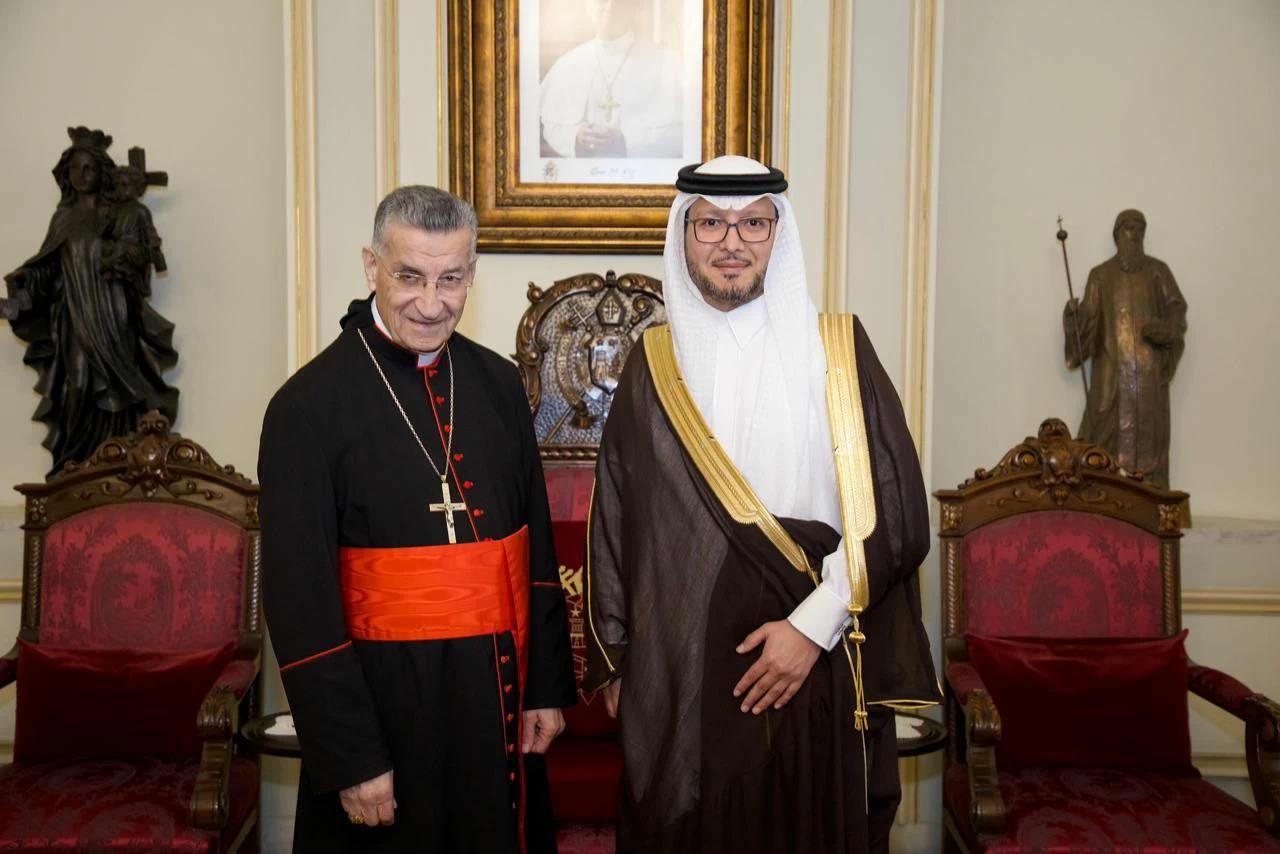
Asharq Al-Awsat described a meeting between Maronite Patriarch Beshara Boutros al-Rahi and Saudi Ambassador to Lebanon Walid Bukhari in Bkerke, where the talks underscored “ways to strengthen stability in Lebanon and support the path of the state and its institutions.”

In that account, Bukhari conveyed greetings from Saudi leadership and praised the patriarch’s “national and spiritual role,” while stressing that “building people comes before building infrastructure, and that fostering loyalty to the nation remains the fundamental pillar of any future recovery.”
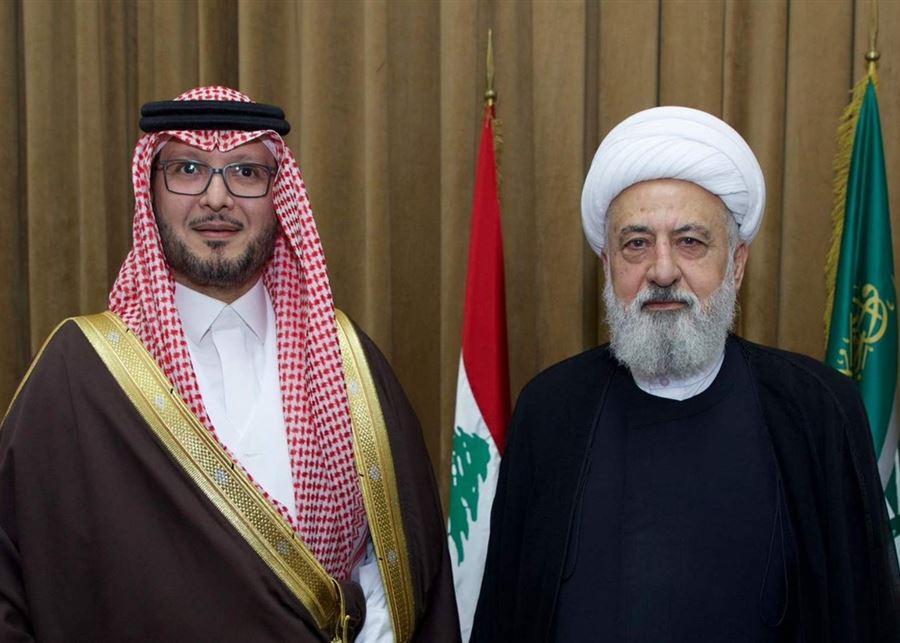
Arab News reported that Bukhari visited Grand Mufti Sheikh Abdul Latif Derian and Deputy Head of the Higher Islamic Shiite Council Sheikh Ali Al-Khatib, and also met Druze spiritual leader Sheikh Sami Abi Al-Muna.
During his meeting with Derian, Bukhari emphasized Saudi Arabia’s “commitment to Lebanon’s unity” and said the Kingdom “stood by the Lebanese state and its institutions in support of solutions that promote security, stability and prosperity.”
L’Orient-Le Jour described Bukhari’s Tuesday meetings as taking place “at Dar el-Fatwa” and “at Sheikh Ali Khatib’s, in Hazmieh,” with the ambassador calling for a common path among Lebanon’s top political leadership.
Voices: unity, state rebuilding, and weapons
The meetings also produced explicit statements from Lebanese religious leaders that link civil peace to rebuilding the state, restoring authority across territory, and confining weapons to the Lebanese army.
“A meeting between Maronite Patriarch Beshara Boutros al-Rahi and Saudi Ambassador to Lebanon Walid Bukhari in Bkerke underscored the priority of consolidating stability in Lebanon by supporting the state and its institutions and fostering a climate of national unity”
Arab News quoted Grand Mufti Sheikh Abdul Latif Derian praising Saudi Arabia’s role and saying “Rebuilding the state is the only path to saving Lebanon by restoring its authority across all its territory, confining weapons to the Lebanese army and adhering to the Taif accord while strengthening national unity.”
In the same account, Derian welcomed diplomatic efforts by President Joseph Aoun and Prime Minister Nawaf Salam, with the support of Arab and international partners, to “halt the war in Lebanon and reach a settlement that ensures stability.”
L’Orient-Le Jour reported that Mufti Deriane expressed “deep gratitude for the role that Saudi Arabia plays in the region, more particularly in Lebanon, by supporting and contributing to preserving the stability, security and unity of the country,” and he added that “the reconstruction of the state is the only way to save Lebanon.”
That outlet further quoted Deriane saying the state must be rebuilt by “restore its prestige, extend its authority over the entire territory, monopolize arms in the hands of the Lebanese army, respect the Taif Agreement and strengthen the unity of the Lebanese.”
At Sheikh Ali Khatib’s, L’Orient-Le Jour said Bukhari was “optimistic about the future,” while also underscoring the need to consolidate civil peace and to ensure that “no Lebanese component is harmed.”
Coverage divergence on emphasis and framing
While the core message across outlets centers on Taif and civil peace, the reporting differs in what it foregrounds—some accounts emphasize the ambassador’s philosophical framing, others emphasize institutional coordination and negotiation mechanics, and still others focus on the diplomatic context around Lebanon’s leadership.
Asharq Al-Awsat highlighted the Bkerke meeting as a consolidation of stability through supporting “the path of the state and its institutions,” and it included Bukhari’s line that “building people comes before building infrastructure.”
By contrast, Arab News and Al-Sharq Al-Awsat both foregrounded the Taif Agreement as “the backbone” or “the primary gateway” to settlement, with Arab News explicitly stating “Adherence to the 1989 Taif Agreement is the backbone of any settlement in Lebanon.”
L’Orient-Le Jour, however, added a detailed description of what it said Saudi Arabia had “laid out” as “fundamentals” for direct negotiations, including “the full preservation of the Taif Agreement,” “the maintenance of the government,” and “the consolidation of the understanding among the three presidents.”
That same L’Orient-Le Jour report also tied the diplomatic effort to a negotiation timeline, stating that “Lebanon held two direct preparatory meetings with Israel ahead of the direct negotiations planned under Washington's aegis,” and that those meetings “allowed extending the ceasefire with Israel by three weeks.”
Other outlets, such as Al-Rai, framed the ambassador’s message as a “notable development in Beirut” and focused on the ambassador’s rhetorical question about wisdom, saying he asked Lebanon, “whether wisdom has a deadline,” and then stressed “the importance of prioritizing wisdom and reason.”
Stakes: negotiations, ceasefire, and leadership coordination
The stakes described in the coverage revolve around halting the war in Lebanon, preserving civil peace, and coordinating among Lebanon’s top political figures to shape a settlement framework tied to Taif.
“Politics - Lebanon Boukhari calls for respecting the Taif Agreement and for preserving civil peace Riyadh 'maintains constant coordination and cooperation with the Lebanese state,' said the Saudi ambassador during a tour of senior Shiite and Sunni religious authorities”
Arab News reported that Derian welcomed diplomatic efforts by President Joseph Aoun and Prime Minister Nawaf Salam, with support from Arab and international partners, to “halt the war in Lebanon and reach a settlement that ensures stability.”

L’Orient-Le Jour said Bukhari called on President Joseph Aoun, Prime Minister Nawaf Salam and Speaker of Parliament Nabih Berri to “agree on a common path to preserve civil peace,” while expressing confidence “in the wisdom and experience” of Berri.
The same outlet described a negotiation process under Washington’s aegis, stating that “Lebanon held two direct preparatory meetings with Israel ahead of the direct negotiations planned under Washington's aegis,” and that those meetings “allowed extending the ceasefire with Israel by three weeks, after more than a month and a half of conflict with Hezbollah.”
In addition, L’Orient-Le Jour reported that Saudi Arabia had entered “the Lebanese scene with full weight in the run-up to direct negotiations between Lebanon and Israel,” and it listed priorities including “priority should be given to protecting Lebanon as an entity (society and demographics) within the framework of the negotiations” and “implementation of government decisions regarding the state's monopoly on weapons.”
Separately, Elaph introduced a potential shift in Saudi representation, saying Lebanese newspapers reported that the Lebanese Foreign Ministry had received “the accreditation papers for the new ambassador,” believed to be Fahd Al-Dosari, while also emphasizing that “to date there has been no announcement” confirming the appointment.
More on Lebanon

Hezbollah Fibre-Optic Drones Threaten Israeli Helicopter and Kill Idan Fooks in Taybeh
11 sources compared
Trump Tells Netanyahu to Limit Lebanon Strikes to “Surgical” Operations
16 sources compared
Israeli Attacks Kill At Least 28 People In Southern Lebanon Despite U.S.-Mediated Ceasefire
39 sources compared

US Embassy Urges Joseph Aoun To Meet Benjamin Netanyahu During Lebanon Ceasefire
13 sources compared