Asia11 June, 20262 min read
Saudi Arabia Documents 1,774 Archaeological Finds in Al Mahd, Including Umar ibn al-Khattab Inscriptions
This article is an automated aggregation of coverage from news outlets. Our editorials offer in-depth analysis curated by the NewsCord team.
Saudi Heritage Authority records 1,774 finds in Al Mahd during second survey season. A rock inscription bearing Umar ibn al-Khattab's name is among the discoveries.
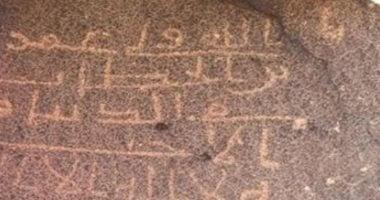
Saudi survey finds Umar inscription
Saudi Arabia’s Heritage Commission documented 1,774 archaeological finds in Al Mahd Governorate, including inscriptions bearing the name of Umar ibn al-Khattab, as part of the second season of survey work across Al Suwayriqiyah, Al Muwayhiyah, and Hadhah. The surveying recorded 156 new archaeological sites, including 461 Islamic inscriptions, 34 Thamudic inscriptions, and 1,259 rock art panels, alongside 11 stone structures, three historical palaces, two caravan routes, and four wells.
Arkeonews said the rock inscriptions bearing Umar ibn al-Khattab’s name are among the most significant discoveries of the season, and it described their presence as giving the survey “particular historical weight.” Masrawy similarly framed the discovery as an archaeological discovery related to Umar ibn al-Khattab, saying the second season yielded 1,774 archaeological discoveries distributed across the Suwayriyah, Al-Muwa’iyah, and Hadah regions.

Numbers and inscription details
Masrawy said the surveying work led by the Authority for Heritage documented 156 newly recorded archaeological sites, including 461 Islamic inscriptions and 34 Thamudic inscriptions, plus 1,259 rock drawings.
The Nation of Saudi Arabia’s Heritage Authority also highlighted Arabic poetry carved on rocks, with Al-Jazeera Net quoting the inscription phrase: 'Allah is the Guardian of Umar ibn al-Khattab in this world and in the Hereafter.'

Al-Jazeera Net added that the World Union of Muslim Scholars responded on its X account with an extended text reading: 'Allah is the Guardian of Umar ibn al-Khattab in this world and the Hereafter, and there is no god but God. Muhammad is the Messenger of God.'
In Arkeonews’ account, the documentation included “Islamic inscriptions, Thamudic inscriptions, rock art panels, stone structures, historical palaces, wells, and two caravan routes,” tying the Umar-related inscriptions to a broader landscape of routes and water points.
Scholars weigh script and meaning
Al-Jazeera Net reported that Dr. Mohammed al-Douri, a specialist in Qur'anic script, commented on the inscription and said he studied the nature of the Hijazi script evident in the writing.
The same article quoted al-Douri concluding that the orthographic features support attributing it to the time Umar ibn al-Khattab lived, and it described a writing style that “leaves part of the word at the end of the line and writes it at the beginning of the following line.”
Arkeonews said the Heritage Commission’s survey work forms part of its continuing national program to identify, document, and protect archaeological sites across Saudi Arabia, and it linked the work to Saudi Vision 2030’s cultural heritage objectives.
In Les Podcasts de l'Institut, Frédéric Imbert was described as a linguistics and epigraphy specialist who has been interested in Islamic epigraphy since the mid-1980s, and the piece said his research led to “the graffiti of the dawn of Islam in Saudi Arabia.”