Yemen27 December, 20252 min read
Saudi-Led Coalition Threatens Military Intervention Against Yemen Separatists
This article is an automated aggregation of coverage from news outlets. Our editorials offer in-depth analysis curated by the NewsCord team.
Saudi-led coalition warned it will back Yemen's government against STC military moves. Saudi warplanes reportedly struck STC positions in Hadramawt province.
15 outlets told this the same way.
Escalation in southern Yemen
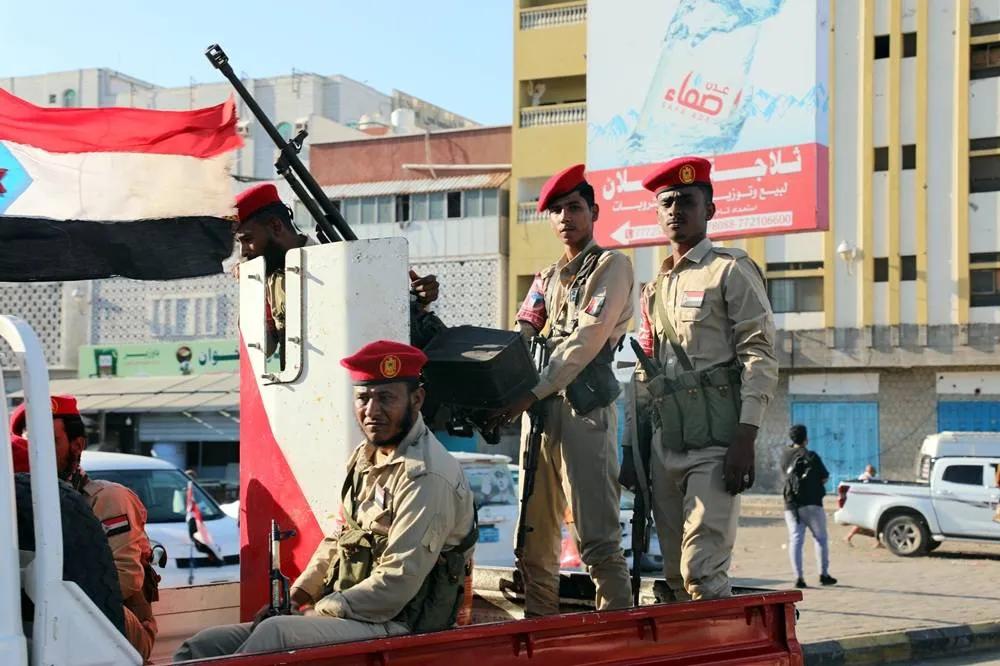
Saudi Arabia's coalition warned it will use military force to back Yemen's internationally recognised government after the UAE-backed Southern Transitional Council (STC) seized large areas of Hadramawt and al-Mahra.
“Saudi Arabia‑led coalition warned it will support Yemen’s internationally recognised government in any military confrontation with UAE‑backed separatists after the Southern Transitional Council (STC) seized large areas of Hadramawt and Mahrah.”
The seizure signalled a sharp escalation in intra-anti-Houthi fighting.

Multiple outlets reported Riyadh issued warnings through senior officials, including Defence Minister Khalid bin Salman and coalition spokesman Gen. Turki al-Malki.
Riyadh said it would intervene if de-escalation efforts fail.
Yemen's government formally asked the coalition to "take all necessary military measures" to protect civilians and support its forces.
The STC says it remains undeterred after recent gains, even as regional actors call for calm.
Saudi-backed deployments near Yemen
Reports indicate a heavy Saudi-backed force posture on the ground and in the air. Several outlets say roughly 15,000 Saudi-backed Yemeni fighters have massed near the Saudi border on the edges of STC-seized territory.
Footage and local accounts circulated showing smoke after reported Saudi airstrikes on STC positions, though casualty figures remain unclear in available reporting. Saudi officials publicly urged the STC to 'peacefully hand over' the governorates, and the coalition warned it would intervene if diplomatic de-escalation failed.

Gulf partners' Yemen crisis
The crisis has strained relationships between Gulf partners, with reporting identifying a fault line between Saudi Arabia and the UAE, which backs the STC, even as both capitals publicly seek unity. Some outlets say the UAE publicly welcomed Saudi security measures, while others emphasise that the STC's advance has embarrassed Riyadh and could deepen rivalry. International actors have urged de-escalation, but the tone varies: The Guardian and others highlight international appeals for Yemeni unity and negotiations, while regional outlets focus on immediate security measures and posture.
“The UAE praised Saudi efforts but stopped short of demanding STC withdrawal; private talks on withdrawal preconditions are reported to be underway.”
Southern Yemen political tensions
The Southern Transitional Council's actions and southern politics complicate any straightforward resolution. The STC has continued to assert control, and supporters have held mass rallies demanding independence. At the same time, protests in Aden have put pressure on STC leadership.
Some analysts warn the STC may have crossed Saudi 'red lines' and that its advances could harden positions. Local reports claim strikes were retaliatory, and casualty figures are disputed or unverified.

International responses to Yemen
International responses are mixed, with several outlets reporting calls for restraint and diplomacy from the United States and other external actors. At least one mainstream report says European states and Gulf neighbours are urging Yemeni unity and negotiations.
“U.S. Secretary of State Marco Rubio urged restraint and continued diplomacy as fighting escalated in Yemen.”
Some regional reporting includes unverified or out-of-place claims, for example Naharnet's snippet that attributes disputed comments to a Western leader. These differences underscore divergent priorities — diplomacy and unity in Western mainstream coverage versus immediate security and coalition backing in regional outlets.