Full Analysis Summary
Saudi strikes on STC
Saudi-led warplanes struck positions held by the UAE-backed Southern Transitional Council (STC) in Hadramout province.
STC officials reported that the strikes hit camps including Al-Khasah and killed seven people while wounding more than 20.
The operation followed a broader STC advance into Hadramout and neighboring Al Mahra that had alarmed Riyadh and prompted a government operation to retake seized sites.
Coverage Differences
Framing of trigger
Sources differ on what they emphasize as the immediate trigger for the strikes: The Guardian (Western Mainstream) highlights an alleged Emirati weapons shipment and the UAE’s announcement it would pull remaining troops; AP News (Western Mainstream) stresses the STC advance and the Saudi-backed operation to retake camps; SOFX (Other) highlights the broader escalation and lists specific targets hit in Hadramout. Each source reports claims from local actors but frames the proximate cause differently.
Casualty reporting and confirmation
Several outlets report the STC’s casualty figures but note limits to independent verification: India Today and France 24 repeat STC casualty claims, while AP explicitly says some claims could not be independently verified. That leads to variation in how definitive each source appears.
STC offensive and response
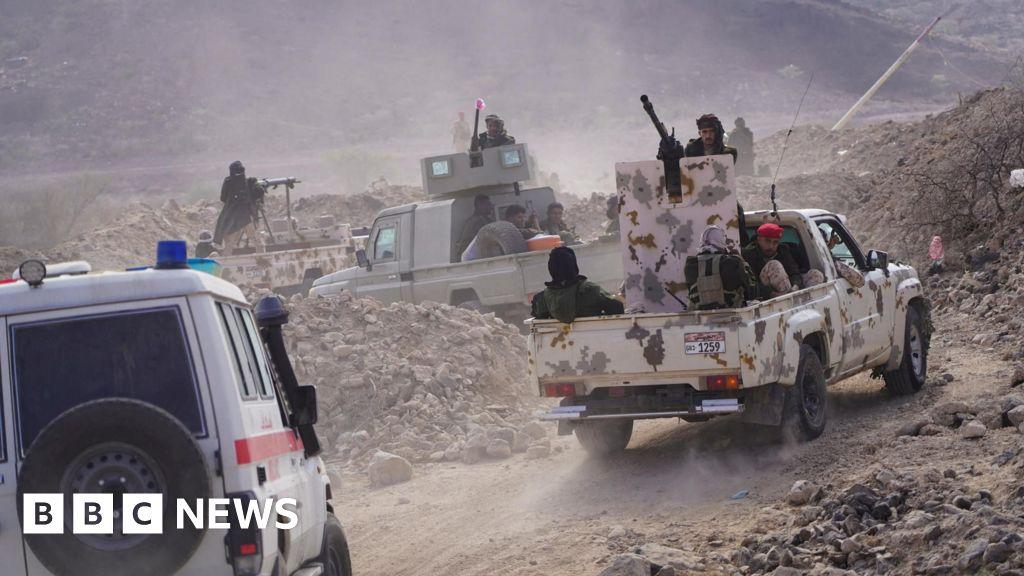
The strikes follow a recent STC offensive that seized large parts of southern Yemen.
That offensive included Hadramout and Al Mahra and prompted a Saudi-backed response described by Riyadh and its local allies as a campaign to retake military sites and remove weapons.
Saudi-appointed Hadramout governor Salem al-Khanbashi announced a 'peaceful' operation to reclaim positions and was named to lead new National Shield/Homeland Shield forces.
Pro-government units advanced on camps the STC had taken.
Coverage Differences
Description of government operation
AP News (Western Mainstream) and France 24 (Western Mainstream) both report the governor’s described operation and naming to lead National Shield forces, framing it as a government attempt to retake sites; TRT World (West Asian) and SOFX emphasize clashes and ambush claims from STC and government sides, showing a more conflict-centric narrative. The Guardian notes that the STC’s advance “has weakened fragile peace talks with the Houthis,” adding political consequences to the military framing.
Tone on STC actions
Sources differ in language describing the STC: News18 and SOFX stress the STC’s seizure of territory and push toward the Saudi border, while TRT and AP report allegations of ambushes and use of Islamist militias — the latter including an AP note that such accusations were unverified.
Casualty report discrepancies
Casualty figures and details about the strikes vary across reports.
STC and local separatist sources repeatedly cited seven dead and dozens wounded at the Al-Khasah camp.
Multiple outlets note that independent verification is limited; AP explicitly says some claims could not be independently verified, while other outlets repeat the STC figures as reported.
Coverage Differences
Casualty verification
AP News (Western Mainstream) stresses lack of independent verification of STC claims; India Today and Azerbaycan24 (Asian and Asian) repeat the STC casualty numbers more directly; Macau Business (Other) also reports the seven deaths, showing how regional and smaller outlets often reiterate local figures without the same verification caveats found in larger Western outlets.
Specifics of targets hit
SOFX and France 24 list specific camps and bases hit (e.g., 37th Brigade camp, First Military Region HQ, Sayun airport), whereas some reports focus more narrowly on Al‑Khasah; that produces variation in how extensive the strike picture appears across sources.
UAE withdrawal from Yemen
Abu Dhabi announced an end to its counter-terrorism mission in Yemen.
The UAE framed the move as a voluntary withdrawal after a review cited new risks to the safety and effectiveness of its forces.
Saudi and government-aligned sources say the pullback occurred amid pressure and diplomatic rifts following the strikes and allegations about weapons shipments.
Coverage Differences
Cause of UAE withdrawal
The Diplomatic Insight (Other) publishes the UAE’s defense ministry statement framing the end of the mission as a voluntary, safety‑driven decision, while The Guardian and France 24 (Western Mainstream) link the move directly to Saudi pressure and the Mukalla strike; AP and SOFX report on suspended flights and the diplomatic fallout, showing different emphases on voluntariness vs. coercion.
Diplomatic fallout reporting
AP News cites a transport ministry source saying flights to/from the UAE were suspended until Saudi Arabia reversed reported measures; other outlets emphasize the broader rift between Riyadh and Abu Dhabi and the strategic implications of the withdrawal.
Regional fallout in southern Yemen
Analysts and regional reports warn the escalation deepens a Saudi–UAE rift and undermines the anti‑Houthi coalition.
Outlets note the STC's advance risks reviving calls for southern independence.
The split weakens coordination against the Iran-aligned Houthis.
Commentators see broader strategic implications for control of southern ports and oil-rich provinces.
Coverage Differences
Emphasis on political vs. military consequences
The Guardian (Western Mainstream) emphasizes political fallout — saying the STC advance “risks reviving calls for South Yemeni independence and has weakened fragile peace talks with the Houthis”; TRT World (West Asian) stresses that the rift exposes and weakens the anti‑Houthi coalition; The Diplomatic Insight points to broader diplomatic discussions involving the US and Saudi officials, a more diplomatic/security‑focused angle.
Regional/security implications highlighted
SOFX and France 24 underscore strategic implications tied to control of coastline and oil‑rich provinces and note how the Saudi‑UAE rivalry changes calculations; News18 and Azerbaycan24 recount how the clashes followed STC seizures and describe the fatalities, linking local fighting to bigger geopolitical trends.