Other18 February, 20262 min read
Scientists Capture First-Ever Footage of Sleeper Shark Swimming in Antarctica's Near-Freezing Deep Waters
This article is an automated aggregation of coverage from news outlets. Our editorials offer in-depth analysis curated by the NewsCord team.
First recorded video shows a sleeper shark swimming in Antarctica's near-freezing deep ocean. Shark estimated about 3 to 4 meters (10–13 feet) long.
6 outlets told this the same way.
Outlets did split on Lebanon Returns 37 Smuggled Artefacts to Egypt After 2020 Port Seizure →
Antarctic sleeper shark footage
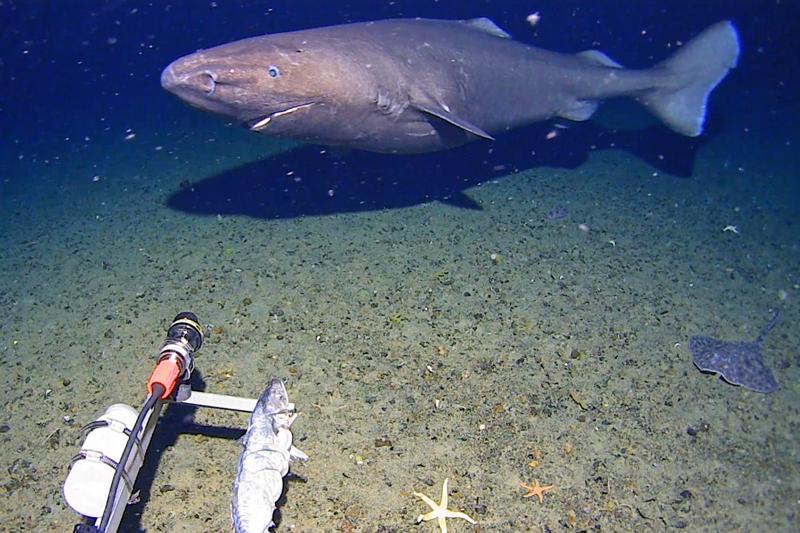
Scientists from the Minderoo–UWA Deep‑Sea Research Centre captured what researchers say is the first-ever footage of a sleeper shark in Antarctic waters in January 2025. The footage was recorded off the South Shetland Islands near the Antarctic Peninsula. Researchers estimated the shark at about 3–4 meters (10–13 feet) long.
“Scientists captured the first-ever footage of a shark in the Antarctic (Southern) Ocean in January 2025, recorded by a camera from the Minderoo‑UWA Deep‑Sea Research Centre off the South Shetland Islands near the Antarctic Peninsula.”
It was observed moving slowly above the seabed at roughly 490 meters depth where the water temperature was about 1.27°C. The discovery was announced by researchers including centre director Alan Jamieson and was described in short-form coverage that called attention to the animal’s size.
Sleeper shark sighting
Researchers identified the animal as a sleeper shark and placed its size in the 3–4 m (10–13 ft) range based on the footage. United News of Bangladesh and Latest news from Azerbaijan both cite those measurements and the 490 m filming depth. Scientists involved note that sharks had long been assumed absent south of the 60° latitude line.
Experts not involved in the study also found no prior records this far south. The footage was recorded by an unmanned camera maintained by the Minderoo–UWA centre. Alan Jamieson is named in coverage as a lead researcher announcing the sighting.
Antarctic sleeper shark discovery
United News of Bangladesh and Latest news from Azerbaijan report researchers suspect the shark occupied ~500 m because it was the warmest layer within a strongly stratified water column. Those outlets also report researchers suspect a sparse, hard-to-detect population may be feeding on whale carcasses, squid and other sinking prey.
“The shark likely occupied the ~500 m depth because it was the warmest layer within a strongly stratified water column, and scientists suspect a sparse, hard‑to‑detect population feeding on whale carcasses, squid and other sinking prey.”
Coverage from Fine Day stresses the surprise and suggests the discovery challenges assumptions about survivability in near-freezing depths. A short Associated Press excerpt centers on the animal’s bulk.
Sightings and observation limits
The recordings were made by deployed research cameras that typically operate in the austral summer. Reporters caution that limited year‑round observation and the remoteness of the area make it difficult to know whether the sighting reflects a persistent population or an intermittent visitor.
United News of Bangladesh and Latest news from Azerbaijan both note these observational limits and call out the possibility that limited camera coverage has left southern distributions under-sampled. Fine Day’s report highlights the depth and darkness where the animal was filmed, while the Associated Press snippet provided a brief descriptive take without methodological detail.
Shark sighting coverage
Scientists and reporters link the sighting to open questions about distribution and climate. United News of Bangladesh and Latest news from Azerbaijan note that potential range changes from warming waters or climate change could alter shark distributions, but sparse data make trends hard to assess. Fine Day frames the finding as overturning assumptions about survivability.
“Climate change could also shift shark distributions, but sparse data from the region make trends hard to assess.”
Each outlet’s tone shifts what the discovery implies, ranging from careful calls for more study to headlines emphasising surprise and overturning previous beliefs. All sources underline that current knowledge remains limited.