Technology and Science06 March, 20261 min read
Scientists Create Half‑Möbius Carbon Molecule, Verify Structure Using IBM Quantum Computer
This article is an automated aggregation of coverage from news outlets. Our editorials offer in-depth analysis curated by the NewsCord team.
Scientists synthesized a carbon-based molecule exhibiting a half‑Möbius electronic topology. Researchers assembled the molecule atom-by-atom at IBM using a custom precursor.
Discovery and novelty
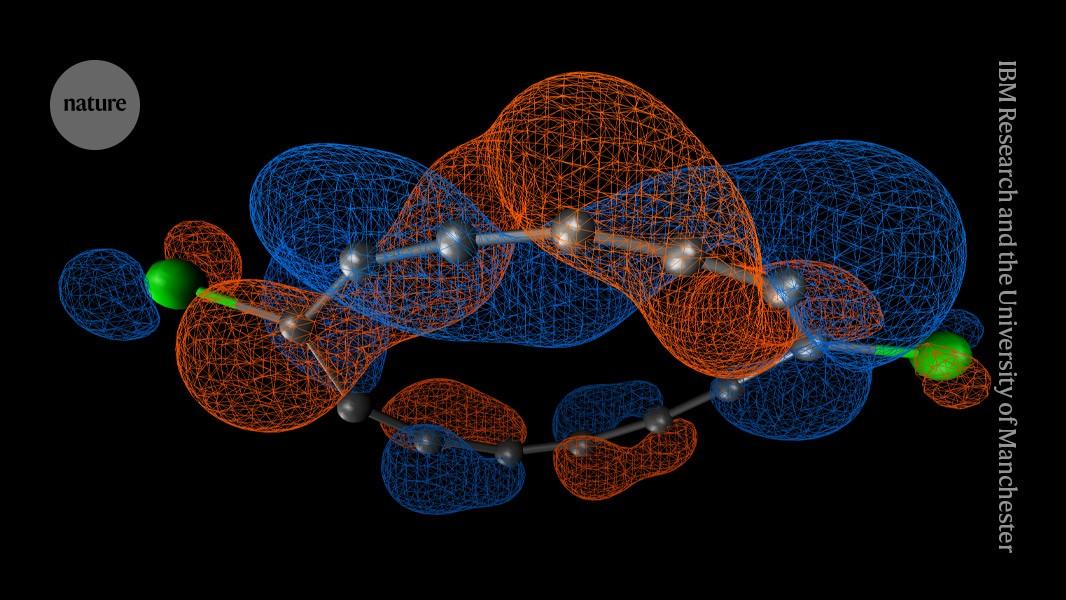
An international team of scientists reported the synthesis and experimental characterization of a previously unknown carbon-based molecule, C₁₃Cl₂, that displays a novel “half‑Möbius” electronic topology.
“Published today in Science, it is the first experimental observation of a half-Möbius electronic topology in a single molecule.”
Multiple outlets describe this as the first experimental observation of such a topology in a single molecule and highlight its uniqueness in scientific literature.
Synthesis method
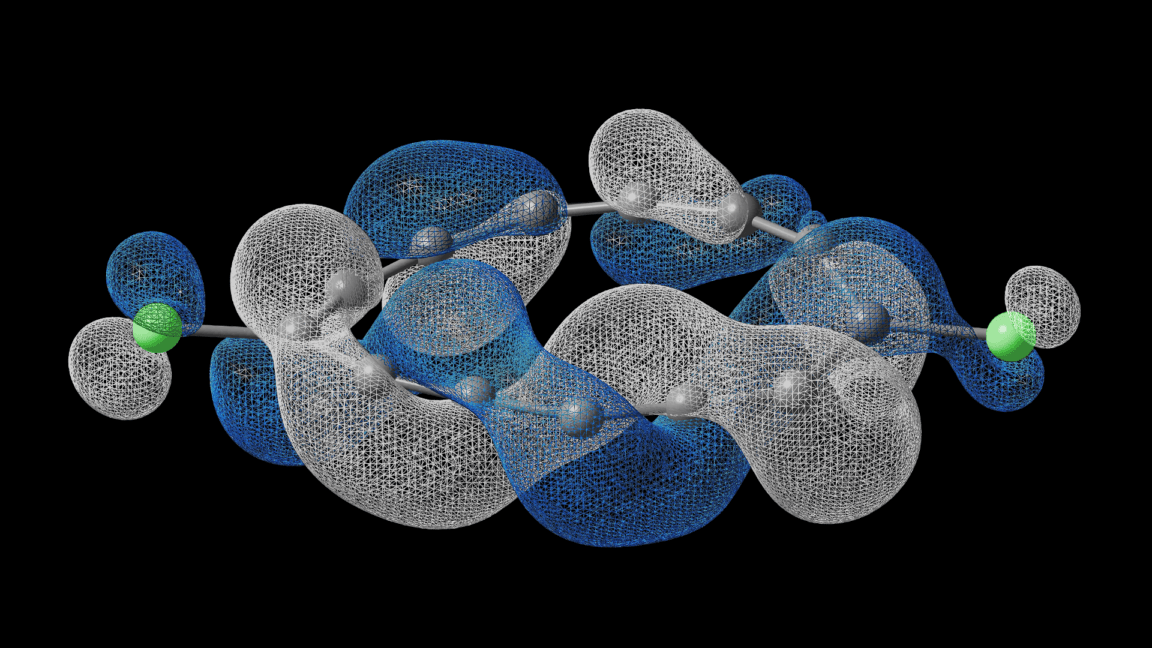
The molecule was made by sculpting a fully chlorinated 13‑carbon ring (C₁₃Cl₁₀) down to C₁₃Cl₂ using a scanning tunnelling microscope (STM) at IBM Research Europe in Zurich. Researchers removed chlorine atoms one by one until only two remained, producing a 13‑carbon loop with two chlorines on opposite sides. Multiple institutions collaborated on the synthesis and characterization.
Electronic topology
The molecule’s electronic topology is unusual: its electron orbitals are twisted through 90 degrees, producing a half‑Möbius arrangement.
“With the right combination of additional orbitals, it’s possible to twist things so that an electron starts out on top of the molecule (assuming the ring is laid flat on a surface) but ends up at the bottom by the time it completes a full circuit around the ring.”
That twist gives the system handedness (chirality) and makes electrons travel in a corkscrew‑like pattern rather than returning to their starting position after a single loop.
Quantum verification
Validating and modelling the molecule’s electronic configurations required a quantum simulation that the teams say could not be done with classical computers alone. Computing reports the researchers simulated the system "using 72 qubits" and a sample-based algorithm (SqDRIFT), while Mirage News reports the team "were able to explore 32 electrons" on IBM’s quantum computer. The sources use different technical framings (qubit count versus electrons explored), so the two figures should be seen as complementary metrics reported by different outlets rather than a single contradictory fact.
Implications
The team and commentators frame the result as a two‑fold advance: a demonstration that topology can be engineered to control electronic properties in chemistry, and a concrete example of a quantum simulation producing insights that classical computation could not.
“The discovery advances science on two fronts. For chemistry, it demonstrates that electronic topology - the property governing how electrons move through a molecule - can be deliberately engineered, not merely found in nature. For quantum computing, it is a concrete demonstration of a quantum simulation doing what it was designed to do: representing quantum mechanical behavior directly, at the molecular scale, to produce scientific insight that would otherwise have remained out of reach.”
IBM researchers described the work as a step toward the long‑standing goal of building computers that directly simulate quantum physics.
