Full Analysis Summary
SCO statement on Iran sanctions
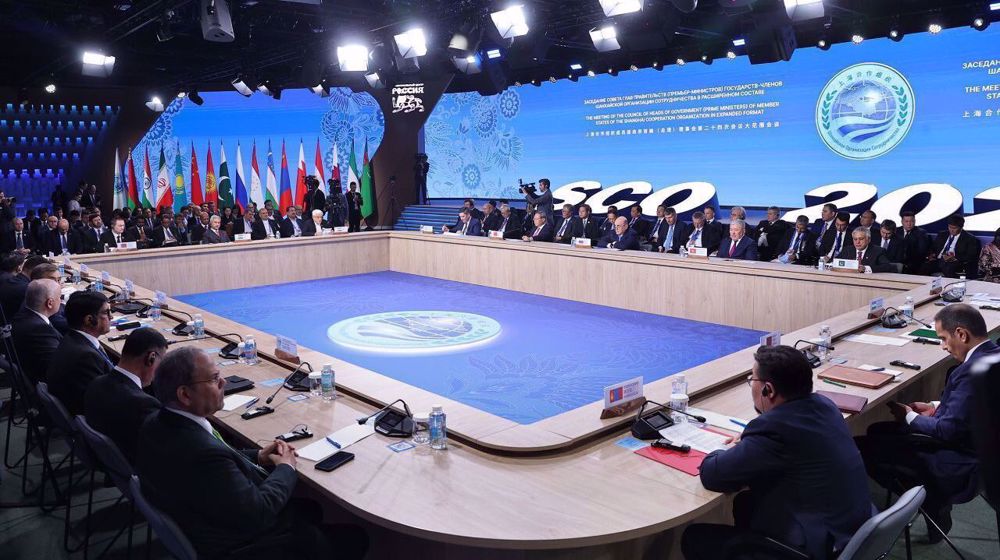
SCO prime ministers concluded their 24th meeting in Moscow with a joint communique sharply criticizing Western unilateral measures against Iran, framing those sanctions as violations of the UN Charter and international law that hinder global cooperation and the UN Sustainable Development Goals.
The statement also emphasized preserving the inclusivity and consensus underpinning UN Security Council Resolution 2231 and noted that, under its operative paragraph 8, some of its provisions have lost validity.
This depiction presents the SCO's diplomatic posture as aligned in defense of Iran's legal and diplomatic position within multilateral frameworks.
Coverage Differences
Tone / Narrative (single-source limitation)
PressTV (West Asian) frames the SCO communique as a strong legal and normative defence of Iran, emphasising violations of the UN Charter and the SDGs and asserting parts of UNSC Resolution 2231 have lost validity. Because only PressTV is provided, there is no Western Mainstream or Western Alternative source to contrast this framing, so we cannot show how other outlets might characterise the communique (e.g., as balanced, critical, or emphasising different legal points).
Missed information
PressTV reports the SCO view but does not include reactions from Western governments, the E3, or independent legal experts; this absence prevents verification of legal claims such as which provisions have 'lost validity' under operative paragraph 8 and whether the communique’s characterisation would be contested.
SCO backing and tensions
The SCO communique explicitly backed Iran’s position in the JCPOA dispute, citing the U.S. withdrawal from the 2015 deal in 2018 and alleging that the E3 (France, Germany, UK) failed to meet their commitments.
The communique also rejected recent E3 attempts to use the accord’s 'snapback' mechanism to reinstate UN sanctions.
PressTV recounts that prior Iran–U.S. talks this year produced no breakthrough across five rounds.
It reports Tehran’s contention that a 12-day campaign launched by Israel and the U.S. in June killed hundreds and damaged infrastructure.
The coverage thus combines diplomatic and legal claims with a reminder of recent kinetic tensions cited by Tehran.
Coverage Differences
Narrative emphasis
PressTV emphasises Iranian grievances and SCO support — citing U.S. withdrawal, alleged E3 failures, and rejection of 'snapback' — and couples those claims with Tehran’s account of a damaging campaign by Israel and the U.S. Without other sources, we cannot show whether the E3 or the U.S. would dispute the SCO’s legal interpretation or deny the casualty/infrastructure figures attributed to Tehran.
Missed corroboration
PressTV reports Tehran’s casualty and damage claims about the June campaign but does not provide independent verification or alternate accounts from Israel, the U.S., or neutral observers; that omission limits the ability to assess the factual accuracy of those assertions.
SCO cooperation and Iran stance
Beyond the Iran-specific positions, SCO prime ministers signed a comprehensive cooperation document on economic development, transport and social support to deepen integration among member states.
This parallel agenda demonstrates the bloc's focus on practical regional integration even as it takes a political stance on Iran-related issues.
PressTV reported that Iran's First Vice President Mohammad Reza Aref led Iran's delegation, underscoring Tehran's senior-level engagement in both the political statement and the integration agenda.
Coverage Differences
Tone / Coverage focus
PressTV pairs the political condemnation of Western measures with positive coverage of SCO economic and social cooperation, signalling a dual narrative: diplomatic solidarity and practical regional integration. Without other sources, we cannot compare whether Western outlets would foreground the economic pact, highlight different stakeholders, or question the depth of the commitments.
Missed detail
PressTV reports the signing of a broad cooperation document but gives no granular details on timelines, financing, or specific projects; this omission prevents evaluation of whether the agreement represents symbolic unity or binding commitments.
PressTV on SCO and Iran
PressTV's account casts the SCO as united in opposing Western pressure on Iran.
It portrays the group as defending Iran's legal stance on the JCPOA and rejecting attempts to 'snapback' sanctions while also advancing regional economic integration.
The article's tone is declarative and broadly supportive of Iran's position.
However, because only PressTV's West Asian perspective is available here, alternative viewpoints and independent verification for legal interpretations, casualty figures, and details of the cooperation pact are absent, leaving some claims and the wider international reception ambiguous.
Coverage Differences
Tone / Perspective
PressTV (West Asian) presents a strongly pro-Iran, SCO-aligned narrative that emphasises legal denunciation of Western measures and solidarity with Tehran. The absence of Western Mainstream or Western Alternative sources in the provided material means we cannot demonstrate how those outlet types might characterise the meeting or whether they would contest the SCO’s legal assertions.
Ambiguity / Missing corroboration
Key factual assertions cited from Tehran’s perspective (e.g., hundreds killed in a June campaign, which provisions of UNSC 2231 are 'no longer valid') are reported but not independently corroborated in the provided material; that creates ambiguity about the scope and veracity of some claims.