Britain11 January, 20262 min read
Seat Leon Driver Crashes Head-On Into Taxi in Bolton, Killing Three Teenagers and Taxi Driver
This article is an automated aggregation of coverage from news outlets. Our editorials offer in-depth analysis curated by the NewsCord team.
Head-on collision between a red Seat Leon and Citroën C4 Picasso on Wigan Road, Bolton Three teenagers (aged 18-19) and a taxi driver in his 50s were killed
9 outlets told this the same way.
Bolton head-on crash
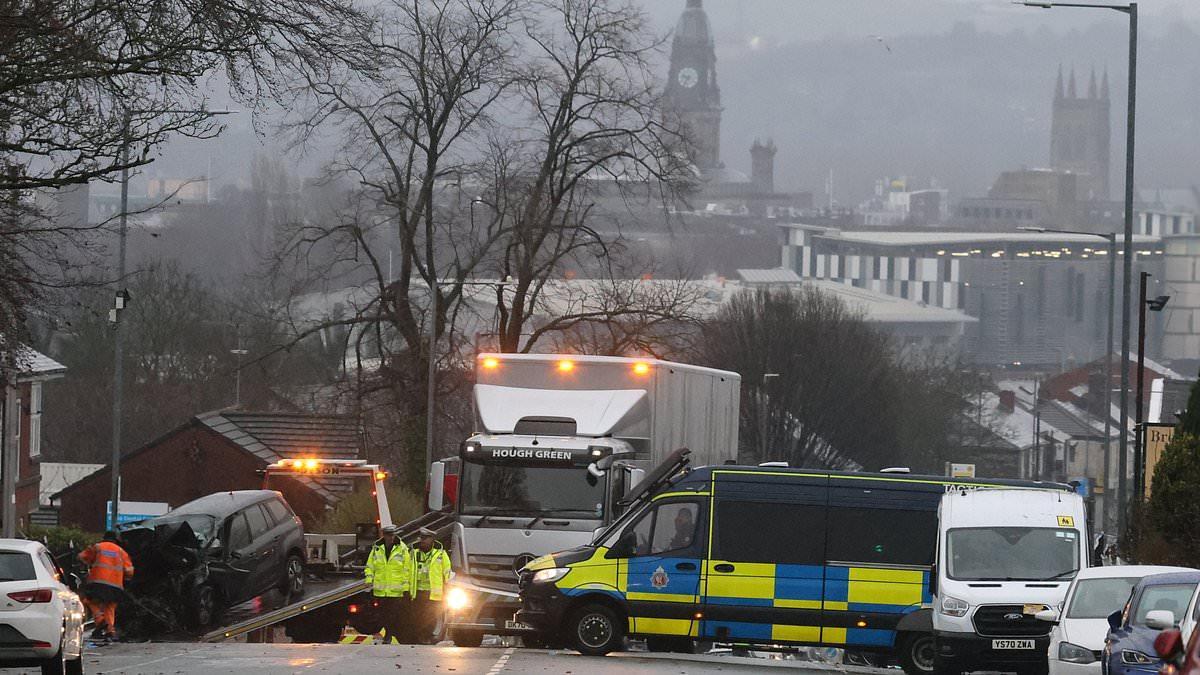
In the early hours on Wigan Road in Bolton, a red Seat Leon and a Citroën C4 Picasso collided head-on, killing four people and injuring five others. Reports place the crash at around midnight to just before 1am and identify the dead as three teenagers in the Seat and the taxi driver, believed to be a man in his 50s; five passengers were taken to hospital.
“Four people died and five others were injured after a head-on collision in Bolton in the early hours of the morning.”
Greater Manchester Police said formal identification is ongoing and family liaison officers are supporting relatives. Emergency services including firefighters used cutting equipment at the scene to free people from vehicles and CPR was performed by crews.

Victim identification update
Authorities and local reporting identified the three passengers in the Seat as teenagers—two aged 18 and one 19—and said the taxi driver was in his 50s; formal identification was ongoing as police notified next of kin and specialist family liaison officers supported families.
While mainstream outlets emphasised that identification was pending and police urged witnesses to come forward, some tabloids and local organisations circulated names linked to the victims.
Eyewitnesses and footage accounts
Multiple accounts reference doorbell or CCTV footage and witness reports that appear to show the Seat on the wrong side of the road and travelling at speed before the collision. Neighbours reported hearing a loud bang and seeing debris at the scene. Emergency responders cut people from vehicles, and firefighters reportedly remained at the scene for around two hours in some accounts.
“CCTV footage reportedly showed the Seat travelling at speed on the wrong side of the 30mph road before striking the taxi, spinning across the carriageway, hitting a parked car and coming to rest.”
Investigation into road collision
Greater Manchester Police have launched an investigation, are carrying out formal identification and have urged witnesses to come forward. Local police described the collision as a devastating incident, and fire and rescue services attended with multiple units.
Local councillors and community leaders expressed shock and called for proper inquiries and support for families. Some reports also noted prior concerns about speeding on Wigan Road and calls for traffic-calming measures.

Community reaction and coverage
Community reaction combined shock, sombre official statements and local prayers. Council and community figures expressed devastation and a sombre mood, and a local mosque group asked people to pray for the families.
“Local councillor Ayyub Patel said the community and the victims’ relatives were ‘devastated’ and ‘sombre.’”
Police liaison officers are in place to support relatives while investigations continue. Coverage tone varies by outlet: mainstream reports present measured official statements and investigation updates, while tabloids highlight footage and vivid scene descriptions.
