Crypto04 May, 20268 min read
Senate Clears CLARITY Act Yield Hurdle as Bitcoin Climbs Above $78,000
This article is an automated aggregation of coverage from news outlets. Our editorials offer in-depth analysis curated by the NewsCord team.
Senate clears CLARITY Act yield hurdle, enabling crypto market structure legislation; Bitcoin rises above $78,000. Bitcoin recovers to around $78,000 after midweek dip amid regulatory progress.
CLARITY Act and Bitcoin
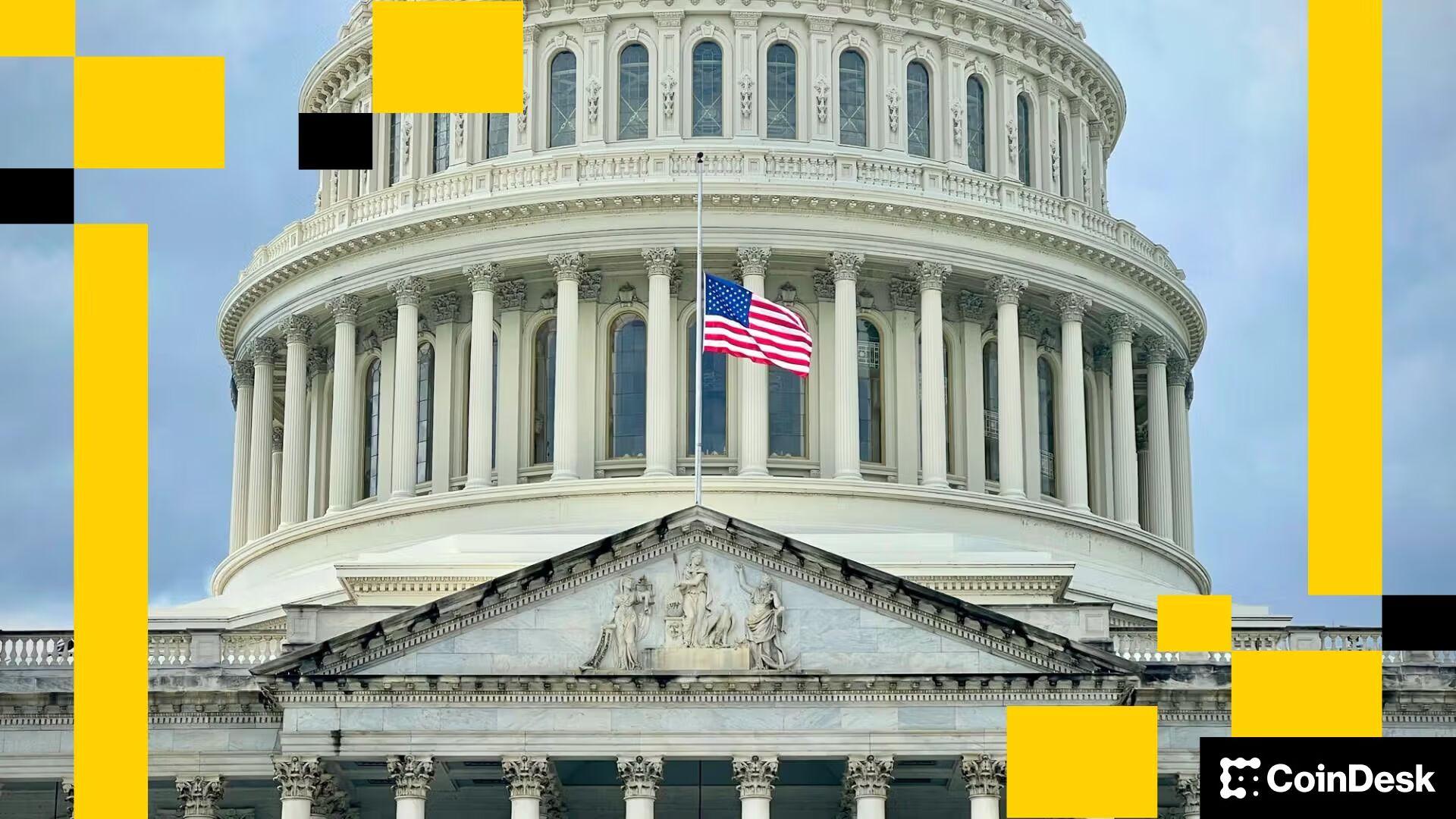
Bitcoin’s price outlook and crypto regulation in the United States moved in tandem this week as the Senate advanced the CLARITY Act’s stablecoin yield framework while other legislative friction persisted. CoinDesk described “Bitcoin above $78,000 as Senate clears Clarity Act yield hurdle,” saying the Senate’s stablecoin yield compromise “removing a key roadblock to crypto market structure legislation.” In the same reporting, CoinDesk said the Senate released “the long-negotiated Clarity Act compromise text Friday,” and that the agreement “would ban stablecoin issuers from offering yield based purely on holding reserves while preserving activity-based reward programs.”
The Western Alternative’s “Crypto Briefing” framed the picture differently on the policy timeline, saying “Senator Thom Tillis (R-NC) has become a significant obstacle in the passage of the CLARITY Act,” and that Tillis “insists on adding ethics provisions” that would restrict federal officials, including the president, from engaging in digital asset activities. That briefing also said the bill “now faces delays in the Senate Banking Committee,” and that “The bill requires 60 votes for passage.”

Market pricing reflected the legislative uncertainty, with the Western Alternative stating that “Bitcoin’s future price prediction market currently prices a 4.4% YES probability for Bitcoin reaching $200,000 by December 31, 2026.” Even with the policy progress, CoinDesk reported Bitcoin recovered from a midweek dip to “climb back above $78,000 by Saturday morning in Asia,” with the largest crypto traded at “$78,180 in Asian hours Saturday.”
Stablecoin yield compromise
The CLARITY Act’s stablecoin yield compromise became the focal point for how the Senate intended to regulate crypto market structure, particularly around what stablecoin issuers could pay. CoinDesk said the Senate “unveiled compromise Clarity Act language” that “would bar stablecoin issuers from paying yield on reserves while preserving activity-based rewards,” and it added that the change cleared the way for “a Banking Committee markup and eventual detailed rules from Treasury and the CFTC.” In the same account, CoinDesk said the compromise “would ban stablecoin issuers from offering yield based purely on holding reserves but preserves activity-based reward programs that crypto firms structure as incentives for using their platforms.”
CoinDesk also quoted Coinbase’s legal position through Chief Legal Officer Paul Grewal, who said the language “preserves activity-based rewards tied to real participation on crypto platforms and networks, which is what the bank lobby said they wanted.” The Economy News article in Persian echoed the same core policy distinction, stating that the agreement “would specifically prohibit yields distributed solely based on reserves held by stablecoin issuers” while “activity-based reward programs designed to encourage use of crypto platforms would remain allowed.”
Economy News further said that “Coinbase, which was at the center of these talks, quickly supported the agreement,” and it repeated Grewal’s framing that the final text “preserves rewards based on real user participation on the networks, which is what the banking lobby had sought.” MEXC’s repost added a different emphasis, saying “The main point of disagreement was the yield on stablecoins,” and it claimed the bill “now bans or severely restricts passive yield on stablecoins.”
Macro jitters and rebound
Bitcoin’s move back above $78,000 was tied in the reporting to macro uncertainty and a specific sequence of geopolitical and market signals rather than a purely crypto-driven catalyst. CoinDesk said Bitcoin “recovered from a midweek dip to $75,500 to climb back above $78,000 by Saturday morning in Asia,” and it attributed the earlier weakness to “fresh Iran military escalation reports.” CoinDesk also linked the rebound to Friday’s development that “Tehran had relayed a new ceasefire proposal to Washington through Pakistan,” which it said “sent WTI crude falling nearly 3% to around $102 a barrel.”
The Economy News article similarly described the Wednesday price drop as “mainly due to reports of escalating military tensions in Iran,” and it said the market calmed after “news of sending a new ceasefire proposal from Tehran to Washington via Pakistan.” In the same Economy News account, Bitcoin’s trading level was given as “Bitcoin price at 11:40 Iran time was $78,169,” and it said the price “reached $78,180.”
CoinDesk also connected the broader market mood to equities, noting that “U.S. stocks notched fresh records,” with the S&P 500 “logging a fifth straight weekly gain” and the Nasdaq 100 “lifted by strong tech earnings from Apple and Oracle.” MEXC’s repost described a different mechanism for the crypto bounce, saying “Liquidations surged 95% – shorts crushed, a big day for Bitcoin ETFs.”
ETF inflows and positioning
Alongside the policy and macro narratives, the reporting also emphasized institutional flows into Bitcoin exchange-traded products and the trading mechanics that accompanied the move. MEXC said “May 1 (11 Ordibehesht 1405) ET was a big day for crypto ETFs,” and it cited “SoSoValue data” showing “American Bitcoin spot ETFs registered a net inflow of $630 million.” It added that “Ethereum spot ETFs were green as well and had net inflows of $101 million,” and it framed the institutional demand as a driver of market direction by stating, “This kind of institutional demand is what moves markets.”
CoinDesk, meanwhile, described the market setup as dependent on catalysts outside crypto, saying “Bitcoin needs a fresh catalyst to break decisively above $78,000,” and it listed “Fed clarity, ETF re-acceleration, or a Hormuz reopening” as the most likely sources. CoinDesk also quoted Daniel Reis-Faria, CEO of ZeroStack, who said, “Bitcoin staying below the $78,000 mark isn't really about crypto right now, it's about what's happening in the broader market.”
Reis-Faria’s note, as reproduced by CoinDesk, continued: “The Fed holding rates wasn't a surprise, but there is no clear direction on what comes next, and that's keeping investors from stepping in.” MEXC’s repost offered a more immediate trading explanation, stating that “perpetual open interest fell 4.03%,” and tying the move to ETF activity it described as “a big day for Bitcoin ETFs.”
Central banks and Bitcoin reserves
While U.S. lawmakers debated the CLARITY Act, another thread in the reporting focused on how central banks might treat Bitcoin as part of reserve strategy. Bitget’s reposted market item said “Aleš Michl, Governor of the Czech National Bank (CNB), became the first sitting central bank head to deliver a keynote at the Bitcoin Conference in Las Vegas,” and it said he argued for “adding 1% Bitcoin to his central bank's foreign exchange reserves.” The same piece said the appearance carried weight because “the CNB Bank Board formally voted against including Bitcoin in the official foreign exchange reserves in February 2026,” and it described Michl as continuing to advocate for a position that “did not gain a majority within his own body.”
Bitget’s text also described the CNB’s reserve context with figures, saying the CNB “currently holds around 180 billion USD in foreign exchange reserves,” which it said corresponds to “about 44 percent of Czech gross domestic product.” It further described a test portfolio approved by the Bank Board, saying “the Bank Board approved a volume of one million US dollars on 30 October 2025,” and that “Bitcoin was acquired that day at a price of 110'670 USD.”
The same account said the test portfolio “has been running operationally since October 2025,” with a “term” of “two years,” and it said the volume “remains constant during the test phase.” Finally, the repost included a statement attributed to ECB President Christine Lagarde, saying she stated on “30 January 2025” that she was “confident no Bitcoin would enter the reserves of any central bank on the General Council.”
What happens next
Across the different reports, the near-term stakes for crypto policy and market direction hinge on the next procedural steps in the Senate and on how regulators and markets respond to the CLARITY Act’s yield rules. CoinDesk said that after the Senate released the compromise text, “A markup, the Senate Banking Committee hearing where the bill gets formally debated and amended, can now proceed,” and it added that “Treasury and the CFTC would have a year after the bill becomes law to write the detailed rules around what crypto firms can and cannot do with yield products.” The Western Alternative’s “Crypto Briefing” emphasized that the CLARITY Act still faces uncertainty because “Senator Thom Tillis (R-NC) has become a significant obstacle,” and it said Tillis’s ethics provisions would restrict federal officials, including the president, from engaging in digital asset activities.
That same briefing also said the bill “now faces delays in the Senate Banking Committee,” and it warned that “Tillis’s demand indicates heightened partisan tension, risking further delays without an ethics consensus.” MEXC’s repost laid out a longer schedule, stating “Senate Banking Committee hearing: week of May 11, 2026,” “Senate floor vote: June or July 2026,” and “Expected to land on Trump’s desk: Summer 2026.”
In parallel, CoinDesk described the market’s immediate condition as waiting for a catalyst, saying “Bitcoin needs a fresh catalyst to break decisively above $78,000,” and it pointed to “Fed clarity, ETF re-acceleration, or a Hormuz reopening” as the most likely sources. CoinDesk also highlighted that the policy side had already moved enough to clear the way for further action, while the market still watched macro signals, quoting Daniel Reis-Faria that “there is no clear direction on what comes next, and that's keeping investors from stepping in.”