
Senate Republicans Block Iran War Powers Resolution Again as Trump’s 60-Day Deadline Nears
Key Takeaways
- Senate blocked the latest Democrats' Iran war-powers resolution ahead of the 60-day deadline.
- Republicans largely blocked the measure, with rare crossovers voting in favor.
- The deadline is a statutory trigger for congressional action under the War Powers Resolution.
War Powers Standoff
The United States is approaching a statutory deadline tied to the War Powers Resolution as President Donald Trump’s military campaign against Iran nears its 60-day mark.
“Friday will mark the 60-day statutory deadline to conclude the conflict”
ABC News reports that “Friday will mark the 60-day statutory deadline to conclude the conflict,” after Trump announced “major combat operations” on Feb. 28.

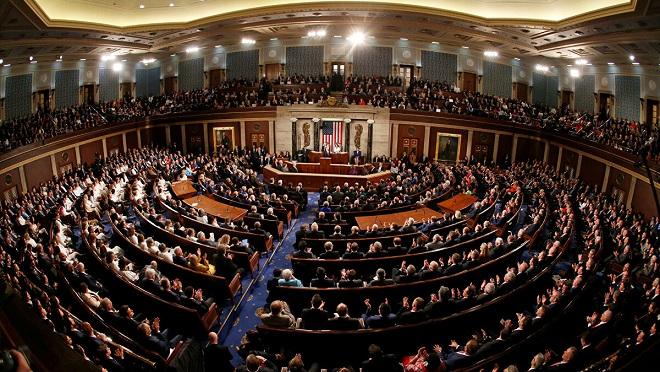
ABC News also says the Senate failed to advance an Iran War Powers Resolution for the sixth time, with a vote of 50-47, and notes that “For the sixth time, the Senate on Thursday failed to advance an Iran War Powers Resolution by a vote of 50-47.”
Politico frames the same moment as a crack in GOP unity, saying “GOP unity over the Iran war started to crack Thursday when Sen. Susan Collins of Maine voted with Democrats to halt the conflict.”
The Guardian similarly reports that “The Republican-led Senate on Thursday again blocked a Democratic attempt to stop Donald Trump’s war in Iran,” with the vote “47-50.”
Across the coverage, the deadline is anchored to the War Powers Resolution of 1973, which CBS News describes as requiring formal notification within 48 hours and creating a 60-day clock for withdrawal absent congressional authorization.
CBS News adds that the Iran war began Feb. 28 and that Trump “formally informed congressional leaders of the hostilities in a March 2 letter, starting the 60-day clock that expires Friday.”
Ceasefire and the Clock
The central dispute is how the War Powers clock should be interpreted in light of a ceasefire and ongoing U.S. actions.
Axios reports that “Senate Republicans are calling on the Trump administration to clarify how it is interpreting the 60-day clock under the War Powers Act,” and it ties the question to Defense Secretary Pete Hegseth’s testimony.
Axios says Hegseth suggested the clock can “pause or stop” during a ceasefire, and it quotes Sen. Todd Young saying, “It sounds like there's some wiggle room he provided there for himself.”
Axios also includes Democrats’ rejection of that view, quoting Sen. Tim Kaine: “A ceasefire means bombs aren't dropping,” and adding, “It doesn't mean there are no hostilities. If we're using the U.S. military to blockade everything going into and out of Iran, that's still hostility.”
NBC News adds that House Speaker Mike Johnson said the U.S. is “not at war,” telling NBC News in the Capitol, “I don’t think we have an active, kinetic military bombing, firing or anything like that. Right now, we are trying to broker a peace.”
NBC News also quotes Hegseth’s position in a Senate hearing, saying, “we are in a ceasefire right now, which, our understanding, means the 60-day clock pauses or stops in a ceasefire.”
CBS News describes the legal structure, saying the law requires withdrawal absent authorization and that the president can extend for “an additional 30 days to safely withdraw forces,” while also emphasizing that it “does not grant him authority to continue an offensive campaign.”
Negotiations and Coalition
Beyond the Senate vote, the administration’s approach to Iran includes diplomacy efforts and a push for international participation tied to maritime security.
ABC News reports that after Trump announced “major combat operations” on Feb. 28, a two-week ceasefire was followed by “initial U.S.-Iran talks in Pakistan earlier this month failed to reach a peace deal,” and Trump later announced an “open-ended extension of the ceasefire and the continuation of the blockade until Iran's proposal is submitted and discussions are concluded "one way or the other."”
ABC News also quotes Trump in the Oval Office, saying Iran is “dying to make a deal,” and it includes his statement, “hopefully it can be worked out very soon.”
When asked about the future of negotiations, ABC News says Trump told reporters, “Nobody knows what the talks are except myself and a couple of other people.”
The same ABC News report says the Trump administration is seeking “the participation of other countries to form an international coalition to help re-open the Strait of Hormuz,” dubbed the “Maritime Freedom Construct,” and it describes the coalition as coordinating “diplomatic efforts, including aligning on sanctions and information sharing to help with safe transit through the waterway.”
ABC News adds that “A cable sent this week by the State Department to posts around the world called on diplomats to announce the formation of the new coalition and "ask for partner participation" by Friday.”
It also quotes a State Department official saying, “The MFC’s efforts will enhance maritime domain awareness and support the safe passage of commercial operators and their crews,” and notes that the United Kingdom and France have already launched a multilateral effort involving “at least 30 nations,” and it records Defense Secretary Pete Hegseth dismissing that effort as “silly.”
Different Frames, Same Vote
While the vote count is consistent across outlets, the political framing differs sharply between reports.
Politico emphasizes that “GOP unity over the Iran war started to crack” when Sen. Susan Collins voted with Democrats, and it highlights that “That’s especially true as he blows past a legal deadline this week for the U.S. to exit the war without congressional authorization.”

Politico also quotes Sen. Chuck Schumer saying, “Time’s up,” and “Republicans, stop sitting out, start speaking up.”
The Guardian, by contrast, foregrounds the procedural repetition, writing that it was “the sixth time this year that Democrats have forced a vote on a war powers resolution related to the US’s assault on Iran,” and it reports that “All have failed, mostly along party lines.”
The Guardian also includes the argument over the ceasefire, saying Pete Hegseth testified that “the 60-day clock was paused due to the current ceasefire with Iran,” while “Democrats and critics have raised concerns with that interpretation.”
ABC News similarly reports the Senate vote as part of a repeated pattern, stating “For the sixth time, the Senate on Thursday failed to advance an Iran War Powers Resolution,” and it notes that “For the first time, Republican Sen. Susan Collins, Maine, voted with Democrats.”
NBC News frames the same deadline through House Speaker Mike Johnson’s insistence that Congress does not need to act because the U.S. is “not at war,” quoting Johnson: “We are not at war.”
Costs, Next Steps, and Cuba
As the 60-day deadline approaches, the sources describe competing next steps: congressional authorization debates, claims about paused clocks, and continued U.S. actions such as blockade and maritime policing.
“Skip to main content 2 hours ago - Politics & Policy Pentagon calls timeout on War Powers Hans Nichols email (opens in new window) sms (opens in new window) facebook (opens in new window) twitter (opens in new window) linkedin (opens in new window) bluesky (opens in new window) Add Axios as your preferred source to see more of our stories on Google”
CBS News says the White House official told CBS News that “Trump administration officials were in active conversations with members of Congress about congressional authorization for the war,” and it quotes White House spokeswoman Anna Kelly saying the administration provided “over 30 bipartisan briefings for members of Congress to keep them apprised of military updates.”
CBS News also describes the legal stakes, saying the deadline “could set up an eventual clash with Republicans in Congress,” and it quotes Republican Sen. John Curtis of Utah writing that “A period of 60 days is a fully sufficient window for presidents to take emergency measures.”
NBC News adds that Acting Pentagon Comptroller Jules Hurst III testified that “the war has cost $25 billion so far,” and it says the Trump administration planned to request “supplemental funding for the war.”
NBC News also records the House leadership’s position that “We’re policing the Strait of Hormuz and trying to get a peace,” and it quotes Johnson saying, “There’s nothing Congress can do to move that along any further, so we’ll see how it plays out.”
Meanwhile, the political conflict is not limited to Iran: Fox News reports that Democrats tried to limit Trump’s war powers on Cuba and that the resolution would require removal of forces and considers “the use of the United States Coast Guard and other components of the Armed Forces to conduct a blockade or quarantine of Cuba” a hostile act requiring Congress’ approval.
Fox News says Democrats’ Cuba effort failed to advance, and it quotes Sen. Tim Kaine saying, “You gotta ask Republicans about their position,” while also quoting Kaine’s warning that “We’ll see that because we’ll have an Iran war vote close to the 60-day [deadline] by the end of this week.”
More on USA

Brian Kemp Refuses to Cancel Georgia May 19 Primary After Supreme Court Callais Ruling
10 sources compared

Thousands Join May Day Economic Blackout Against President Donald Trump’s Policies Across U.S.
25 sources compared
Kamala Harris Considers 2028 U.S. Presidential Run After 2024 Loss to Donald Trump
19 sources compared

Donald Trump Threatens Troop Reduction in Germany, Also Targets Italy and Spain
18 sources compared