
Serbia equips MiG-29 fighters with Chinese CM-400 supersonic missiles
Key Takeaways
- Serbia purchased Chinese CM-400 supersonic missiles
- CM-400 missiles have been integrated onto Serbian MiG-29 fighter jets
- President Aleksandar Vučić publicly confirmed the purchase and said Serbia holds significant numbers
Acquisition announced
Serbia has undertaken a program to arm its Mikoyan MiG-29 fighters with Chinese CM-400 series supersonic missiles, marking a significant upgrade to its air-to-surface strike capability.
“A public procurement procedure aimed at repairing up to ten engines for Bulgaria’s MiG-29 fighter jets has been cancelled after no companies submitted applications to participate Game Changer in the Region: Serbian MiG-29s Equipped with Chinese CM-400 Missiles and LS-6 Guided Bombs Serbia’s MiG-29 fighter jets have been equipped with new Chinese-made air-launched weapons, marking a notable expansion of the country’s strike capabilities”
Reporting indicates that Serbian officials and defense ministry sources confirmed transfers of Chinese missile systems intended to integrate with the Air Force’s remaining MiG-29 fleet, with the government framing the move as a sovereign decision to modernize deterrence.
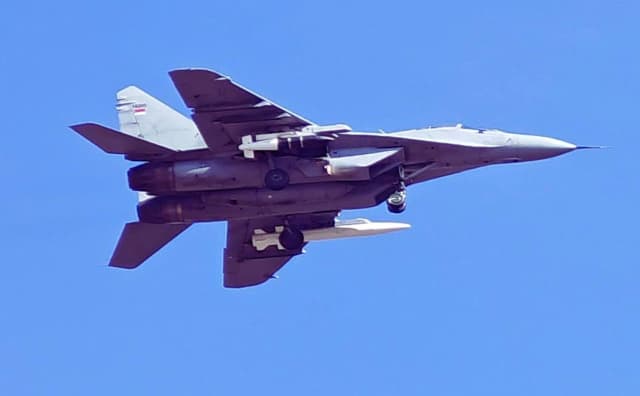
Coverage from regional and international outlets notes this is part of a broader deepening of military-technical ties between Belgrade and Beijing, following recent Chinese defense cooperation and arms-delivery announcements to Serbia.
Missile capabilities
The CM-400 family is presented in reporting as a supersonic, sea-skimming design with a high-speed terminal phase intended to complicate interception.
Analysts cited by news outlets say its integration onto continental airframes like the MiG-29 represents a technical and tactical shift.

Serbian and international commentators emphasised that mounting CM-400-class missiles on fighters changes the aircraft’s mission set from purely air-to-air and limited ground-attack roles toward precision stand-off strike capability.
Regional responses
Reactions in the region and from Western capitals have been mixed and cautious.
“Serbia buys supersonic ballistic missiles from China, Croatia says it will talk to NATO allies Serbian President Aleksandar Vučić confirmed on March 12 that Serbia has purchased CM-400 supersonic ballistic missiles from China”
Neighbouring countries and NATO officials expressed concern that the acquisition could destabilise existing security balances, while Serbia defended the move as lawful and defensive.
International reporting captures a spectrum of responses, from diplomatic queries and calls for transparency to statements signalling unease about how such armaments could affect crisis dynamics in the Balkans and the Adriatic.
Integration challenges
Experts and defence commentators highlighted technical, logistical and interoperability challenges Serbia will face in adapting the Soviet-era MiG-29 to carry a modern Chinese supersonic missile.
Challenges include avionics integration, targeting datalinks, and pilot training.
Outlets quoted analysts who said the retrofit requires sustained technical cooperation, testing, and support equipment, plus maintenance and sustainment agreements to operationalise the capability.
Geopolitical implications
Observers argue that beyond the immediate military effects, the deal signals a geopolitical deepening between Belgrade and Beijing that carries diplomatic implications for Serbia's relationships with the EU, NATO and Russia.
“A public procurement procedure aimed at repairing up to ten engines for Bulgaria’s MiG-29 fighter jets has been cancelled after no companies submitted applications to participate Game Changer in the Region: Serbian MiG-29s Equipped with Chinese CM-400 Missiles and LS-6 Guided Bombs Serbia’s MiG-29 fighter jets have been equipped with new Chinese-made air-launched weapons, marking a notable expansion of the country’s strike capabilities”
Reports linked the transfer to broader Chinese outreach in the Balkans and suggested it may be leveraged for political bargaining.
Serbian officials maintained the procurement was a straightforward sovereign modernization decision.
More on China

Apple Cuts China App Store Commissions to 25% After Regulator Pressure
25 sources compared

Trump Opens Broad Trade Investigation Targeting China, Mexico and EU; Beijing Calls It Political Manipulation
11 sources compared

President Xi Jinping Rubber-Stamps $30 Trillion Five-Year Plan To Weaponize PLA And Boost Growth
12 sources compared

German Chancellor Friedrich Merz Presses President Xi Jinping to Reduce Market Distortions, Urges Chinese Investment
13 sources compared