Full Analysis Summary
Winter storm worsening Gaza crisis
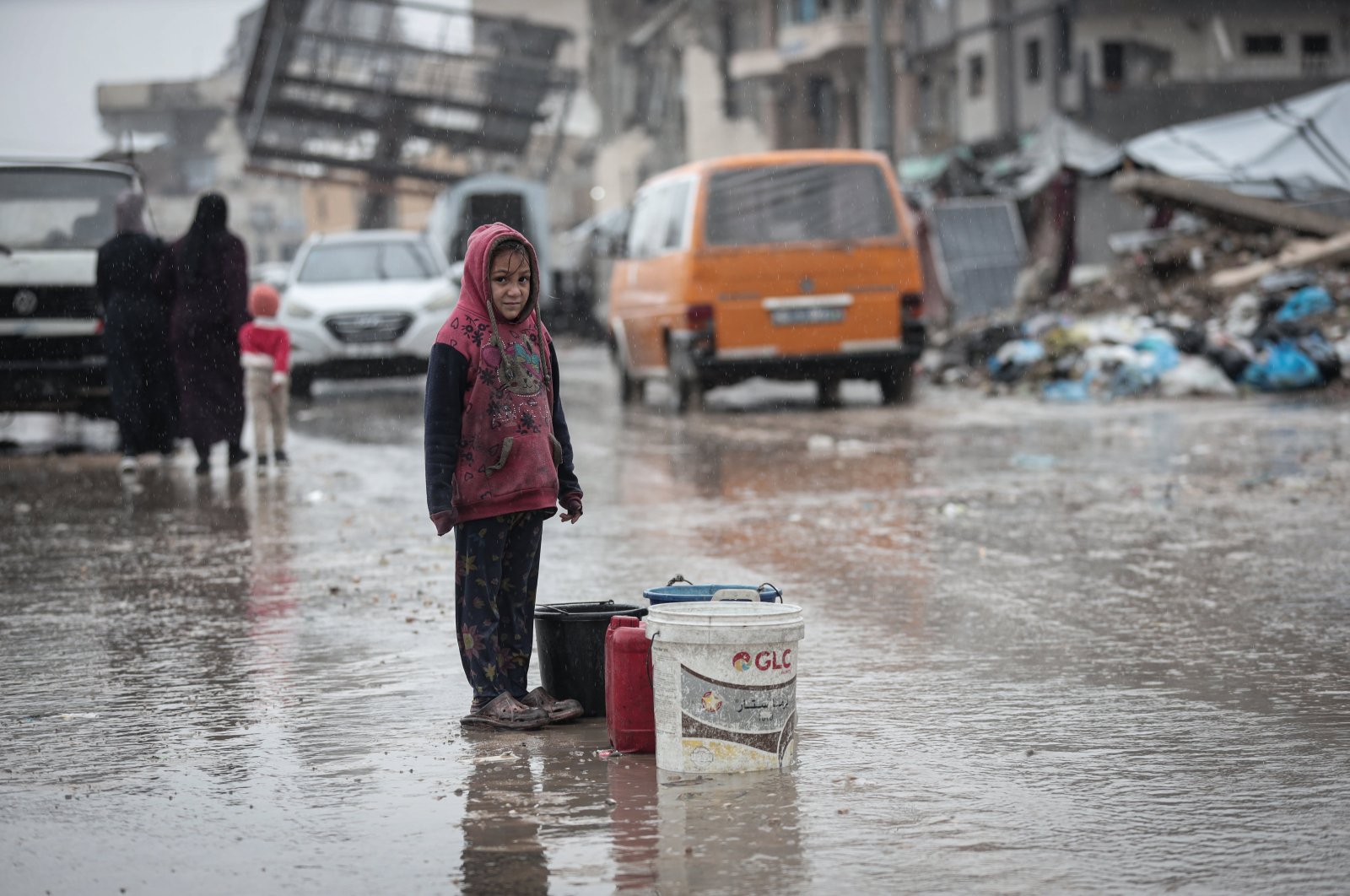
A severe winter low-pressure storm brought heavy rain, hail and gale-force winds to Gaza, compounding the humanitarian crisis by flooding neighborhoods, tearing apart tents and undermining already-damaged buildings.
Al-Jazeera Net reported that heavy rains and strong winds from the system caused 18 residential buildings already damaged by earlier Israeli strikes to fully collapse and more than 110 buildings to suffer serious partial collapses.
Daily Sabah said the system brought heavy rain, hail and gusts of 70–80 km/h.
Al Jazeera noted that winter is compounding the suffering of tens of thousands of displaced Palestinians as neighborhoods fill with muddy water.
None of the provided articles explicitly confirms the figure of 25 storm deaths (including six children) in their snippets; they focus on collapse counts, displaced tents and the widening emergency.
Coverage Differences
Emphasis and detail
Al‑Jazeera Net (West Asian) emphasizes structural collapses and quantifies building damage and tent losses, Daily Sabah (West Asian) emphasizes the meteorological force and immediate risks of flooding and collapse, and Al Jazeera (West Asian) frames the weather as exacerbating displacement and muddying neighborhoods — but none of the three provide the specific storm death toll claimed in the user's headline in these snippets.
Shelter destruction and needs
The storm destroyed or rendered unusable vast amounts of temporary shelter.
Al Jazeera Net reported that about 90% of displaced people’s tents were blown away or flooded, leaving thousands of families without temporary shelter and most of their possessions.
Daily Sabah described Palestinians sheltering in cracked, unstable structures at high risk of collapse because Israel is blocking mobile homes and construction materials.
Al Jazeera said rescuers were still recovering bodies from rubble even as the truce held imperfectly.
Together, these reports depict mass exposure to cold, wet conditions with little immediate shelter available and urgent humanitarian needs.
Coverage Differences
Narrative focus
Al‑Jazeera Net (West Asian) focuses on the immediate physical loss of tents and shelter statistics, Daily Sabah (West Asian) connects shelter shortages to Israel blocking materials and mobile homes, while Al Jazeera (West Asian) pairs the weather impact with ongoing rescue activity and the fragile ceasefire — producing different emphases on cause, effect and response.
Ceasefire and humanitarian access
All three sources blame limited aid deliveries and the incomplete implementation of the October 10 ceasefire for worsening humanitarian conditions.
Daily Sabah reports that Israel has not allowed agreed amounts of food, aid, medical supplies, and mobile housing into Gaza and has not fully observed the initial halt to fighting.
It adds that Israeli forces reportedly continued attacks that killed at least 414 Palestinians and wounded 1,142 since the ceasefire.
Al-Jazeera Net similarly says Israel has not fulfilled the agreement’s obligations to permit entry of food, relief and medical supplies and mobile homes.
Al Jazeera notes the truce has largely held, though Gaza’s Health Ministry reports repeated Israeli violations.
Together, the pieces attribute the humanitarian squeeze to Israeli actions and the truce’s incomplete implementation.
Coverage Differences
Framing of ceasefire compliance
Daily Sabah (West Asian) and Al‑Jazeera Net (West Asian) present stronger criticisms that Israel is actively blocking aid and continuing attacks, while Al Jazeera (West Asian) uses the phrasing "largely held" for the truce even as it reports Health Ministry claims of repeated Israeli violations; the latter distinguishes the truce’s overall status from individual violations.
Civilian toll and destruction
The snippets present cumulative casualty and destruction figures from the broader Israeli offensive since October 2023.
Daily Sabah reports over 71,200 Palestinians killed, mostly women and children, and more than 171,200 injured.
Al Jazeera puts the toll at at least 71,266 killed with 171,219 wounded.
Al-Jazeera Net recalls that Israel’s offensive that began on October 8, 2023 lasted two years, killing over 71,000 Palestinians, injuring more than 171,000, destroying 90% of civil infrastructure, and creating an estimated $70 billion reconstruction need, according to the UN.
These numbers underline the scale of loss and infrastructure destruction that the storm has further exposed, though slight numeric variations exist across reports.
Coverage Differences
Numeric variation and scope
All three sources (Daily Sabah, Al Jazeera, Al‑Jazeera Net — all West Asian) report broadly similar casualty and damage scales, but the precise totals differ slightly across the snippets (e.g., "over 71,200" vs. "at least 71,266" vs. "over 71,000"), and Al‑Jazeera Net uniquely cites the UN estimate of "90% of civil infrastructure" destroyed and a "$70 billion reconstruction need."
Storm, aid and conflict
Al‑Jazeera Net reported that Civil Defence renewed appeals to the international community for urgent relief, emergency humanitarian aid, and reconstruction and safe housing.
Daily Sabah quoted meteorologist Laith al‑Allami warning the storm would last through Sunday evening with gusts of 70–80 km/h, falling temperatures, and flood risks.
Al Jazeera highlighted political obstacles — including negotiations over a second phase of the truce and troop withdrawals — that complicate swift, large‑scale relief.
The provided snippets do not clearly confirm the specific headline figure of 25 dead, including six children.
Verified reporting shows widespread destruction and displaced families whose tents were lost or flooded.
Reporters directly attributed aid blockages and continued Israeli attacks to worsening civilian suffering.
Coverage Differences
Calls to action vs political focus
Al‑Jazeera Net (West Asian) foregrounds Civil Defence appeals and international relief needs, Daily Sabah (West Asian) foregrounds meteorological warnings and immediate weather danger, and Al Jazeera (West Asian) foregrounds the political and negotiation context (phase two hurdles) even while noting humanitarian strain — creating different priorities for what response is urgent.