Britain23 April, 20268 min read
Shabana Mahmood Signs UK-France £662m Three-Year Deal To Curb English Channel Small-Boat Crossings
This article is an automated aggregation of coverage from news outlets. Our editorials offer in-depth analysis curated by the NewsCord team.
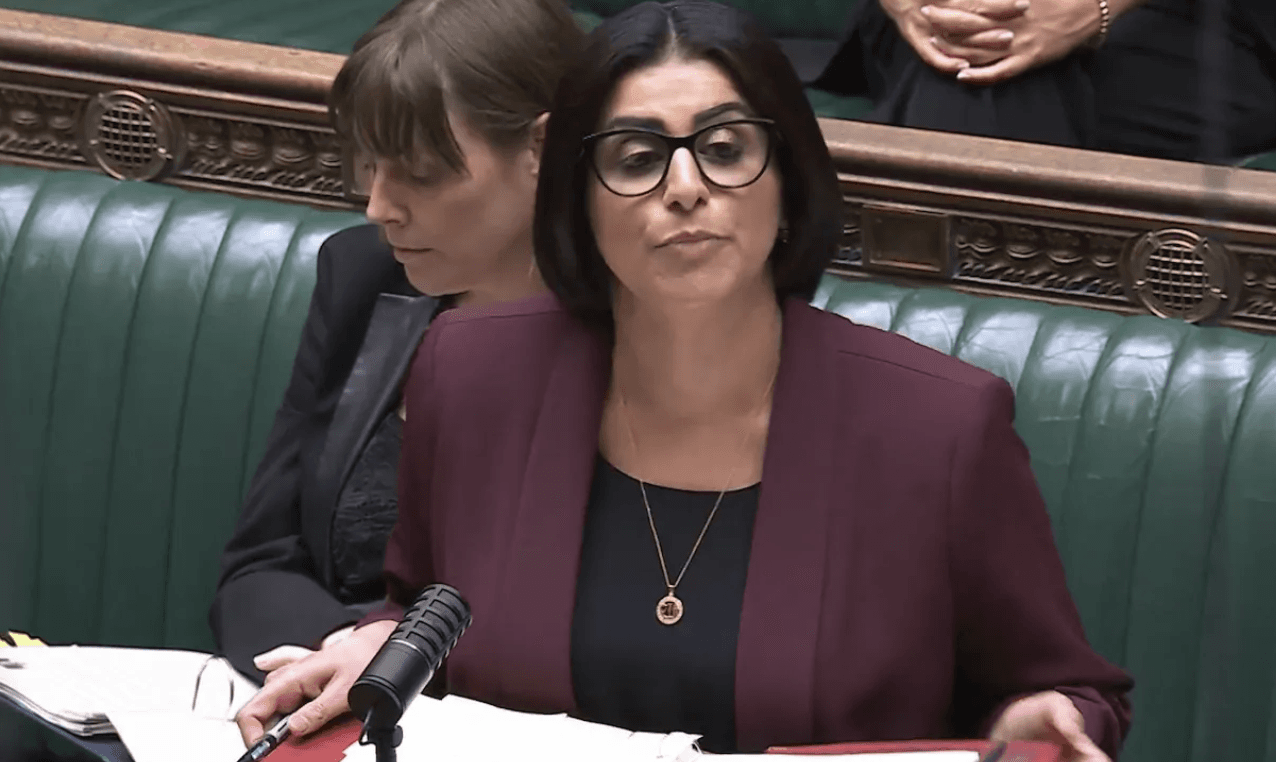
Shabana Mahmood, Home Secretary, signed three-year UK-France deal to curb Channel crossings. UK funding up to €766 million to France, with payments contingent on results.
The new UK-France pact
Britain and France agreed a new three-year plan to curb undocumented migrant crossings of the English Channel in small boats, renewing the Sandhurst Treaty that had been signed in 2018, extended in 2023, and was due to end this year. The agreement is tied to a funding package that multiple outlets describe as reaching up to €766 million (or £650 million / £662 million depending on the report), with a “flexible share” conditioned on results. In the BBC’s account, Home Secretary Shabana Mahmood signed the three-year agreement with France on Thursday, and it will send “at least 50 police officers” trained in “riot and crowd control tactics” to tackle violence and “hostile crowds.”
The BBC also says the deal will involve France deploying “millions of pounds worth of drones, two helicopters, and a camera system” to intercept people smugglers and illegal migrants. The Times of India similarly describes enforcement measures including “riot-trained police deployment,” “enhanced surveillance,” and “stricter accountability clauses,” valuing the deal at “over £650 million” for three years.
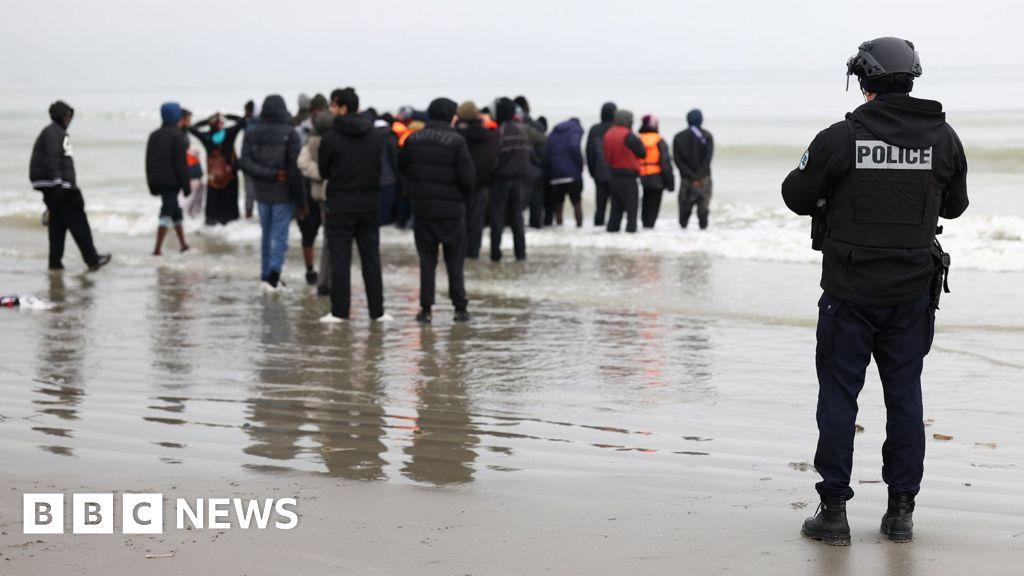
KTEN and RFI both frame the pact as a renewal of the Sandhurst Treaty and describe France increasing law enforcement on the coast to 1,400 officers by 2029, while the UK provides up to €766 million in funding with a conditional portion. Across the reporting, the operational focus is on beaches in northern France and on intercepting boats before migrants can board, with DW and France 24 describing the same core components: drones, helicopters, upgraded camera systems, and additional maritime officers and a new vessel.
Numbers behind the pressure
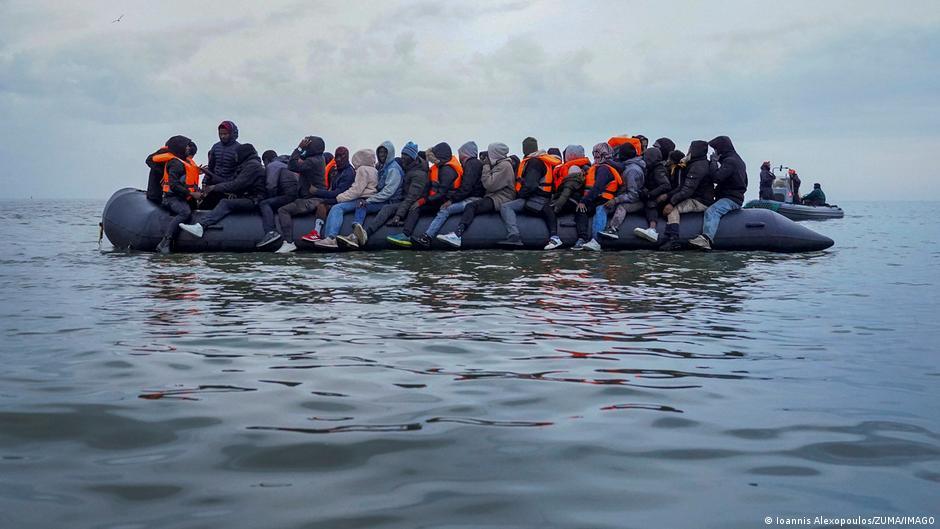
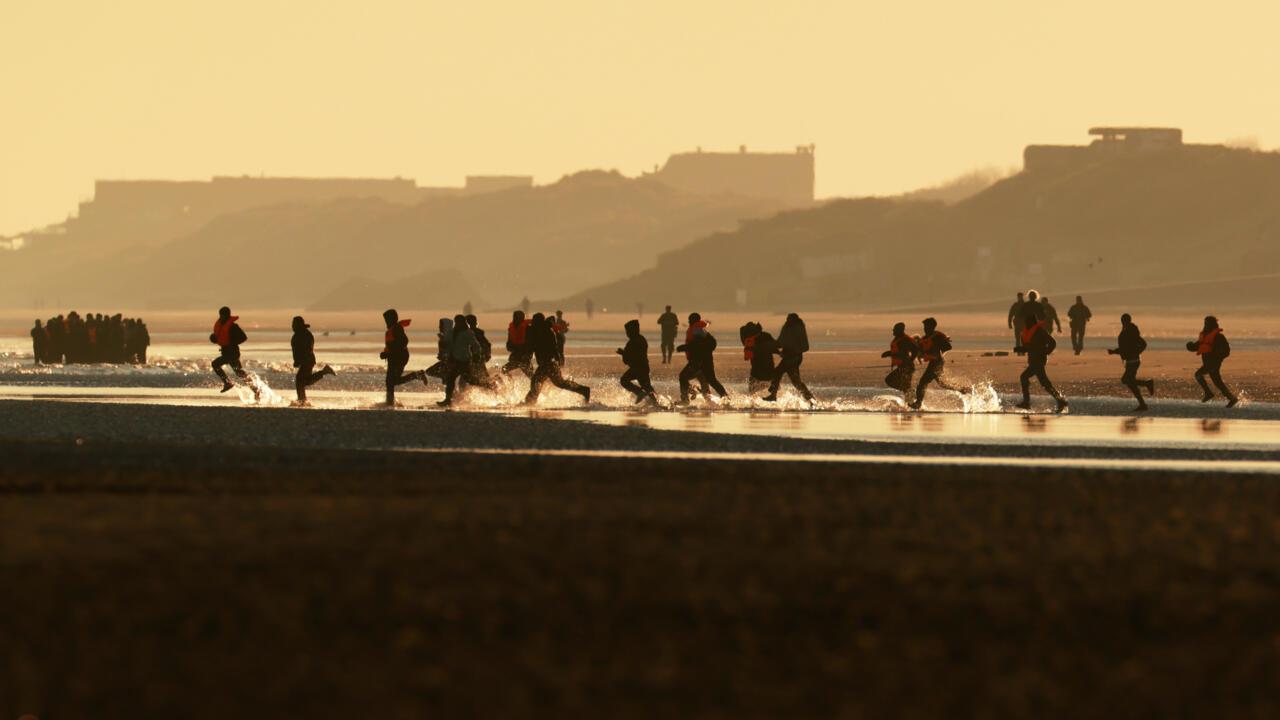
The new deal is presented in the reporting as a response to rising Channel crossings and political pressure on the UK government to act, with multiple outlets citing 2025 arrival figures and early 2026 totals. The BBC says “41,472 people” arrived in the UK by small boat in 2025, and it adds that “On Saturday, 602 migrants arrived in Dover on nine boats,” bringing “the total number of arrivals so far in 2026 to more than 6,000.” The Times of India similarly reports “over 41,000 migrants reaching the UK in 2025 — the highest since such journeys began in 2018,” and it says “More than 6,000 crossings have already been recorded in early 2026.”
KTEN and RFI both cite the same 2025 figure of “41,472” and describe it as the second-highest since large-scale crossings were first detected in 2018. Several outlets also cite deaths at sea in 2025, with KTEN stating “At least 29 migrants died at sea in the Channel in 2025,” and France 24 repeating “At least 29 migrants died at sea in the Channel in 2025.”
The reporting also includes claims about enforcement outcomes and arrests: DW says the British government said joint work with France had “already halted more than 42,000 attempted crossings since July 2024,” while RFI says the UK government said joint work had halted “more than 42,000 attempted crossings since Prime Minister Keir Starmer's Labour Party took office in July 2024.” On the French side, RFI says “around 480 people smugglers were arrested in 2025,” and it also reports that “since the beginning of 2026, arrivals to the United Kingdom have halved compared with the same period last year.”
Who said what
The deal triggered sharply different reactions from UK political figures, with the BBC quoting both government and opposition criticism alongside the Home Secretary’s stated rationale. Shabana Mahmood told the BBC ahead of the signing that “Our work with the French has stopped tens of thousands of illegal migrants boarding boats headed to Britain,” and she said, “But we must do more,” adding that “This landmark deal will stop illegal migrants making the perilous journey and put people smugglers behind bars.” The Conservatives accused the government of funding France without sufficient conditions, with the BBC reporting that Chris Philp, Conservative MP and shadow home secretary, said: “The government's deal hands over half a billion pounds of our money with no conditions at all.”
Philp also argued that “France only prevented a third of embarkations last year and even let those illegal immigrants go to try again,” and he said, “France shouldn't get a single penny unless they stop the vast majority of the boats.” Reform UK’s Zia Yusuf, described by the BBC as Reform UK Shadow Home Secretary, called the deal “astonishing” and said it was “an abhorrent misuse of taxpayers' hard-earned money - funding that could instead deliver thousands of new nurses or police officers here in the UK.”
The Liberal Democrats and the Refugee Council also appear in the BBC’s account, with the Liberal Democrats saying the only way to deter crossings is to “permanently break the criminal gangs business model” and agree a “large-scale returns agreement with France,” while the Refugee Council argued the focus should not be on policing the Channel but on “vulnerable people looking for safety.” The Independent reports that charities like Safe Passage International and Care4Calais warn the deal “will make Channel crossings deadlier for asylum seekers,” and it quotes the concern that “this deal will not deter crossings but instead force migrants into more dangerous journeys.”
How outlets frame it differently
While the core mechanics of the pact—more French policing, UK funding, and a conditional “pay-for-results” element—are consistent across many reports, the outlets diverge in how they characterize the deal’s purpose and likely impact. The BBC describes the agreement as a “landmark deal” and focuses on operational details, including that “For the first time, ministers have said around £100m of UK funding could be redirected or withdrawn after a year if not enough journeys are stopped,” while also noting that the UK government has not confirmed what targets the French would have to meet. The Times of India emphasizes enforcement features and accountability clauses, saying the deal introduces “performance-based funding model” where “around £150 million” depends on France’s success in reducing crossings, and it adds that the UK government “may redirect or withdraw a portion of funding after one year if results are not satisfactory.”
The Independent frames the same conditional funding as insufficient to prevent harm, warning that charities “warn new UK-France migrant deal will make Channel crossings deadlier for asylum seekers,” and it says “A significant portion of the funding, £160 million, is conditional on the deal successfully stopping a sufficient number of journeys.” RFI and DW present the conditional mechanism as a structured results link, with RFI citing a French Interior Ministry roadmap that says if measures do not deliver “sufficient results, based on a joint annual assessment, the funding will be redirected to new actions.”
KTEN and France 24 both describe the Sandhurst Treaty renewal and the conditional portion, but France 24 adds a broader political context about Keir Starmer’s pressures and the appointment scandal involving Peter Mandelson and Jeffrey Epstein, which is not present in the BBC’s framing. Meanwhile, TF1 Info highlights the “flexible share” assessed at “186 million euros” and states that “Only 580 million euros are thus guaranteed to be disbursed by London,” which differs from the BBC’s “around £100m” and the Independent’s “£160 million” conditional figure.
What happens next
The reporting portrays the agreement as setting up a near-term test of whether France can deliver “sufficient results” and whether the UK will redirect or withdraw conditional funding after a year, with multiple outlets describing timelines and next steps.
The BBC says “For the first time” ministers have said around £100m could be redirected or withdrawn after a year if not enough journeys are stopped, and it notes that the UK government has not confirmed what targets France would have to meet to keep the money.

DW similarly describes that “Almost a quarter of the money will be paid only if the measures prove effective,” while RFI quotes the French Interior Ministry roadmap that if the new measures do not deliver “sufficient results, based on a joint annual assessment, the funding will be redirected to new actions.”
TF1 Info adds a specific conditional structure, stating that the “flexible share” is assessed at “186 million euros” and that “Only 580 million euros are thus guaranteed to be disbursed by London,” which implies a clear financial consequence if results are not achieved.
Several outlets also describe the operational ramp-up and where officials will go to lay out details, including that French interior minister Laurent Nunez and Home Secretary Shabana Mahmood are set to lay out further details on Thursday while visiting the site of a proposed accommodation centre for people set to be deported from France at Loon-Plage, near Dunkirk.
In addition to the enforcement measures, the reporting includes a legal and policy debate about what more the UK should do, with the BBC saying Conservatives and Reform have both said the UK needs to pull out of the European Convention on Human Rights (ECHR) to stop the crossings.
Finally, the reporting includes warnings from humanitarian groups about the consequences of results-based funding, with TF1 Info quoting Doctors Without Borders (MSF) criticizing “results-based” funding and saying “drive men, women and children into the hands of smugglers and traffickers and force them to undertake increasingly dangerous, sometimes deadly crossings,” and it quotes Amélie Moyart of Utopia 56 telling AFP that “Crossings continue: before it was by truck, now it is by sea [...]. People are taking more and more risks and the direct consequence is a rise in deaths at the border linked to these political choices.”