Syria09 December, 20253 min read
Sharaa Supporters Celebrate Assad’s Ouster Across Lebanon; Amal and Hezbollah Supporters Vandalize Cars, Lebanese Army Intervenes
This article is an automated aggregation of coverage from news outlets. Our editorials offer in-depth analysis curated by the NewsCord team.
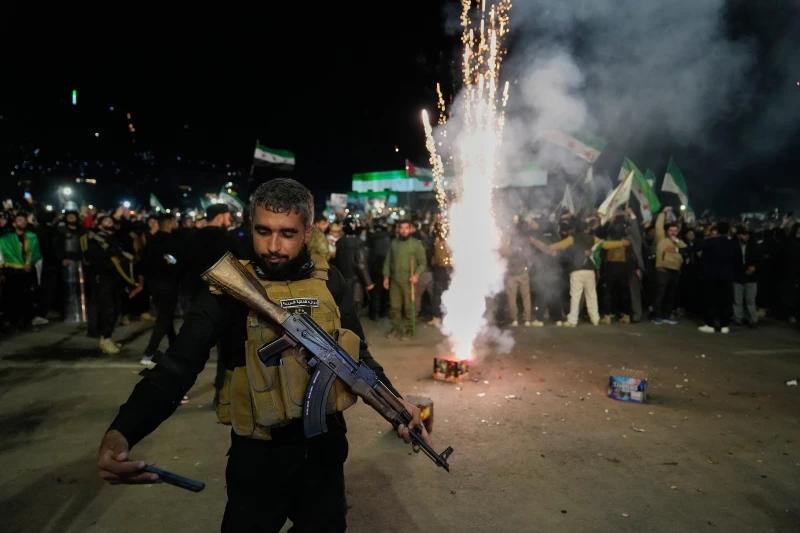
Syrians marked Assad's fall anniversary with widespread celebrations, parades, and renewed optimism. Damascus-affiliated groups chanted inflammatory slogans targeting the SDF and northeast Syria residents.
6 outlets told this the same way.
Outlets did split on Asad Al-Shaibani Meets Saddam Haftar in Benghazi Over Syrian Consulate And Missing Syrians →
Lebanon and Syria unrest
Across several Lebanese towns pro-Sharaa demonstrators staged celebrations marking the first anniversary of Bashar al-Assad’s fall while clashing with supporters of the Amal Movement and Hezbollah, prompting army intervention and local unrest. Naharnet reports that pro-Sharaa demonstrators clashed with supporters of the Amal Movement and Hezbollah in several Lebanese locations and notes incidents including vandalized cars in Sidon’s Haret Saida and reports of gunfire in Beirut’s Qasqas area and the southern suburbs of Msharrafieh and Ghobeiri. The outlet also records that the army intervened after confrontations in Nabatieh’s Kfar Rumman roundabout.
“Pro-Sharaa demonstrators clashed with supporters of the Amal Movement and Hezbollah in several Lebanese locations.”
Al Jazeera provides regional context by describing Syrians marking the anniversary with fireworks and celebrations across major cities, reflecting a sense of renewed optimism in Syria after years of war. The San Mateo Daily Journal frames the broader moment as part of Syria’s slow, fragile attempt to rebuild and re-engage after a fractured conflict, and together these accounts show both celebratory observances tied to al-Sharaa’s rise and tangible violence in Lebanon tied to competing political loyalties.

Anniversary unrest and portrayals
Naharnet reported detailed day-of incidents in Lebanon, including vandalism in Sidon’s Haret Saida where Amal and Hezbollah supporters reportedly damaged cars belonging to pro-Sharaa revelers. In Nabatieh a clash at Kfar Rumman began after some Syrians displayed a picture of al-Sharaa and the army intervened. Pro-Sharaa motorcycle rallies occurred in Tripoli, Aramoun, Corniche al-Mazraa and Khalde.
Amal and Hezbollah staged counter-rallies in Beirut’s southern suburbs and other parts of the capital. Al Jazeera’s coverage did not describe these Lebanese clashes and instead focused on Damascus celebrations and the Syrian government’s efforts to restore basic services, encourage the return of refugees, reshape foreign ties and secure the lifting of international sanctions.

San Mateo’s reporting added a human-rights and recovery angle by highlighting individual stories like Mohammad Marwan’s detention and torture in Saydnaya prison, presenting them as emblematic of Syria’s struggle to heal amid public commemorations. Together, the sources show immediate security incidents in Lebanon alongside varied portrayals of the anniversary within Syria.
Media framing of Syria
Political voices and framing diverge across the sources. Naharnet quotes MP Ghassan Atallah (Free Patriotic Movement) criticizing the rallies, saying 'Syria is nearby' and urging revelers to return to Syria, and characterizes the events as 'provocations involving attacks and shooting against the army.' Al Jazeera, by contrast, reproduces President Ahmed al-Sharaa's speech in Damascus asserting that Syria has turned the page on a 'dark chapter' and vowing justice for victims, an inclusive Syria, and efforts to bring armed groups under Damascus's authority, presenting a governmental narrative of stabilization.
“MP Ghassan Atallah (Free Patriotic Movement) criticized the rallies, saying ‘Syria is nearby’ and urging revelers to return to Syria, calling the events provocations involving attacks and shooting against the army.”
The San Mateo Daily Journal frames such official narratives against testimony of survivors and ongoing fractures, describing Syria as attempting to 'rebuild and re-engage' while still facing sectarian violence, economic instability, and tensions with Kurdish-led forces. These differences underscore contrasting emphases: Naharnet foregrounds immediate Lebanese political tensions, Al Jazeera highlights Syrian leadership's optimistic messaging, and San Mateo stresses human-rights and structural challenges post-conflict.
Security coverage comparison
Naharnet documents immediate law-and-order consequences in Lebanon, including vandalism, gunfire, and counter-rallies that prompted army action. Al Jazeera places the anniversary amid regional pressures, noting recurring Israeli strikes and severe economic problems in Syria even as many citizens report feeling safer.
San Mateo’s coverage emphasizes that despite public marches and commemorations, survivor testimonies and systemic issues such as prison torture, disease, and displacement complicate any narrative of smooth recovery. Together, these sources create a fragmented picture in which cross-border celebrations can spark localized violence in Lebanon even as Syrian authorities claim steps toward normalization.

Media framing of anniversary
In sum, the three sources converge on the factual core - the anniversary prompted public gatherings and mixed reactions - but diverge in tone and omitted details. Naharnet (West Asian) foregrounds Lebanese clashes and security incidents. Al Jazeera (West Asian) foregrounds Syrian governmental messaging and public optimism.
“Pro-Sharaa supporters also held motorcycle rallies in Tripoli, Aramoun, Corniche al-Mazraa and Khalde, while Amal and Hezbollah staged counter-rallies in Beirut’s southern suburbs and other parts of the capital.”
San Mateo (Local Western) foregrounds personal suffering and a fragile, unfinished recovery. None of the three pieces directly contradicts the others on the basic events provided here, but their differing emphases shape distinct narratives about security, legitimacy and the human cost of the conflict. Readers should note that Khaama Press was not available in the materials provided and thus could not be used to broaden the cross-regional comparison.