
'Siren has been sounded': Bahrain urges residents to take shelter as Iran vs US-Israel war escalates
Key Takeaways
- Bahrain issued an immediate advisory urging residents to seek shelter.
- Warning sirens echoed across Bahrain as panic and urgency gripped the country.
- Officials framed it as another escalation in the Iran-US-Israel confrontation.
Bahrain sirens and advisory
Panic and urgency gripped Bahrain as warning sirens echoed across the country, with authorities issuing an immediate advisory urging residents to seek shelter.
“Panic and urgency gripped Bahrain as warning sirens echoed across the country, with authorities issuing an immediate advisory urging residents to seek shelter”
The alert, issued by the Interior Ministry, called on citizens and residents to remain calm but head to the nearest safe place without delay, signalling yet another escalation in the rapidly intensifying Iran vs US–Israel war.
According to official statements, Bahrain’s Interior Ministry activated the national siren system, warning residents of a potential threat and advising them to take precautionary measures.
The alert was clear and urgent: stay calm, avoid open areas, and move to a safe location immediately.
Taking to their official X (formerly Twitter) handle, Bahrain's Ministry of Interior stated, 'The siren has been sounded. Citizens and residents are urged to remain calm and head to the nearest safe place (sic).'
Regional escalations in Gulf region
This was not an isolated incident.
Reports indicate that sirens have sounded multiple times in recent days, highlighting the frequency and seriousness of the situation as regional tensions continue to escalate.
Bahrain’s sirens fit into this pattern as a region transitioning from heightened vigilance to active threat response.
Late February: US-Israel strikes on Iran.
Early March: Iran launches retaliatory attacks.
Mid-March: Gulf countries face repeated alerts and interceptions.
Now: Sirens sound in Bahrain.
Bahrain’s siren system follows a structured protocol.
Initial siren means warning to seek shelter.
Follow-up signal means all-clear notification.
The repeated use of sirens underscores the gravity of the current situation.
What makes this moment significant is how quickly alerts are turning into real-world consequences.
Across the Gulf in recent days, missile threats have triggered emergency phone alerts.
Air defence systems have intercepted incoming projectiles.
Explosions and sonic booms have been reported in major cities.
New normal and civilian guidance
A new normal in the Gulf amid Iran vs US-Israel war?
“Panic and urgency gripped Bahrain as warning sirens echoed across the country, with authorities issuing an immediate advisory urging residents to seek shelter”
The repeated activation of sirens raises a critical question: is this becoming the new normal?
In just a short span, Bahrain has sounded alarms multiple times, neighbouring countries have issued emergency advisories and civilian populations are being trained implicitly to respond quickly.
This marks a shift from isolated incidents to a sustained period of instability, where preparedness is no longer optional.
Alerts are becoming frequent, threats are becoming immediate and civilian preparedness is now critical.
As sirens continue to echo across the Gulf, the region is clearly entering a phase where warning systems are no longer precautionary, they are essential.
Authorities have issued clear guidance for those in Bahrain to remain calm, move to the nearest safe or enclosed space, avoid open areas and follow only official updates.
The emphasis on calm is particularly important as in crisis situations, panic can be as dangerous as the threat itself.
Bahrain’s sirens are not just about one alert, they are part of a larger narrative unfolding across the Middle East.
The region is currently facing military escalation (missiles, drones, retaliatory strikes), civilian exposure (alerts, sirens, safety advisories) and economic uncertainty (energy markets, infrastructure risks).
Together, these elements point to a conflict that is expanding in both scope and impact.
More on Iran

Israel strikes Iran's Pars gas field as Tehran vows revenge
14 sources compared
Trump threatens to blow up South Pars gas field if Iran attacks Qatar again
10 sources compared
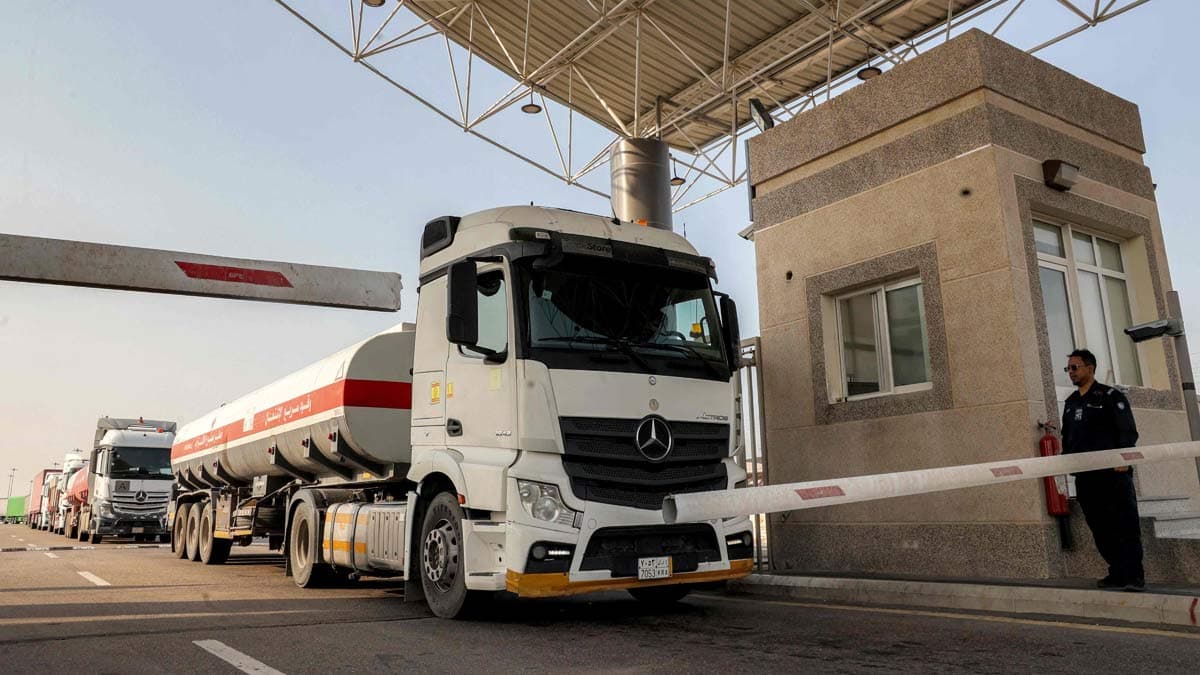
UAE Halts Habshan Gas Facility Operations After Debris From Intercepted Missiles
10 sources compared

Iran Threatens Gulf Energy Facilities After Israel Strikes South Pars Gas Field
11 sources compared