Business19 November, 20252 min read
Sotheby's Sells Gustav Klimt's Portrait of Elisabeth Lederer for $236.4 Million, Sets Modern Art Auction Record
This article is an automated aggregation of coverage from news outlets. Our editorials offer in-depth analysis curated by the NewsCord team.
Painting sold for $236.4 million at Sotheby’s in New York. Sale became most expensive modern artwork and second-most expensive painting sold at auction.
61 outlets told this the same way.
Outlets did split on CATL Starts Trial Production at Debrecen Battery Cell Plant in Hungary →
Klimt auction record
On 18 November at Sotheby's inaugural evening sale in New York's Breuer building, Gustav Klimt's Portrait of Elisabeth Lederer sold for $236.4 million, establishing a new auction record for modern art and making it one of the most valuable paintings ever sold publicly. The price was reached after roughly a 20-minute bidding contest among multiple parties, and Sotheby's did not publicly identify the buyer. Several outlets framed the result variably as a Sotheby's record, a modern-art record and the second-highest auction price overall, underscoring the sale's singular stature in the market.
“Gustav Klimt’s Portrait of Elisabeth Lederer sold for $236.4 million at Sotheby’s inaugural evening sale at the Breuer Building in New York, becoming the most valuable work ever sold in the auction house’s history and the second-most expensive artwork ever at auction.”
Klimt portrait description
The picture is a striking, near‑full‑length portrait executed in Klimt’s late mature phase (about 1914–16) and measures roughly six feet (around 1.8–2.0 m). Reporters repeatedly note its unusual, elongated psychological treatment of the sitter and its richly patterned Asian‑inspired costume, and they stress the work’s rarity, calling it one of only two full‑length Klimt portraits still privately owned. Those formal details — date range, scale, costume and the work’s place in Klimt’s late period — were central to how auctioneers and commentators explained why the painting fetched such a premium.
Wartime provenance and biography
The painting’s wartime provenance and the sitter’s biography featured prominently across accounts.
“The painting was seized by the Nazis after Austria’s 1938 annexation, reappeared on the market in the early 1980s, and entered the private collection of billionaire heir Leonard A. Lauder.”
Many reports recount that the Lederer collection was seized or looted in 1938 after Austria’s annexation.
The Klimt painting narrowly avoided destruction in wartime fires.
Elisabeth Lederer reportedly used a false claim about being Klimt’s daughter to obtain papers that helped her remain in Vienna.
Several elements of the provenance narrative recur across outlets, including restitution to the Lederer family after the war, the painting's later appearance on the market in the early 1980s, and its eventual acquisition by Leonard A. Lauder.
However, details and emphases differ between reports.
Lauder Sale Coverage
The sale was the headline of Leonard A. Lauder’s single-owner presentation, with coverage emphasizing the lauded provenance and theatrical highlights, notably Maurizio Cattelan’s functioning 18K gold toilet.
Outlets diverge on totals and framing, with multiple reports putting the Lauder evening and adjacent modern sale figures in the $500–$700 million range and offering slightly different interpretations of what those numbers signal about the market.

Some commentators see the results as proof of renewed demand for blue-chip, well-provenanced works, while others flagged the sales as spectacle and a brand moment for Sotheby’s Breuer debut.
Klimt sale reporting
Reports differ most on the buyer and the final moments: some accounts say the hammer fell at $205 million to a phone bidder represented by Sotheby's Julian Dawes or after a phone duel between specialists, while others simply record an anonymous buyer calling in.
“Sotheby’s vice chairman Julian Dawes bid by phone to secure the work for a client.”
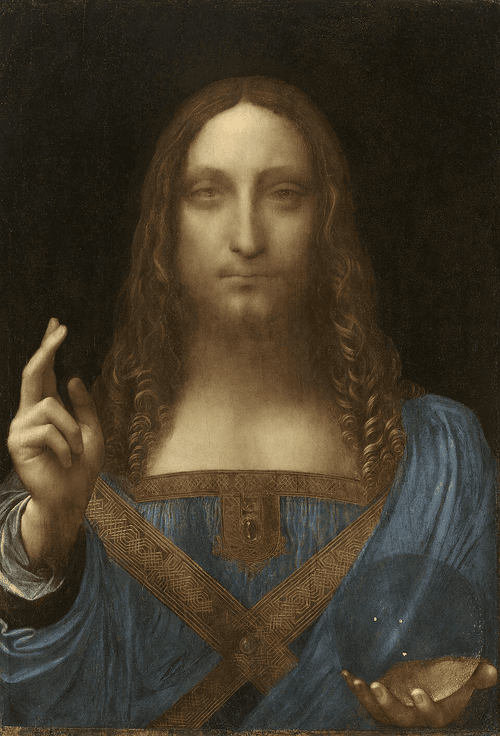
Coverage places the Klimt sale in a pantheon of auction records, frequently comparing it to Klimt's prior auction high (Lady with a Fan, c.$108m) and to the all-time auction high, Leonardo's Salvator Mundi at roughly $450m, to give readers a sense of scale.
