Protests21 November, 20252 min read
South African Government Declares Gender-Based Violence And Femicide A National Disaster After Mass Protests
South African government officially classified gender-based violence and femicide as a national disaster. Thousands across major cities staged 15-minute nationwide lie-down protests and economic shutdowns.

15 outlets told this the same way.
Outlets did split on France Suspends Police Stun Grenades at High School Protests After 15-Year-Old Loses Hand →
South Africa GBV emergency
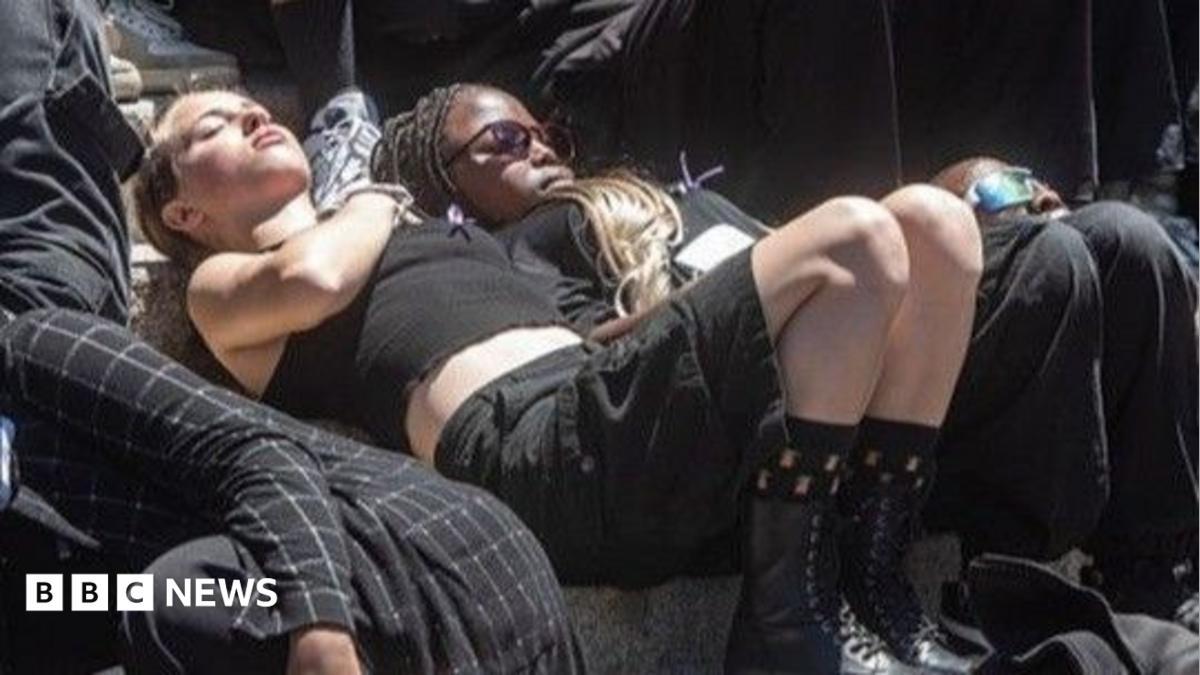
South Africa declared gender-based violence (GBV) and femicide a national disaster following mass nationwide protests organized by Women for Change, which staged 15-minute 'silent lie-down' demonstrations with thousands dressed in black to symbolize the roughly 15 women murdered each day. Reports describe the action as a nationwide shutdown across multiple meetup points ahead of the G20 summit and say the disaster-management declaration followed an assessment that GBV and femicide pose 'persistent and immediate life-safety risks,' elevating the crisis as a priority for the executive and all state organs. Protesters, survivors, activists and celebrities took part to press the government for urgent action while invoking stark national data on murders and rape that campaigners say require extraordinary measures.
“Hundreds of women gathered in a Johannesburg park and in other South African cities to stage a 15-minute silent lie-down protest ahead of this weekend’s G20 summit, wearing black to symbolize the roughly 15 women who die each day from gender-based violence (GBV) and femicide.”
South Africa gender violence crisis
Campaigners and international organisations pointed to alarming statistics and long-term failures in implementation as a key rationale behind the protests and the declaration. Several outlets cite UN Women and government survey figures showing South Africa's femicide rate is about five times the global average and that one in three women have experienced physical violence. Reporters also referenced police data and HSRC figures documenting thousands of reported rapes and nearly 1,000 murders, data organisers used to demand an urgent national response.
Reactions to GBV declaration
Activists welcomed the declaration but many were sceptical about whether it will produce sustained action. Several sources say campaigners have repeatedly pressed for disaster classification for years and that the National Disaster Management Centre had previously refused to treat gender-based violence as a disaster. Organisers and spokespeople pointed to poor implementation, lack of transparency and social norms that normalise violence as barriers that a declaration alone will not fix.
“Activists welcomed the attention but criticized the timing as politically driven ahead of the G20, saying the declaration should not be a show for visitors but must lead to real justice and action.”
Protest tactics and participants
Protesters used diverse tactics to draw attention, including silent lie-downs, nationwide shutdowns, and symbolic props such as an "Unburied Casket." They also employed prosthetics and body paint and amplified their message on social media, with celebrities changing their profiles to purple.
Campaigners mounted mass petitions, repeatedly citing one with more than one million signatures. Organisers described the movement as including survivors, ordinary citizens, and LGBTQIA+ participants across cities from Johannesburg to Cape Town.
GBV disaster classification debate
Observers and commentators note what the disaster label could enable and why many remain uncertain it will be enough. Outlets summarised that classifying gender-based violence as a disaster would let government departments use allocated budgets to roll out prevention and response measures. They also reported that measures could be escalated to a national state of disaster for faster urgent action if initial steps fail.
“It explains that classifying GBV as a disaster would let government departments use allocated budgets to roll out prevention and response measures, and if those measures fail the government could declare a national state of disaster to enable faster, more urgent action.”
Many sources emphasise activist warnings that laws and crisis declarations have existed in other forms, including a 2019 national crisis label, without producing effective implementation. Activists call for tangible services such as easier access to justice, protection orders, counselling, and transparent, sustained interventions.
%2Ffile%2Fattachments%2F2984%2F15_623480.jpg&w=1920&q=75)