Full Analysis Summary
Seoul-US trade coordination
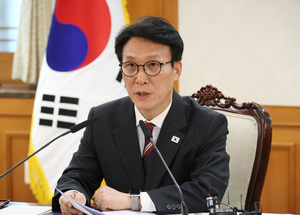
South Korea’s prime minister, Kim Min-seok, scheduled a 5 p.m. meeting with ruling Democratic Party lawmakers and the presidential chief of staff to review a special bill meant to implement Seoul’s pledges of U.S. investment and to coordinate strategy amid U.S. trade pressure.
Officials named as attendees include presidential chief of staff Kang Hoon-sik, ruling party chief Rep. Jung Chung-rae, and presidential political affairs secretary Hong Ik-pyo.
The session is explicitly tied to outcomes from a recent trade delegation trip to the U.S. and to mounting concerns after President Donald Trump’s threats around 'reciprocal' tariffs on Korean goods.
The only other provided source does not cover this political meeting and instead contains unrelated device instructions, indicating a lack of alternative reporting in the supplied set of articles.
Coverage Differences
Unique / Off-topic coverage
The Korea Herald (Asian) provides a focused, factual political account of a high-level meeting to push a special investment bill, naming participants and linking the talks to US tariff threats and a recent trade trip. PressTV (West Asian), by contrast, does not report on the meeting at all; its supplied snippet contains technical instructions for adding a webpage to a device home screen, which is unrelated to the policy topic and therefore offers no corroboration or alternate framing on the meeting.
Tone / Narrative
The Korea Herald frames the meeting as an urgent, policy-focused coordination driven by external trade pressure (quoting Trump’s tariff threats and a recent US trip). The PressTV snippet’s lack of relevant content means it contributes no tone on the subject; thus, across the supplied sources the only tone available is the Korea Herald’s neutral, administrative reporting.
Korea-US investment deal
The bill is tied to a bilateral trade arrangement in which South Korea pledged roughly $350 billion in US investment in exchange for the US reducing reciprocal tariffs from 25% to 15%, according to the Korea Herald.
Officials plan to use the meeting to review the outcomes of a trade delegation’s recent US trip and to coordinate the Democratic Party’s approach to passing the special investment bill in the National Assembly.
Coverage Differences
Missed information / Lack of corroboration
The Korea Herald provides specific details tying the special bill to the $350 billion investment pledge and a tariff-reduction arrangement. The PressTV snippet provides no corroborating policy details; because it is off-topic, the supplied coverage set lacks independent confirmation or alternative framing of the bill’s terms or political stakes.
Special investment meeting agenda
Officials expect the meeting to focus on both the political strategy to secure passage of the special investment bill and on ancillary domestic measures that intersect with the agreement.
The Korea Herald notes a Democratic Party proposal to allow large discount chains to operate 24-hour online services for overnight (dawn) delivery as a measure to balance offline and online retail, a domestic economic policy consideration that may be discussed alongside fulfillment of the US investment commitments.
Coverage Differences
Narrative / Scope
The Korea Herald expands the scope beyond international trade mechanics to domestic retail policy (the 24-hour online “dawn” delivery proposal) as part of the meeting’s agenda. PressTV’s provided snippet is silent on both the international trade and domestic retail policy topics, illustrating a gap in scope between the two sources: one is policy-dense and the other is unrelated technical guidance.
Seoul tariff strategy
The Herald's reporting implies political sensitivity: the meeting's timing and its explicit link to US tariff rhetoric signal Seoul's urgency to finalize domestic measures that implement international commitments and to manage backlash from tariff changes.
The article says officials are coordinating strategy, indicating concern about legislative hurdles and public reaction, and it shows the government is tying specific domestic retail reforms to the broader investment deal.
Coverage Differences
Tone / Framing
The Korea Herald frames the meeting as a pragmatic, urgency-driven coordination among executive and ruling-party figures in response to external trade pressure. Because PressTV’s supplied content does not include political reporting, it contributes no alternative framing and therefore highlights that, among the available sources, only the Korea Herald provides the political sensitivity and framing.
Source limitations and assessment
Based on the supplied articles, the Korea Herald is the only source reporting the meeting’s facts, scope, and its connection to the US investment pledge and Trump's tariff rhetoric, while PressTV provides no relevant coverage in the supplied snippet, so there is no cross-check or alternative regional perspective in the provided set.
Because of this constrained source set, any comprehensive judgment about political debate, legislative prospects, or US–Korea negotiation dynamics beyond what the Korea Herald reports would require additional reporting from other outlets.
The available evidence should be treated as a single-source account unless and until more sources are provided.
Coverage Differences
Missed information / Source limitation
The set of supplied sources is limited: The Korea Herald offers detailed reporting while PressTV’s snippet is unrelated. This produces an information gap—there is no Western Mainstream, Western Alternative, or other regional corroboration provided in the supplied materials to compare narratives, tone, or claims beyond the Korea Herald’s account.