Yemen09 January, 20262 min read
Southern Transitional Council Declares Disputed Dissolution in Riyadh
Riyadh-based STC delegation announced the council's dissolution during Saudi-hosted talks STC spokesmen in Abu Dhabi called the Riyadh disbanding announcement 'ridiculous'

9 outlets told this the same way.
Saudi‑UAE Rift Over Yemen
On Jan. 9, 2026, a delegation in Riyadh read a statement on Saudi television announcing the dissolution of the UAE‑backed Southern Transitional Council (STC) and pledging to pursue southern aims through a Saudi‑sponsored “comprehensive southern conference.”
“On Jan. 9, 2026, a delegation of the UAE-backed Southern Transitional Council (STC) allegedly detained in Riyadh read a statement on Saudi TV saying the STC was dissolving after a failed southern offensive that drew a Saudi military response.”
The reading was attributed to STC secretary-general Abdulrahman al‑Subaihi and reported by Saudi media and a Saudi‑backed Yemeni government agency.
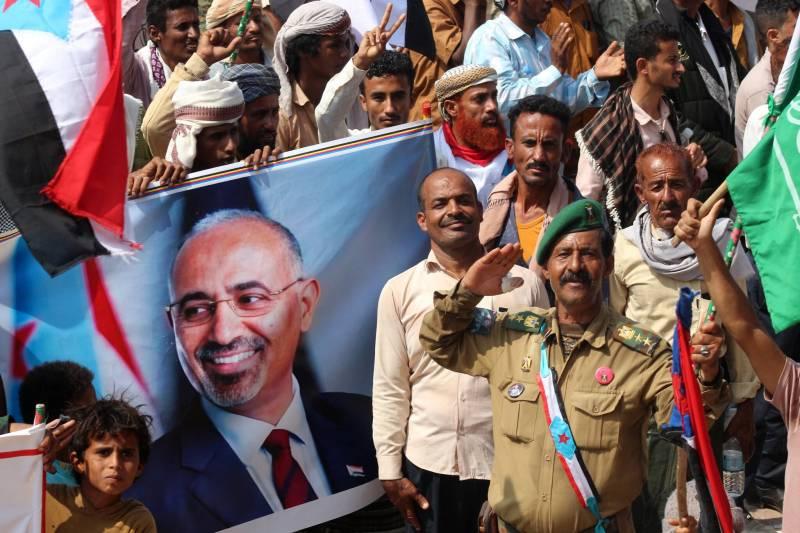
Some reports say the delegation had been summoned to Riyadh after an STC offensive was repelled.
Those developments have been described as intensifying a rift between Saudi Arabia and the UAE.
STC dispute over dissolution
STC officials and representatives based outside Riyadh immediately disputed the validity of the dissolution announcement. STC spokesman Anwar al‑Tamimi, speaking from Abu Dhabi, called reports that the group had been dissolved "ridiculous" and said the Riyadh delegation could not be reached. Colleagues in the UAE said the televised statement appeared to have been made under duress.
The STC's National Assembly has urged demonstrations in Aden and Mukalla, rejecting what it called 'partial or evasive solutions'. This reflects sharp division within the movement over the Riyadh claims.

Dissolution and diplomatic tensions
Saudi officials and allied voices framed the dissolution as a constructive step toward wider southern participation and Riyadh's planned conference. Saudi Defence Minister Khalid bin Salman described the move as a 'courageous step,' and Saudi authorities said they would form a preparatory committee to organise the conference.
“Saudi Defence Minister Khalid bin Salman welcomed the declaration as a ‘courageous step,’ saying it would broaden southern participation in the Riyadh conference and that Saudi Arabia would form a preparatory committee to organise it.”
Observers and some outlets place the announcement in the context of recent hostilities, noting a December STC offensive that overran Hadramout and al-Mahra before being pushed back. Those observers also describe Riyadh's actions — including strikes on vessels, a state of emergency and orders for UAE withdrawals — as deepening a diplomatic rift with the UAE.
STC territorial developments
The military and territorial context underpins competing accounts. Reports recount heavy December fighting in which the STC initially seized the two eastern governorates bordering Saudi Arabia - Hadramawt and Al Mahrah. Government-backed forces then recaptured those areas, and the STC is now described as holding only parts of Aden and Dhale.
Some outlets characterise the STC's December expansion as a miscalculation and argue Riyadh views separatism as increasingly untenable. STC statements frame dissolution as a step to protect the southern cause and advance dialogue under Saudi auspices.

STC status and uncertainty
Significant ambiguity remains as outlets report conflicting claims about whether the Riyadh statement reflected a genuine internal decision or a declaration made under pressure. Reports also conflict over the whereabouts of STC leader Aidarous al-Zubaidi and note Saudi officials' public silence in some accounts. The combination of televised statements, public denials, calls for demonstrations, and ongoing military tensions has left the STC's status disputed and uncertain across the reporting landscape.
“Colleagues of the detained delegation based in the UAE rejected the announcement as made under duress, and STC leader Aidarous al‑Zubaidi was reported to have fled to an unknown location.”