Full Analysis Summary
Crew-12 pre-dawn liftoff
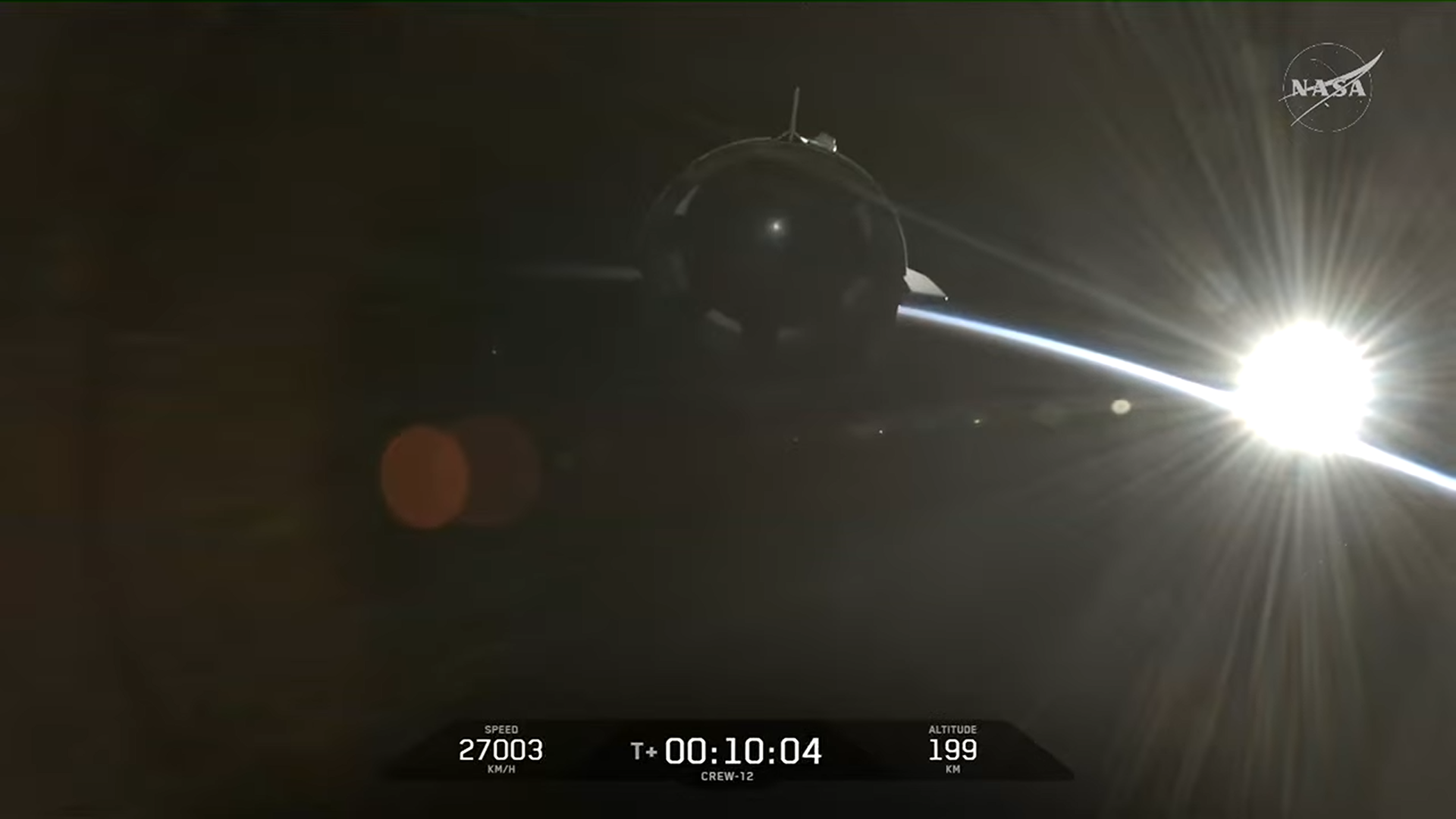
SpaceX launched NASA’s Crew-12 mission from Cape Canaveral in a pre-dawn liftoff that sent a Falcon 9 and Crew Dragon toward the International Space Station, carrying four crew members for an extended stay.
Space reported the mission was set for a Feb. 13 liftoff at 5:15 a.m. EST and that NASA’s launch webcast began earlier in the morning.
NBC confirmed the crew launched early Friday and were en route to the station.
NPR described the pre-dawn ascent and the Falcon 9’s nine-minute climb into orbit.
Coverage Differences
Timing/Status
Space’s piece describes the mission in pre‑launch terms with a scheduled Feb. 13, 5:15 a.m. EST liftoff and a planned NASA webcast: it says the launch was "set to launch Crew‑12" and gives specific webcast start times, whereas NBC and NPR report the flight as having already occurred, with NBC saying the crew "launched early Friday" and NPR describing the actual "pre‑dawn Friday liftoff" and the nine‑minute ascent. This is a difference between a pre‑launch schedule framing (Space) and post‑launch reporting (NBC, NPR).
Tone
Space uses technical, schedule‑focused language (launch times, webcast platforms, launch‑readiness checks), while NBC emphasizes operational context (the station returning to seven crew and the earlier Crew‑11 medical return) and NPR emphasizes the sensory description of the ascent. Each source’s focus shapes how the same event is presented.
Crew-12 roster discrepancies
The Crew-12 roster includes NASA astronauts Jessica Meir and Jack Hathaway, ESA astronaut Sophie Adenot, and a Russian cosmonaut whose name appears with differing spellings across sources.
Space lists the Russian cosmonaut as 'Andrey Fedaev' and presents the crew as 'commander Jessica Meir and pilot Jack Hathaway (both NASA), ESA astronaut Sophie Adenot, and Russian cosmonaut Andrey Fedaev' for an eight-month mission.
NBC and NPR use the spelling 'Andrey Fedyaev'.
NPR additionally assigns mission-specialist designations to Fedyaev and Adenot and explicitly lists Hathaway as pilot and Meir as commander.
These variations reflect small editorial differences in name transliteration and role labeling rather than substantive disagreement about who is flying.
Coverage Differences
Spelling/Transliteration
Space spells the Russian cosmonaut’s name "Andrey Fedaev," while NBC News and NPR use "Andrey Fedyaev." This is a straightforward transliteration variance across outlets rather than a disagreement about identity.
Role Labels
Space gives a concise crew listing with Meir as commander and Hathaway as pilot and identifies Adenot and the Russian cosmonaut without the "mission specialist" tag, whereas NPR explicitly lists mission‑specialist roles for Andrey Fedyaev and Sophie Adenot. NBC lists the crew without role qualifiers. These are differences in how much role detail each outlet reports.
Crew-12 docking timeline
Space noted the flight was moved up to replace Crew-11 after that team’s early return for a medical evacuation and said the Crew-12 flight would last about eight months.
Space added that NASA would provide a separate webcast on Feb. 14 for docking coverage.
NBC reported the Dragon capsule was expected to "dock Saturday around 3:15 p.m. ET" and connected the arrival to the station returning to its normal seven-person complement after Crew-11’s Jan. 14 early return.
NPR likewise said the crew "are expected to dock with the station Saturday afternoon Eastern time."
These accounts align on the docking window and the Crew-11 context but differ in the level of timing precision each outlet provides.
Coverage Differences
Timing Precision
NBC gives an explicit docking time — "around 3:15 p.m. ET" — while NPR uses the looser phrase "Saturday afternoon Eastern time" and Space references a Feb. 14 webcast for docking coverage. The sources agree on the same docking window in substance but vary in specificity.
Mission Length/Context
Space explicitly states the Crew‑12 flight "will fly an eight‑month mission" and that it "was moved up to replace Crew‑11, which returned early after the station’s first‑ever medical evacuation," while NBC and NPR mention Crew‑11’s early return and medical issue but emphasize operational impacts (returning to a full crew). The outlets share context but highlight different operational takeaways.
Launch coverage summary
Space reported weather was 'about a 90% chance of go,' and said teams would monitor wind and range weather for the Falcon 9 booster landing.
Space also said mission managers had completed a Launch Readiness Review.
NBC noted the launch had been delayed two days by high winds and that SpaceX and the FAA had reviewed 'a recent uncrewed Falcon 9 anomaly that briefly paused flights'.
NPR highlighted the rocket's nine-minute ascent and the visual brightness of the pre-dawn climb.
Together, the three outlets present technical readiness, regulatory review, and the visual experience of the launch.
Coverage Differences
Operational Focus
Space emphasizes readiness and weather probabilities ("about a 90% chance of go," launch readiness checks, and monitoring booster landing conditions), NBC emphasizes recent operational disruptions and regulatory review (the two‑day weather delay and an FAA/SpaceX review of an uncrewed anomaly), and NPR focuses on the ascent’s sensory impact ("briefly turning the night sky bright during its nine-minute ascent"). These reflect different editorial angles rather than conflicting facts.