Full story
Ceuta border breach
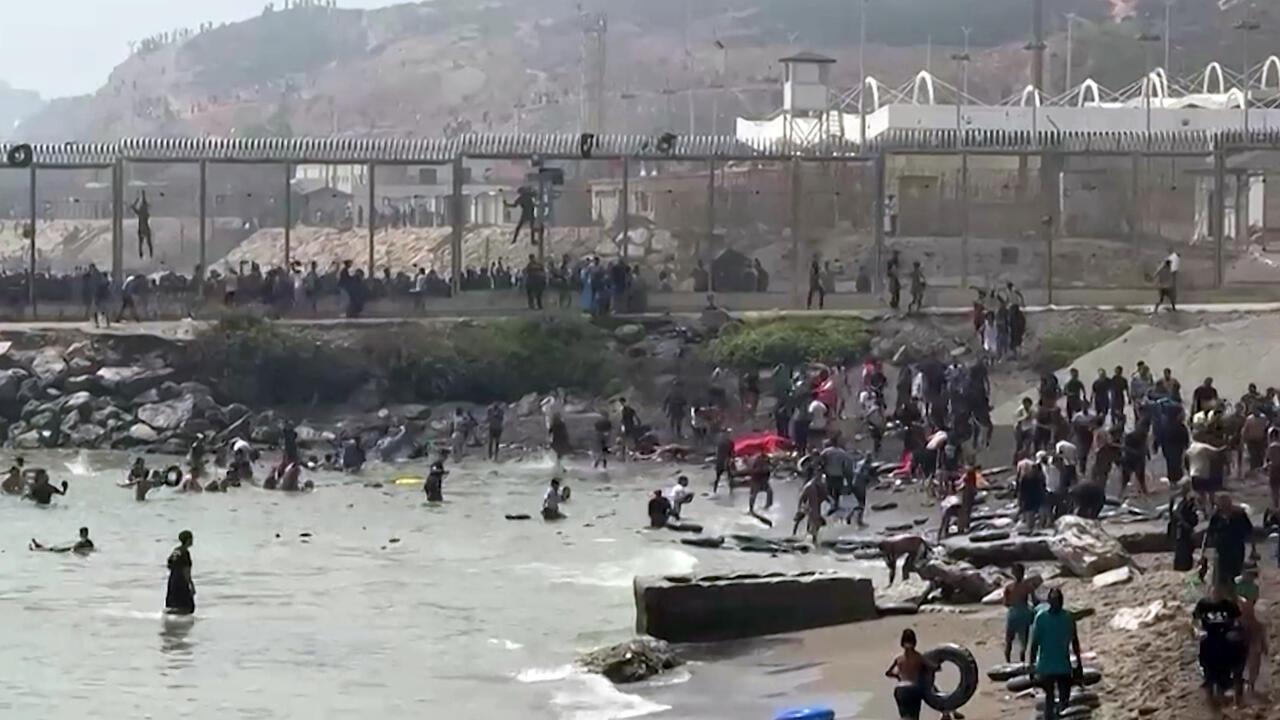
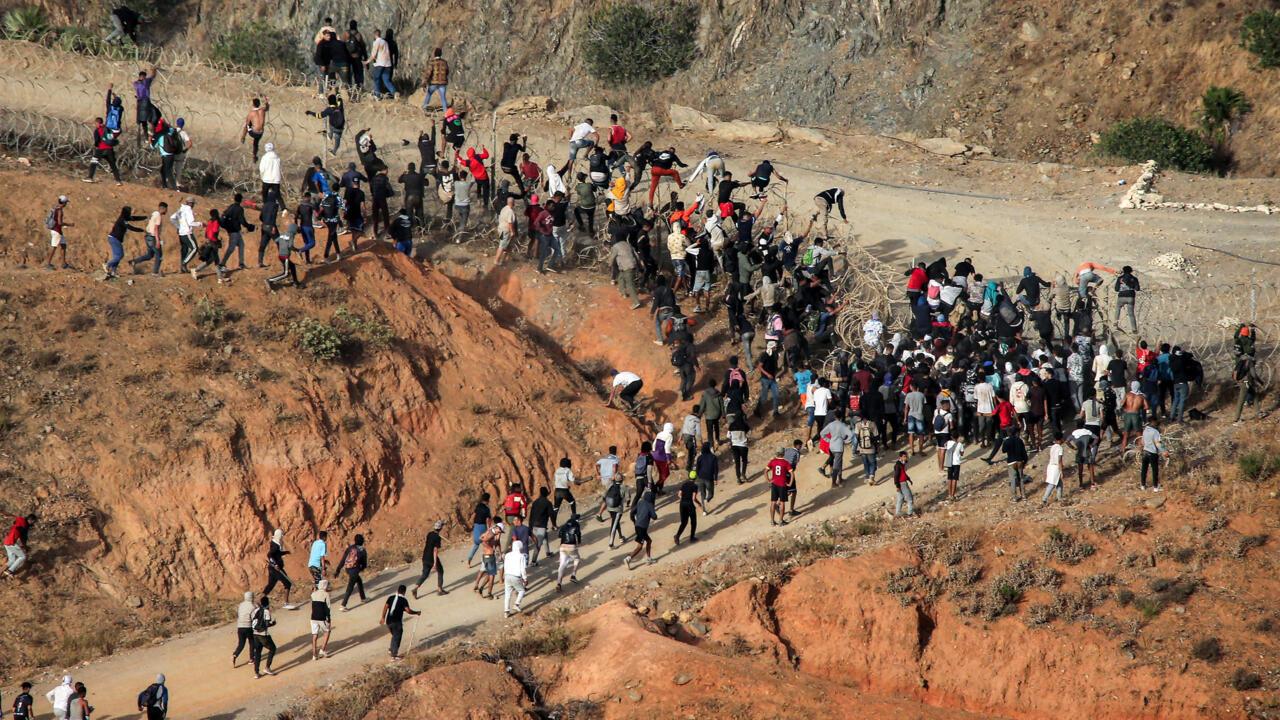
Thousands of migrants breached the Morocco border into Spain’s tiny territory of Ceuta, prompting Spain to deploy its military to restore order after at least nine people died in the attempt.
“to maintain security in the city of Ceuta”
Spain’s government said it would send the Armed Forces to help the Civil Guard “to maintain security in the city of Ceuta,” and it announced that Prime Minister Pedro Sánchez would join Interior Minister Fernando Grande-Marlaska and visit Ceuta Friday.

Rachid Sbihi, head of the association that represents Spain’s Civil Guard officers in Ceuta, said, “The situation is absolute chaos,” adding that the border had “totally collapsed.”
The Guardian reported that videos shot at Tarajal beach showed crowds of people walking around the breakwaters and running on the beach and roads, while a Guardia Civil spokesperson said the migrants were “massively entering from the sea” through the Tarajal breakwater.
The Guardian also reported that TVE said between 2,000 and 3,000 people had crossed into Ceuta, while Efe said some had entered by scaling the high border fence.
Political pressure and quotes
Ceuta’s regional president Juan Jesús Vivas demanded a national emergency declaration and additional police and troops, saying the aim was “to guarantee the inviolability of the frontier” and citizens’ safety.
The Guardian quoted Vivas calling for a national emergency over the crossings, and it reported that Spain’s interior ministry rejected the request by saying such emergencies could not be declared over migration issues.

In a post on X, Pedro Sánchez said his government would provide “an immediate response” to the situation in Ceuta and said, “We’re mobilising all necessary resources, working with Moroccan and international authorities.”
Opposition leaders framed the crisis as a national security failure, with Alberto Núñez Feijóo telling the Guardian that “The government can’t look the other way, because we are facing a national security crisis,” and Santiago Abascal describing the incident as an “invasion.”
The BBC also quoted Zakaria Zarroqui, a migrant rights activist, saying, “The situation remains out of control at this very moment,” as people continued to flock to Fnideq in Morocco to attempt the crossing.
What comes next
Spain’s interior ministry announced that 60 members of the armed forces would be deployed to Ceuta, along with an additional 30 Guardia Civil officers, to reinforce the Guardia Civil in maintaining security in the city.
“60 members of the armed forces would be deployed to Ceuta”
The Guardian said Spain’s interior ministry rejected calls for a national emergency and limited the response to deploying forces, while also stating that such emergencies could only be declared in response to dire meteorological events or a volcanic or nuclear threat.
The BBC reported that the Armed Forces would reinforce the Guardia Civil in the exercise of its powers and in any others that were necessary to maintain security in Ceuta, as authorities confirmed deaths of at least 10 people, most of them drowned.
The BBC also said Vivas warned that if “adequate and proportionate measures are not applied” and if the intensity of the influx continues, Ceuta could soon see figures similar to the May 2021 episode.
In parallel, the BBC reported that Spain’s Supreme Court ruled earlier this month that migrants arriving at Ceuta and Melilla by sea cannot be summarily returned, and it quoted Vivas saying, “We are in a humanitarian and social emergency situation.”