Full Analysis Summary
Spain's 1986 EU accession
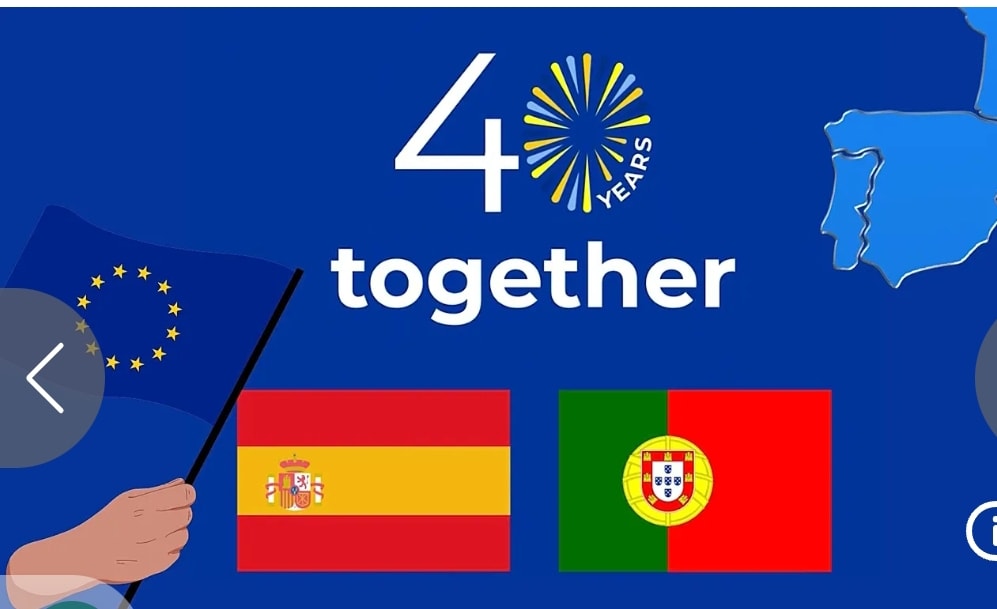
Spain's accession to the European Communities on January 1, 1986 marked the formal end of Franco-era isolation and began a rapid process of political reintegration and economic modernization.
Joining the EEC anchored Spain's democratic transition by tying national reforms to European treaties and institutions, while immediately adopting common rules such as VAT that integrated Spain into European markets.
Observers credit EU membership with re-establishing Spain as a central participant in continental politics after decades of authoritarian rule and experimentation with non-alignment during the transition years.
Coverage Differences
Emphasis / Tone
vocal.media (Other) emphasizes accession as a structural anchor that 'returned' Spain to Europe and states that accession 'anchored their democratic transitions,' focusing on institutional mechanisms. El País (Western Mainstream) frames the accession as part of a broader four‑decade transformation and emphasizes national scale and statistical gains—calling the period a 'profound political, social and economic transformation' and noting specific policy changes like VAT taking effect immediately on Jan. 1, 1986. The two sources therefore complement rather than directly contradict: vocal.media stresses institutional mechanics while El País stresses the scale and results for Spain specifically.
Spain's EU economic transformation
EU membership delivered significant economic modernization by providing market access, investment, and cohesion and structural funds that financed highways, ports, and urban renewal, helping shift Spain’s economy toward manufacturing, tourism, and services.
Over time these changes coincided with dramatic growth, as Spain moved from a low‑income per‑capita position at accession to becoming one of the EU’s largest economies, a trajectory the Spanish press calls unmatched in scale among members since 1986.
Coverage Differences
Narrative / Comparative focus
vocal.media (Other) outlines the mechanisms—cohesion and structural funds, market opening and diversification (manufacturing, tourism, services)—that explain modernization. El País (Western Mainstream) stresses the empirical outcomes and comparative success of Spain, giving figures on population and GDP per capita growth and claiming 'no other member has matched its scale' of advancement. Thus vocal.media explains the 'how,' while El País emphasizes the 'how much' and places Spain’s gains in comparative context.
Effects of EU integration
Beyond economics, legal integration and common standards reshaped Spanish governance and society.
Accession required meeting democratic and rule-of-law criteria and then subjected national rules to EU treaties and regulations, bringing Spain into shared decision-making bodies.
Programs such as Erasmus and broader EU social standards encouraged mobility and a more cosmopolitan identity, even as debates about sovereignty and cultural change persisted.
Coverage Differences
Focus on institutional mechanics vs. national political history
vocal.media (Other) emphasizes the technical legal integration—'Joining requires meeting democratic, rule‑of‑law and market‑economy criteria' and details how EU law shapes domestic regulation. El País (Western Mainstream) places integration in the context of Spain’s fraught transition—mentioning Suárez’s flirtation with non‑alignment and the 1981 coup attempt—but underscores sustained public support for Europe. The difference is one of framing: vocal.media foregrounds institutional processes; El País foregrounds Spain’s domestic political resilience and public sentiment.
EU shocks and recovery
EU membership exposed Spain to collective rules and continental crises: the 2008 financial crash, subsequent austerity pressures, and the COVID-19 shock tested the resilience of Spain’s recovery and social model.
Both sources note the severity of these tests; vocal.media lists the 2008 crisis, Portugal’s bailout, and Spain’s high unemployment, while El País acknowledges extra EU aid and frames these shocks as part of a broader story in which Spain nonetheless achieved large-scale gains since accession.
The reporting differs in emphasis between institutional constraints and a narrative of eventual recovery.
Coverage Differences
Tone / Narrative about crises
vocal.media (Other) emphasizes exposure to EU fiscal rules and crises ('They also faced severe tests: the 2008 financial crisis and its austerity aftermath...'), presenting accession as both enabling and binding. El País (Western Mainstream) recognizes the need for extra EU aid during crises but uses that acknowledgement to underline 'no other member has matched its scale' of advancement—framing crises as setbacks in an overall success story. The two thus differ in whether they foreground constraints or resilience.
Spain's EU priorities
Looking forward, both accounts point to new priorities - green transition, digitalization, demographic change and migration - as the next tests for Spain within the EU.
vocal.media lists these policy fronts explicitly and highlights the continued role of EU funds, single-market freedoms and shared policymaking in shaping reforms.
El País echoes the forward-looking note while warning that domestic political shifts toward euroskeptic or dismantling agendas could endanger some of the gains earned since 1986.
Coverage Differences
Warning vs. Technical roadmap
vocal.media (Other) presents a policy roadmap—green transitions, digitalization, demographic challenges—and the instruments (funds, single market) that will support them. El País (Western Mainstream) similarly lists challenges but pairs them with a political warning about euroskepticism that could reverse gains. Thus vocal.media is more technocratic about mechanisms, while El País blends technical priorities with a political cautionary tone.