Crime12 January, 20263 min read
Stephen Pittman Admits Antisemitic Arson, Torches Historic Jackson Synagogue
This article is an automated aggregation of coverage from news outlets. Our editorials offer in-depth analysis curated by the NewsCord team.
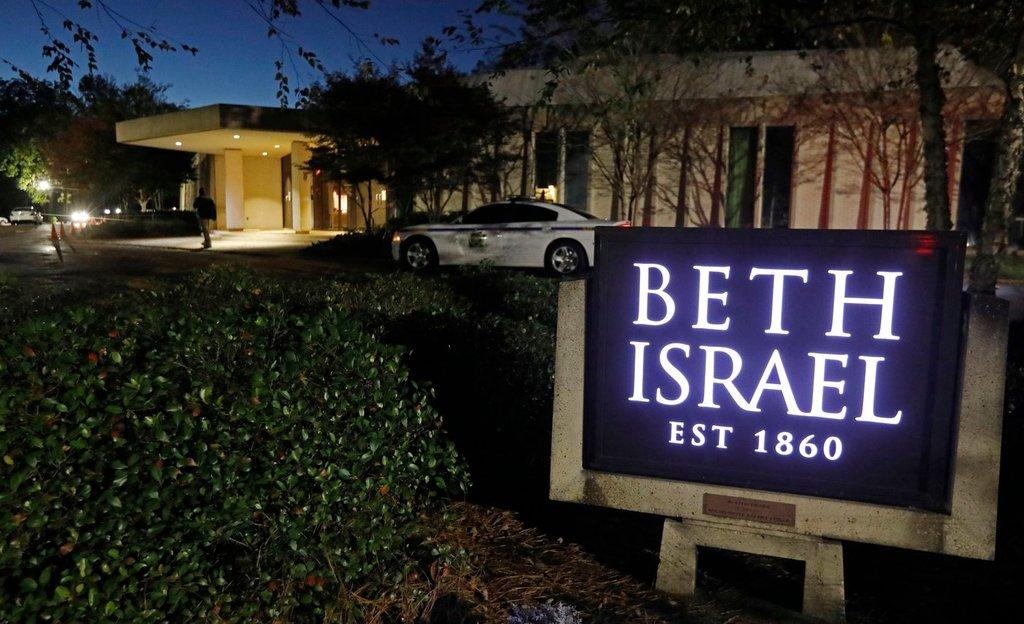
Stephen Pittman admitted targeting Beth Israel in Jackson because it was Jewish He poured accelerant in the synagogue lobby and set it on fire, footage shows
5 outlets told this the same way.
Jackson synagogue arson
Federal authorities say Stephen Pittman set fire to the historic Beth Israel synagogue in Jackson, Mississippi, on a pre-dawn Saturday. Pittman was later found by his father covered in burns and was arrested. Court documents and local officials described the case as brazen and potentially terroristic in nature.
“Authorities say the fire was set at the Beth Israel Congregation in Jackson shortly after 3 a.m. Saturday. No congregants or firefighters were injured.”
The Mississippi Free Press reports the blaze began shortly after 3 a.m. and that no congregants or firefighters were injured. The New York Post says Pittman was arrested after his father alerted police, and it notes Jackson Mayor John Horhn called the incident 'an act of terror'. Haaretz did not provide an article on the incident in the material supplied.

Alleged arson attack details
Investigators say the attack was methodical. Security footage described by the Mississippi Free Press shows a masked, hooded man pouring gasoline on the lobby floor and a couch. The FBI affidavit, as reported by both outlets, alleges Pittman bought gasoline, removed his license plate, used an axe to break a window, poured gas inside, and ignited it with a torch lighter.
The New York Post adds that court documents say Pittman laughed, told his father 'he finally got them,' and sent texts bragging about the attack. Investigators also recovered a burned cellphone and a hand torch believed to be linked to the incident. Haaretz did not supply a reporting piece on the event in the provided text.

Synagogue fire damage
The blaze inflicted significant institutional damage, and the Mississippi Free Press reported the fire badly damaged the synagogue's library and offices. The paper said five Torahs were being assessed for smoke damage, with two destroyed, while a Holocaust-era Torah kept behind glass was unharmed.
“The blaze badly damaged the synagogue’s library and offices. Five Torahs were being assessed for smoke damage; two Torahs in the library were destroyed. A Holocaust-survivor Torah behind glass was unharmed.”
The New York Post highlighted the Torah's miraculous survival and placed the attack in the synagogue's long history. Haaretz's supplied text did not offer reporting to corroborate or expand on those damage details.
Coverage of Pittman case
Mississippi Free Press describes Pittman's federal first-appearance hearing, noting a public defender was appointed, his hands were bandaged, and prosecutors said he faces about five to 20 years if convicted. The New York Post reports the charge as maliciously damaging or destroying a building by means of fire or explosive, repeats investigators' claims about his admission, and records the mayor's vow to treat antisemitic and racist attacks as threats to residents' safety. Haaretz did not provide a substantive article in the supplied material to comment on charging or court details.
Coverage of synagogue attack
Reporting places the attack in historical and communal context but with different emphases. Both outlets recall earlier violent episodes: the New York Post notes Beth Israel was bombed by local Ku Klux Klan members in 1967. The Mississippi Free Press recalls KKK bombings in the 1960s when the synagogue’s rabbi opposed segregation and emphasizes Beth Israel’s role as the longtime central Jewish institution in Mississippi, housing the Jewish Federation and the Institute of Southern Jewish Life.
“Beth Israel, the center of Jackson’s small Jewish community, was founded in 1860 and was bombed by local Ku Klux Klan members in 1967.”
The Mississippi Free Press also records immediate community responses, noting that the congregation’s president vowed to rebuild and that nearby churches have offered space. Haaretz’s supplied text does not include contextual reporting. These differences reflect editorial choices: the Post foregrounds an incendiary label and a single historical reference, the Free Press provides institutional history and community response, and Haaretz’s note marks an absence of sourced reporting.