Gaza Genocide13 January, 20263 min read
Storm Collapses Gaza Homes Damaged by Israel's Airstrikes, Killing Displaced Palestinians
This article is an automated aggregation of coverage from news outlets. Our editorials offer in-depth analysis curated by the NewsCord team.
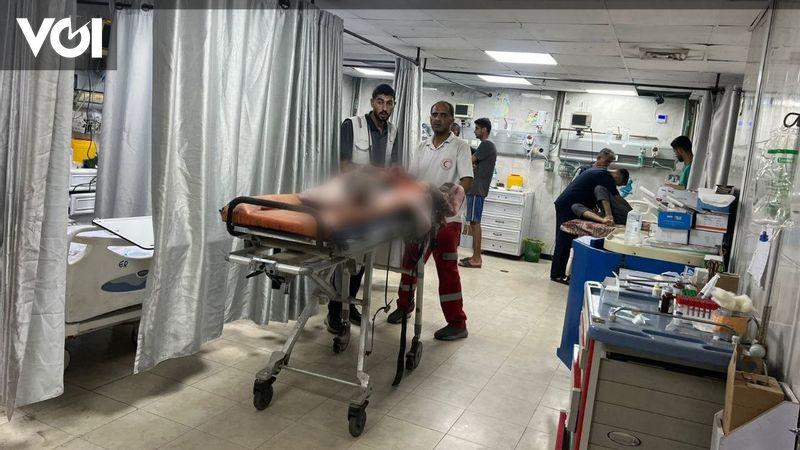
Powerful storm tore thousands of tents, flooded camps, and battered Gaza with heavy rains. Buildings previously damaged by Israeli airstrikes collapsed, killing at least four Palestinians sheltering in homes.
43 outlets told this the same way.
Outlets did split on Israel Marks Oct. 7 Anniversary With Strikes on Gaza, Netanyahu Faces Election After Nova Tribute →
The Guardian was read line by line by the Watchdog: 9.2. See the score →
Gaza storm casualties
A violent winter storm swept across the Gaza Strip, causing buildings already shattered by Israeli airstrikes to collapse. The storm killed displaced Palestinians sheltering in tents and weakened structures. Reports vary on the immediate death toll; Middle East Monitor said five Palestinians were killed when cracked or unstable homes collapsed and an additional elderly man died after debris from a minaret fell.
“Five Palestinians were killed in the Gaza Strip after buildings already damaged by Israeli airstrikes collapsed during a powerful storm, Palestinian civil defense and medical sources said.”
Anadolu Ajansı and AL24 News reported four deaths: an elderly man, a child and two women. Oman Observer and The Express Tribune gave higher counts, saying at least six people died in the storm, including a one-year-old who froze to death in a tent. Witnesses and local health sources described walls toppling onto tents and families' flimsy shelters being ripped away by strong winds and flooding, leaving survivors scrambling to salvage belongings and re-secure coverings on the narrow coastal strip where many displaced people live.

Storm-driven shelter crisis
The storm multiplied an acute shelter crisis: multiple sources say thousands of tents and displacement sites were flooded, torn apart or rendered uninhabitable. Gaza government and WAFA figures quoted by AL24 News and Middle East Monitor put as many as 127,000 of 135,000 tents unfit for habitation. CBC and The Express Tribune reported roughly 7,000 tents ruined in 48 hours and warned that many occupants have no alternative shelter.
UN agencies and Palestinian authorities told mainstream outlets that roughly 1.5 million people remain displaced and that about 300,000 new tents are urgently needed. Aid groups say incoming supply is insufficient and distributions are hampered by damaged infrastructure and access limits.

Gaza ceasefire casualties
Multiple sources report Israeli strikes have continued despite a fragile ceasefire, leaving hundreds killed and wounded since Oct. 10, 2025.
“Gaza health authorities say that despite a ceasefire that began Oct. 10, 2025, Israeli strikes have continued, killing 442 Palestinians and injuring more than 1,200.”
Anadolu Ajansı and Arab News PK cite Gaza health authorities saying 442 Palestinians were killed and over 1,200 wounded during the ceasefire period.
CBC and AL24 News repeated Gaza’s Health Ministry and hospital statements that more than 440 people were killed by Israeli fire since the truce began.
UNICEF and other UN agencies emphasized the toll on children, with UNICEF spokesman James Elder saying roughly 100 children have been killed since the ceasefire.
Many of those child deaths were attributed to airstrikes, drone strikes, tank shelling and live ammunition.
UN and health officials warned that ongoing Israeli operations and clearance procedures are slowing or blocking critical medical and food deliveries into Gaza.
Aid constraints in Gaza
Humanitarian response is constrained, with agencies warning that fuel shortages, destroyed equipment and Israeli clearance procedures are preventing efficient rescue and relief operations. CBC and The Express Tribune report municipal and civil defence teams lack fuel and working bulldozers and pumps because of war damage. UN News says medicine and food deliveries have been slowed or blocked by Israeli clearance processes and warns that a planned ban on international NGOs would further obstruct life-saving aid.
West Asian outlets and Gaza officials accuse the international community and Israel of failing to allow sufficient aid. Middle East Monitor reports that Hamas has called the situation genocidal.

Shelter collapses and response
Multiple sources describe displaced Palestinians dying in flimsy shelters after Israeli airstrikes left buildings unstable and a storm caused collapses, though outlets emphasize different details. West Asian and alternative Western outlets highlight the link between prior Israeli bombing, the shelter collapse and political accusations of genocide. Mainstream Western outlets emphasize operational rescue limits, UN verification and the urgent need for tens or hundreds of thousands of replacement tents and heating supplies.
“Shifa Hospital said walls collapsed onto tents, killing at least four people (two women, a 15-year-old girl and a 72-year-old man identified as Mohamed Hamouda); another woman was killed by a fallen wall in western Gaza City.”
Casualty counts vary — four, five or six dead in the storm — and cumulative figures since the ceasefire (about 440–442 reported by Gaza health authorities) differ between sources, so exact totals are ambiguous and require verification from hospital records and UN tallies. Despite numeric uncertainty, all cited sources call for immediate, expanded humanitarian access and shelter materials to prevent further deaths.
