Full Analysis Summary
Controversy Over Minister's Israel Visit
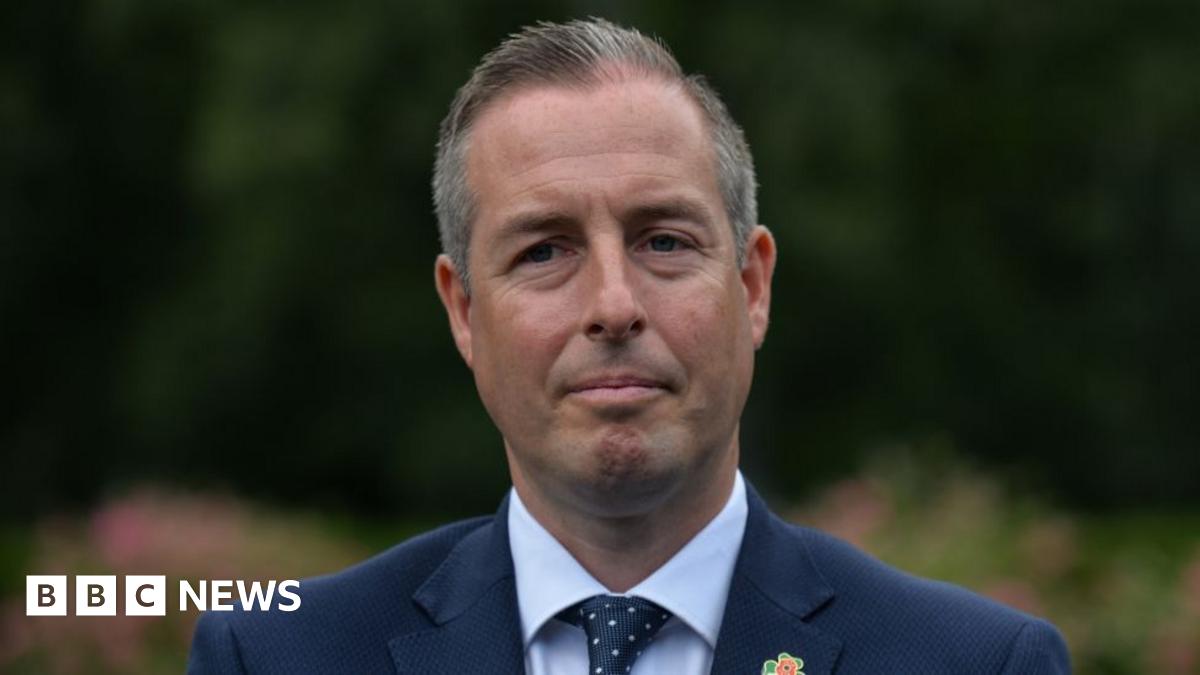
Stormont is preparing a no-confidence motion against Education Minister Paul Givan after he joined a six-day trip to Israel organized by the Israeli government.
The visit drew intense scrutiny in Northern Ireland.
The trip took place amid the aftermath of the 7 October 2023 attack by Hamas, which killed about 1,200 people in Israel.
It also occurred during Israel’s large-scale campaign in Gaza that Gaza’s Hamas-run health ministry says has caused over 68,500 deaths.
BBC reports that leading genocide scholars have declared that genocide is occurring in Gaza, a claim Israel denies.
This adds gravity to the political controversy surrounding a minister’s decision to participate in a government-organized visit to Israel.
Coverage Differences
missed information
Only BBC (Western Mainstream) is provided, so cross-source comparisons (e.g., West Asian or Western Alternative perspectives) cannot be verified. BBC reports the context, including the 7 October death toll, Gaza casualty figures, and notes that 'the world's leading genocide scholars have declared that genocide is occurring in Gaza, a claim Israel denies,' but without additional sources we cannot assess whether other outlets emphasize different casualty figures, dispute the genocide characterization, or frame the political stakes at Stormont differently.
Domestic Response to Minister's Trip
The domestic backlash has been sharp.
The Northern Ireland Teachers’ Council (NITC) criticized Givan’s participation and called for the Department of Education to maintain political neutrality.
They urged the removal of any promotion of the trip from departmental platforms.
Opposition also spilled into the streets as People Before Profit (PBP) organized a rally at Belfast City Hall.
The rally was joined by teachers, Gaza solidarity supporters, community groups, and some politicians.
This signaled a widening coalition of critics questioning the propriety of a minister’s pro-Israel engagement during a war widely condemned by genocide scholars.
Coverage Differences
missed information
With only BBC (Western Mainstream) available, we cannot compare how, for example, West Asian or Western Alternative outlets frame the NITC’s neutrality demand or the breadth and goals of the PBP-led rally. BBC reports the NITC’s call and the composition of the rally, but we can’t verify whether other sources highlight labor-union dissent more forcefully, portray the rally as larger/smaller, or emphasize different grievances about Givan’s trip.
Northern Ireland Political Motion
Politically, Stormont actors are now moving to test support for a no-confidence motion against Givan.
BBC reports there is a proposal to back such a motion; however, it is unlikely to succeed because ministers in Northern Ireland need only their own party’s support to remain in office.
This procedural reality shapes the stakes: the vote may be more about signaling and accountability than removal, given the structural protections for ministers.
Coverage Differences
missed information
Because only BBC (Western Mainstream) is available, we cannot assess whether other outlets provide alternative legal interpretations of ministerial security in office or different counts of parties backing the move. BBC frames the motion as unlikely to succeed due to internal party support requirements; without other sources, we can’t test for disagreements about the likelihood or timing of the vote.
Political Tensions and Gaza Crisis
Even if it fails, the no-confidence push could strain relations within the executive and slow policy progress, especially with an assembly election approaching.
BBC notes that such motions risk deepening ministerial conflicts in the coming months.
Against the backdrop of escalating outrage over Gaza—where genocide scholars have declared genocide and Israel disputes that characterization—the political temperature around Givan’s Israel trip and Stormont’s response looks set to remain high.
Coverage Differences
missed information
Only BBC (Western Mainstream) is provided. We cannot compare whether other outlets forecast different political fallout, emphasize the election timetable differently, or prioritize the genocide scholars’ assessment versus Israel’s denial in explaining the local political tensions.