Full Analysis Summary
Nuuk blackout and impacts
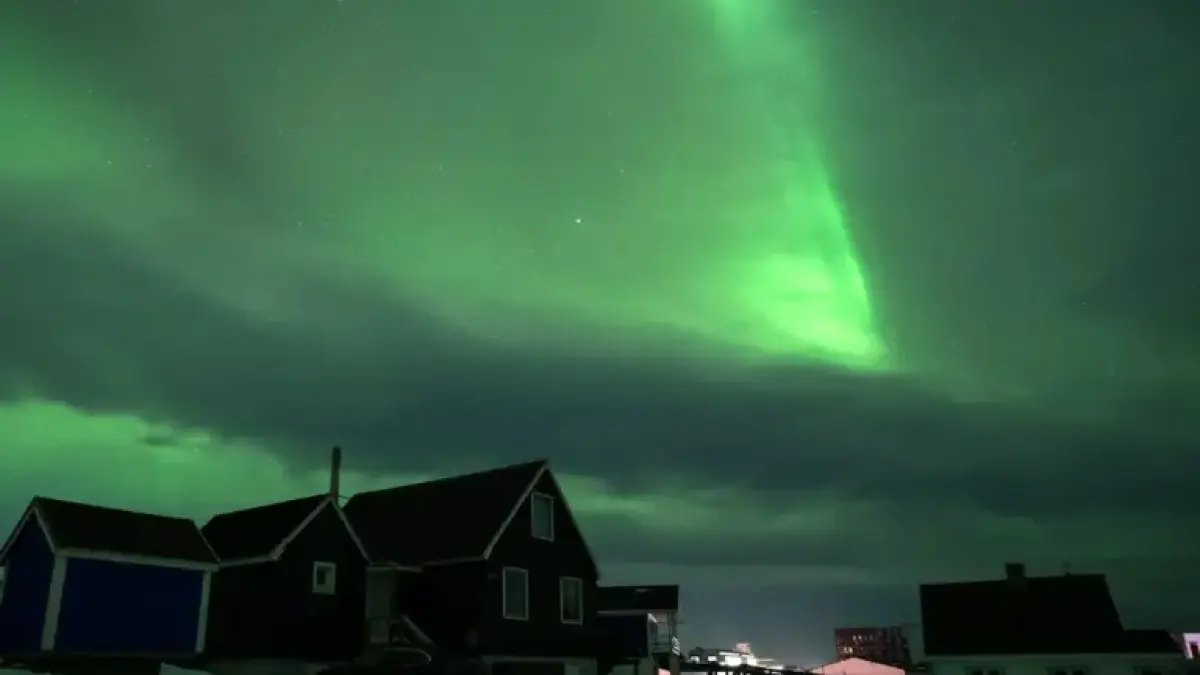
Strong winds late on Saturday caused a transmission line error at the Buksefjord hydroelectric plant, plunging Greenland's capital Nuuk into a widespread power outage that affected roughly 20,000 residents, officials said.
The blackout was reported around 10:30 pm (22:30 local time), and the state utility brought an emergency plant online to stabilize the grid while urging residents to conserve electricity as systems were rebooted.
Authorities also reported disruptions to water supplies and some internet services as the city worked to restore power.
Coverage Differences
Tone/Emphasis
Al Jazeera (West Asian) reports the outage by directly attributing it to "strong winds" and a transmission "line error" at the "main Buksefjord hydroelectric plant," emphasizing the utility’s actions and the timing of the blackout ("around 10:30pm"). filmogaz (Other) supplies largely the same factual account but uses the precise local time phrasing ("22:30 local time") and frames the restoration timeline with slightly different wording ("by 03:30 most of the city (about 75%) had power restored"). Both sources report the same core facts but differ slightly in time phrasing and emphasis on the utility versus authorities.
Nuuk power restoration update
Crews worked through the night.
The utility reported bringing an emergency plant online and had restored power to about 75% of Nuuk's population by approximately 3:30 a.m.
Officials urged residents to limit electricity use as systems were rebooted and called for energy conservation to help stabilize the grid.
They said restoration was underway, but the process left some neighborhoods without power longer than others.
Coverage Differences
Narrative detail
filmogaz (Other) explicitly notes that "authorities urged energy conservation while stabilizing the grid," highlighting the behavioral request to residents; Al Jazeera (West Asian) similarly reports the utility "urging people to limit electricity use as systems were rebooted" but places a slightly stronger emphasis on the utility’s operational action (bringing an emergency plant online) in its narrative.
Outage and preparedness advice
The outage coincided with government advice urging residents to keep at least five days' worth of essentials — water, food, medicine, warm clothing and alternate communications — though officials said the guidance was precautionary and did not signal an imminent crisis.
Filmogaz echoed that advisory, reporting similar precautionary guidance and noting authorities' reassurance that it was not issued in response to an existing emergency.
Coverage Differences
Tone/Context
Al Jazeera (West Asian) reports the government advisory wording directly and quotes officials saying the preparedness guide "did not mean a crisis was imminent," emphasizing the reassurance element. filmogaz (Other) repeats the same precautionary guidance and the list of recommended supplies, similarly framing it as preparatory; the two sources align closely here with little substantive contradiction but slightly different phrasing.
Greenland outage context
Both outlets situate the outage against a backdrop of heightened external attention on Greenland's strategic position.
Al Jazeera explicitly links this to broader tensions tied to U.S. President Donald Trump's territorial interest in Greenland, while filmogaz describes it as heightened international attention related to U.S. geopolitical interest, a slightly less-personalized formulation.
Neither source attributes the outage itself to geopolitical factors; both report the technical cause as a wind-related transmission error and present the political attention only as contextual background.
Coverage Differences
Narrative emphasis/Attribution
Al Jazeera (West Asian) names former U.S. President Donald Trump specifically ("linked to U.S. President Donald Trump’s territorial interest in Greenland"), giving the context a named political figure; filmogaz (Other) refers more generally to "U.S. geopolitical interest," which avoids naming individuals and presents the international attention in broader terms. Both treat the political context as background rather than causal to the outage.