Full Analysis Summary
Kelapa Gading mosque bombing
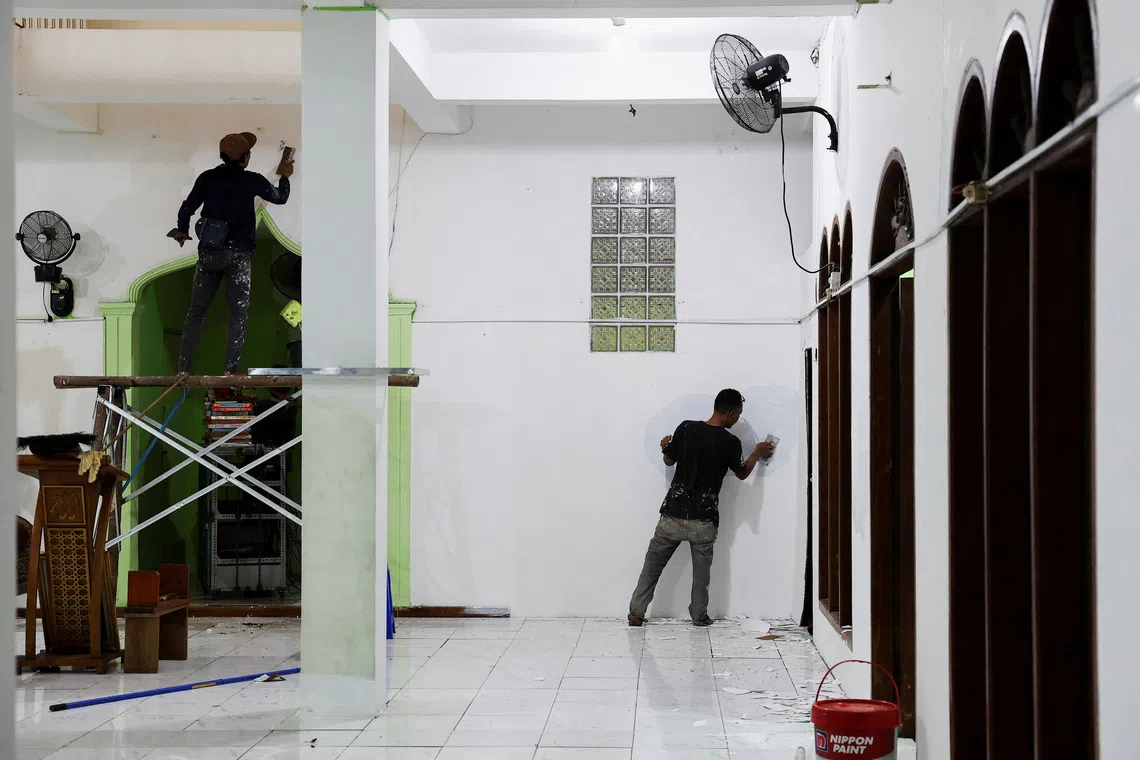
A student is suspected of detonating homemade bombs at a mosque inside a school complex in Kelapa Gading during Friday prayers, injuring dozens of worshippers.
Police in Jakarta said the blasts injured 96 people.
Officers found multiple improvised devices in and around the mosque.
Authorities described the scene as involving several homemade devices and a high casualty count among worshippers at the school mosque.
Coverage Differences
Narrative emphasis
The Straits Times (Asian) emphasizes the suspect and the devices and states the casualty figure and ideological inspiration; Anadolu Ajansı (West Asian) focuses on the location (State Senior High School 72), the number wounded including students and teachers, and investigatory items found; Malay Mail (Asian) highlights the explosion’s timing (Nov. 7) and frames the incident as intensifying a debate about online games. Each source reports overlapping facts (an explosion at a school mosque and nearly 100 injured) but emphasizes different contextual details.
Conflicting accounts of motive
Authorities portray the suspect's motive in different ways.
Jakarta police, as reported by The Straits Times, said the student was driven by vengeance and inspired by white‑supremacist and neo‑Nazi attacks, pointing to extremist ideological influence.
Anadolu Ajansı reports officials saying the student was reportedly bullied and that investigators found an airsoft-style rifle with references to mass shooters.
Malay Mail presents the incident as prompting scrutiny of youth influences and notes a probe into possible student involvement without asserting a single motive.
Coverage Differences
Contradiction / Emphasis
The Straits Times (Asian) attributes an ideological inspiration to white‑supremacist and neo‑Nazi material, presenting a motive of vengeance; Anadolu Ajansı (West Asian) foregrounds reports of bullying and references to mass shooters found on an airsoft-style rifle as part of the investigation; Malay Mail (Asian) does not ascribe a firm motive but highlights the broader policy debate and the probe. These are reporting differences: The Straits Times 'reports' police statements about extremist inspiration, Anadolu 'reports' investigative findings and claims of bullying, and Malay Mail 'reports' the ongoing probe and policy fallout.
Evidence recovered at mosque
Reports vary in detail but overlap on what investigators recovered around the mosque.
The Straits Times says officers found seven homemade devices in and around the mosque, some concealed in Coca-Cola cans, with a mix of remote triggers and fuses, and that three devices failed to explode.
Anadolu Ajansı reports investigators found a soda can believed to be part of a device and an airsoft-style rifle, highlighting physical evidence under examination.
Malay Mail references the explosion and probe more generally and cites the nearly 100 injured as context for a regulatory debate.
Coverage Differences
Detail / Forensics
The Straits Times (Asian) gives technical details about the number of devices, concealment methods (Coca‑Cola cans), and trigger types; Anadolu Ajansı (West Asian) corroborates the presence of a soda can linked to the device and adds mention of an airsoft-style rifle with references to mass shooters; Malay Mail (Asian) omits forensic specifics and situates the event in the wider policy conversation. The Straits Times 'reports' police findings in technical terms, Anadolu 'reports' investigative artifacts and context, and Malay Mail 'reports' the broader implications.
Government response to gaming
Government officials and commentators are already pointing to online games and youth culture as part of the response.
Anadolu Ajansı reports that State Secretary Prasetyo Hadi said President Prabowo Subianto is looking for ways to curb the negative effects of online games and urged teachers to watch for suspicious behaviour, noting Indonesia had over 150 million gamers in 2023.
Malay Mail records Hadi warning that games make violence a normal thing, naming PUBG as the target of the comment and noting that developers did not immediately comment; it also cautions that there is no conclusive evidence linking gaming to violent behavior.
The Straits Times snippet does not mention the gaming debate in the provided excerpt.
Coverage Differences
Policy focus / Omission
Anadolu Ajansı (West Asian) foregrounds government steps and numbers (150 million gamers) and quotes a state official on policy response; Malay Mail (Asian) emphasizes the naming of specific games (PUBG) and records the official quote that games "make violence a normal thing," while also noting the lack of conclusive evidence linking gaming to violence; The Straits Times (Asian) in the provided excerpt focuses on ideological inspiration and device details and does not mention gaming. These differences reflect each source's selection of which aspects of the incident to highlight.
Reporting discrepancies and responses
Key uncertainties and differing emphases remain: dates and framing vary, with The Straits Times citing police comments on Nov. 11 and Malay Mail referring to a Nov. 7 explosion.
Reported motives differ, described as either ideological inspiration or personal grievance and bullying.
Policy responses are debated, with some officials calling for restrictions while other officials and some reporting note there is no conclusive evidence linking gaming to violence.
Readers should note these distinctions in reporting and avoid assuming a single settled narrative until investigators release fuller findings.
Coverage Differences
Ambiguity / Date and framing differences
Malay Mail (Asian) states the explosion occurred on Nov. 7, The Straits Times (Asian) says police made comments on Nov. 11, and Anadolu Ajansı (West Asian) describes the blast as occurring on Friday without a specific calendar date—illustrating small but important differences in date framing. On motive and policy, The Straits Times 'reports' police claims of white‑supremacist inspiration, Anadolu Ajansı 'reports' claims of bullying and government search for game restrictions, and Malay Mail 'reports' both the policy debate and caution that there is no confirmed causal link between games and violence.