Sudan Enters Fourth Year of War as SAF and RSF Battle for Control
Key Takeaways
- SAF and RSF remain locked in a deadly power struggle across Sudan.
- Civilian toll mounting: tens of thousands killed, millions displaced nationwide.
- Quartet peace plan and Berlin donor conference aim to end war and aid civilians.
War enters fourth year
Sudan marked three years since a civil war began between the Sudanese Armed Forces (SAF) and the paramilitary Rapid Support Forces (RSF), with fighting erupting in April 2023 and the conflict now entering its fourth year.
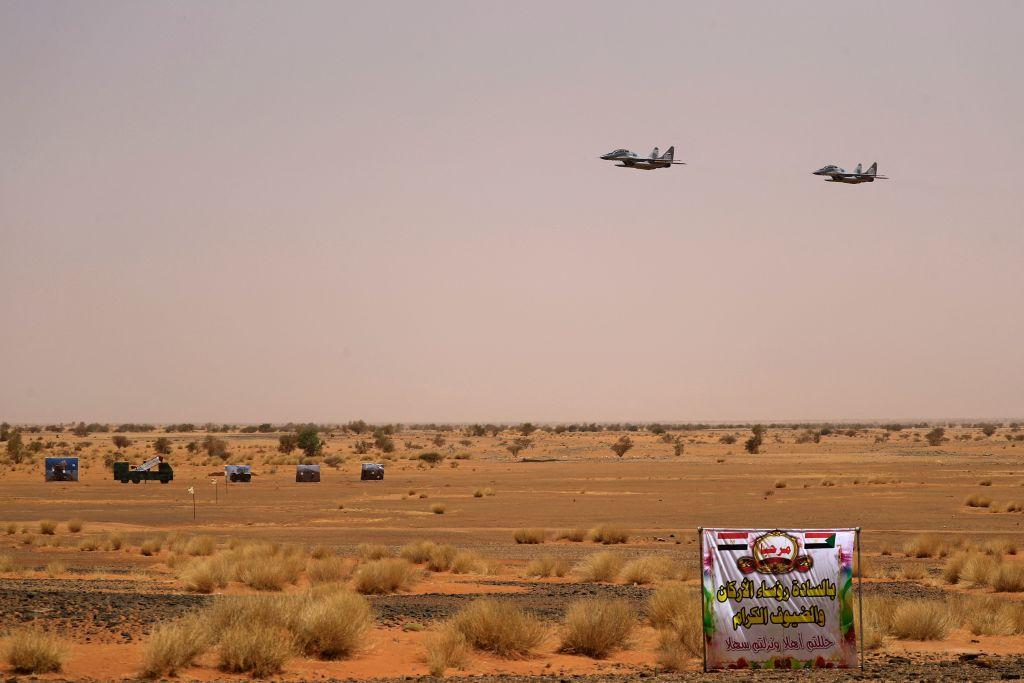
“Egypt has strengthened security along its southwestern border to prevent the spillover of violence and terrorism into its territory amid the intensifying civil war in Sudan south of Egypt”
Democracy Now! says the RSF revolted against the Sudanese Armed Forces after a 2021 military coup left it with diminished political power, and it describes the war as engulfing the country since April 2023.
NPR reports that “It has been three years since fighting erupted in the capital of Sudan,” and it frames the conflict as a power struggle between the Sudanese army led by Gen. Abdel Fattah al-Burhan and the RSF commanded by Mohamed Hamdan Dagalo.
The Council on Foreign Relations’ Global Conflict Tracker similarly describes the civil war as a “deadly power struggle” between SAF and RSF, noting that a year after SAF regained control of Khartoum, western regions including Darfur remain under RSF control.
Al Jazeera adds that “Sudan’s war has entered its fourth year,” while also describing a fragile near-normalcy in Khartoum and central regions alongside worsening humanitarian conditions in Darfur.
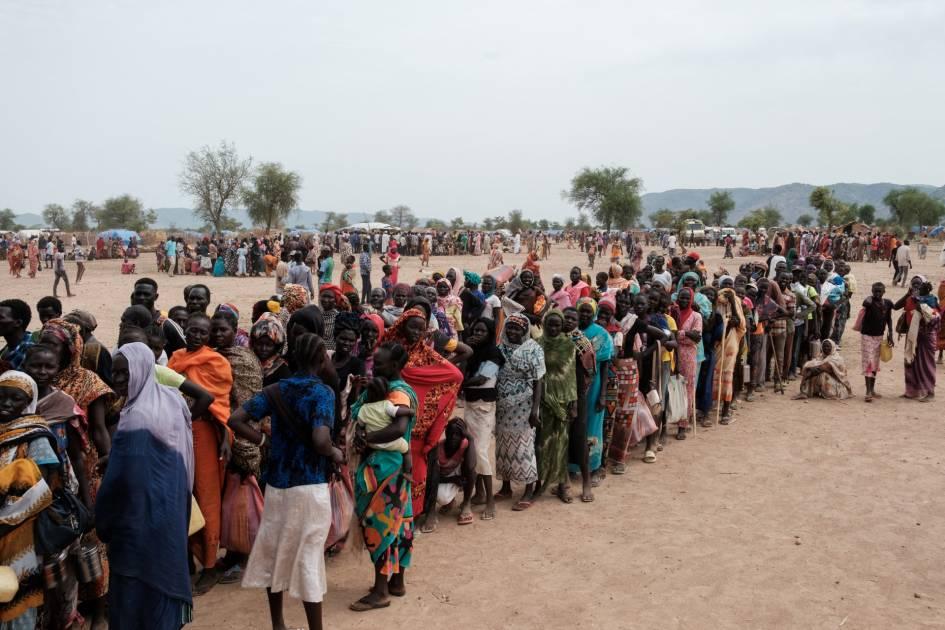
Across the reporting, the war’s scale is tied to displacement and hunger: Democracy Now! says nearly 34 million people need humanitarian assistance, while NPR says nearly 14 million people have been displaced and “Millions more face severe hunger and famine.”
Numbers, displacement, hunger
The sources diverge on death tolls while converging on the magnitude of humanitarian need.
Democracy Now! says “The death toll from three years of war remains unclear,” adding that the National Health Ministry says 11,000 civilians have been killed while “some estimates are as high as 400,000.”

NPR similarly notes that “Some estimates suggest as many as 400,000 people have died,” and it calls the conflict “the world’s largest humanitarian catastrophe.”
The Council on Foreign Relations’ Global Conflict Tracker says analysts remain unable to precisely assess the conflict’s death toll, with estimates ranging from 61,000 to hundreds of thousands, and it states that “Nearly nine million Sudanese remain internally displaced.”
Al Jazeera provides a different humanitarian snapshot, reporting that a joint report by the International Committee of the Red Cross, UNICEF, and Intersos found about 14 million people displaced over three years, while 26 million face acute food insecurity and 33.7 million require humanitarian assistance.
The Norwegian Refugee Council is cited in Democracy Now! for a finding that in North Darfur and South Kordofan, “millions of people get only one meal a day, if any.”
Even where security has improved, the sources stress that the crisis persists: NPR says steady traffic threads through lively streets and the airport has reopened, but it also warns that “the threat of violence from a rising number of drone strikes across the country hangs over millions working to rebuild their lives.”
Berlin pledges and demands
As Sudan marks the anniversary, multiple sources describe international meetings in Berlin aimed at humanitarian support while excluding the warring parties from negotiations.
“Sudan’s war has entered its fourth year, but there is little indication the conflict will end any time soon, as the army and the paramilitary Rapid Support Forces (RSF) are locked in battle for control of the North African nation”
Democracy Now! says “On Thursday, international leaders meeting in Berlin pledged one-and-a-half billion dollars for humanitarian aid in Sudan,” and it quotes UN Secretary-General António Guterres saying, “This nightmare must end,” while calling for an immediate end to hostilities.
Key Biscayne Portal similarly reports that donors pledged about 1.5 billion euros ($1.8 billion) for Sudan at an international meeting held in Berlin, and it quotes Guterres calling the anniversary “a tragic milestone in a conflict that has shattered a country of immense promise.”
Euronews describes a Berlin meeting hosted by the German government and African partners, saying it aims to mobilize “billions of euros in aid” while noting the “conspicuous absence of the warring parties, namely the army and the Rapid Support Forces, which were excluded from the guest list.”
Democracy Now! quotes French Foreign Minister Jean-Noël Barrot telling SAF and RSF that “There is an alternative to war,” and it says France stands ready to contribute to “a monitoring and verification mechanism to ensure its implementation.”
The Democracy Now! transcript further states that the international Sudan conference in Berlin was supposed to help revive negotiations but that “the two sides fighting the war were excluded,” and it adds that the Sudanese foreign minister criticized Western leaders for not coordinating with Khartoum, describing the conference as a “colonial tutelage approach.”
In parallel, the Council on Foreign Relations’ tracker says mediation efforts have stalled as top officials in both camps refuse to halt violence, while regional and international actors continue to fund and arm both belligerents.
Frontlines, drones, and shifting control
Beyond humanitarian pledges, the sources describe how the war’s geography and tactics have evolved, with the army and RSF locked in a military impasse.
Al Jazeera says life has returned to a fragile state of near-normalcy in Khartoum and central regions after the army regained control of the regions, but it also describes uncertainty as the military deadlock persists in the Kordofan region and the humanitarian crisis in Darfur worsened.
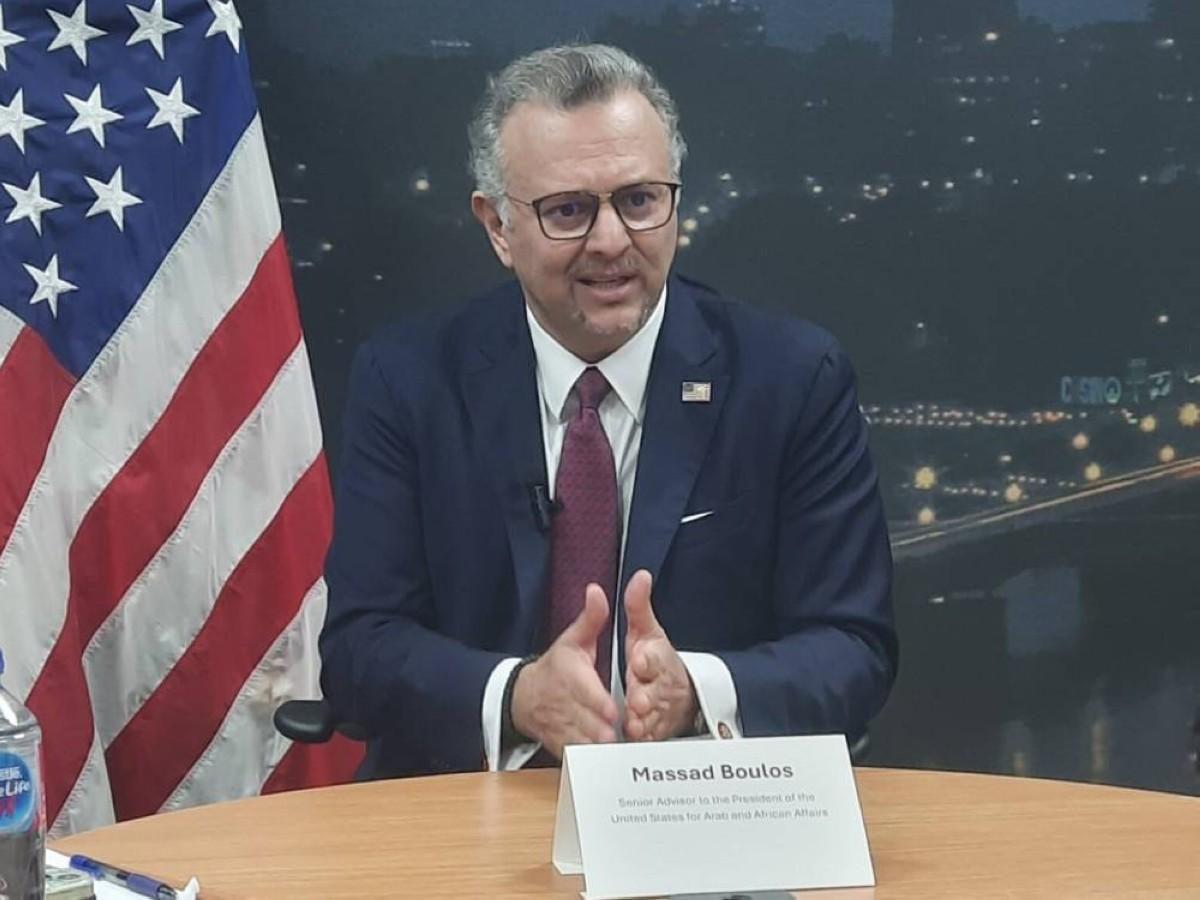
It details territorial moves, stating that on May 20 of last year the Sudanese army recaptured Khartoum State from RSF forces after more than two years of fighting, and it adds that on January 11, 2025, the army retook Wad Madani, the capital of Gezira State.
Al Jazeera continues with a sequence of advances and setbacks, including that the army broke the siege on el-Obeid in North Kordofan in February 2025 and regained Kadugli and Dilling in South Kordofan by last February, while the RSF made progress with the capture of el-Fasher, the capital of North Darfur, on October 26 of last year after a two-year siege.
On tactics, Al Jazeera reports that “The RSF has increasingly been relying on drones to strike targets in central and northern Sudan,” and it says the army acquired new drones to target supply lines, eliminate several RSF leaders, and destroy military equipment.
NPR likewise emphasizes that “the threat of violence from a rising number of drone strikes across the country hangs over millions working to rebuild their lives,” and it links the conflict’s expansion to drone strikes and outside involvement.
The Council on Foreign Relations’ tracker adds that regional and international actors continue to fund and arm both belligerents, reinforcing the sense that the conflict is not contained to a single front.
Education, civilians, and long-term risks
The sources also document how the war’s consequences extend into civilian life, including education and the long-term rebuilding of cities.
The Arabic-language report Al-Araby Al-Jadeed says “No educational institution in Sudan escaped the war's consequences,” describing how airstrikes by aircraft and drones affected schools and how “the few states whose schools and universities were not affected by the fighting were turned into shelters for the displaced.”
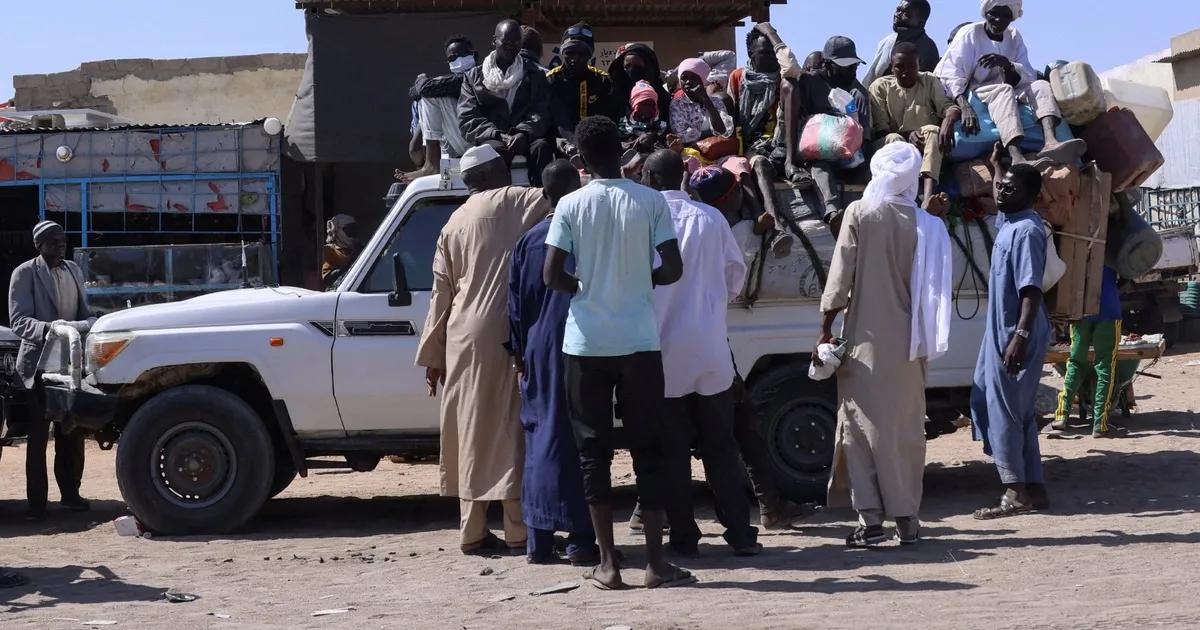
It reports that the UN described the education crisis as “on the verge of becoming the world's worst education crisis,” while Save the Children said “millions of children have been deprived of education for about 500 days, in one of the longest school closures in the world.”
The same report says the war deprived “around 19 million children of basic education,” and it adds that “about 10,000 schools were destroyed or damaged or looted,” with some converted into military barracks, detention centers, armories, or shelters.
It also provides exam figures, stating that “Students in army-controlled areas sat for the secondary exam on 13 April this year,” while “more than 280,000 students in Darfur and parts of Kordofan could not sit for those exams because they are RSF-controlled.”
Teacher Ibrahim Yaqub describes the disruption in Darfur, saying “The work of schools and universities in the region stopped from the very first day of the war,” and he adds that “there is no talk of reopening the closed schools.”
From West Kordofan, teacher Hamid Al-Sheikh says “We have not been paid our monthly salaries since the war began, schools have stopped,” and he adds that “restoration seems unlikely at this time.”
In parallel, NPR describes rebuilding in Khartoum as partial and fragile, noting that “State services like electricity and running water are still scarce,” and it says “Schools, hospitals and mosques are only gradually being repaired,” while danger persists from drone strikes.
The stakes are also framed in terms of regional stability: Key Biscayne Portal quotes Guterres saying “The consequences are not confined to Sudan. They are destabilising the wider region,” and it says the conference aimed to ensure Sudan “does not become a forgotten crisis.”
More on Sudan
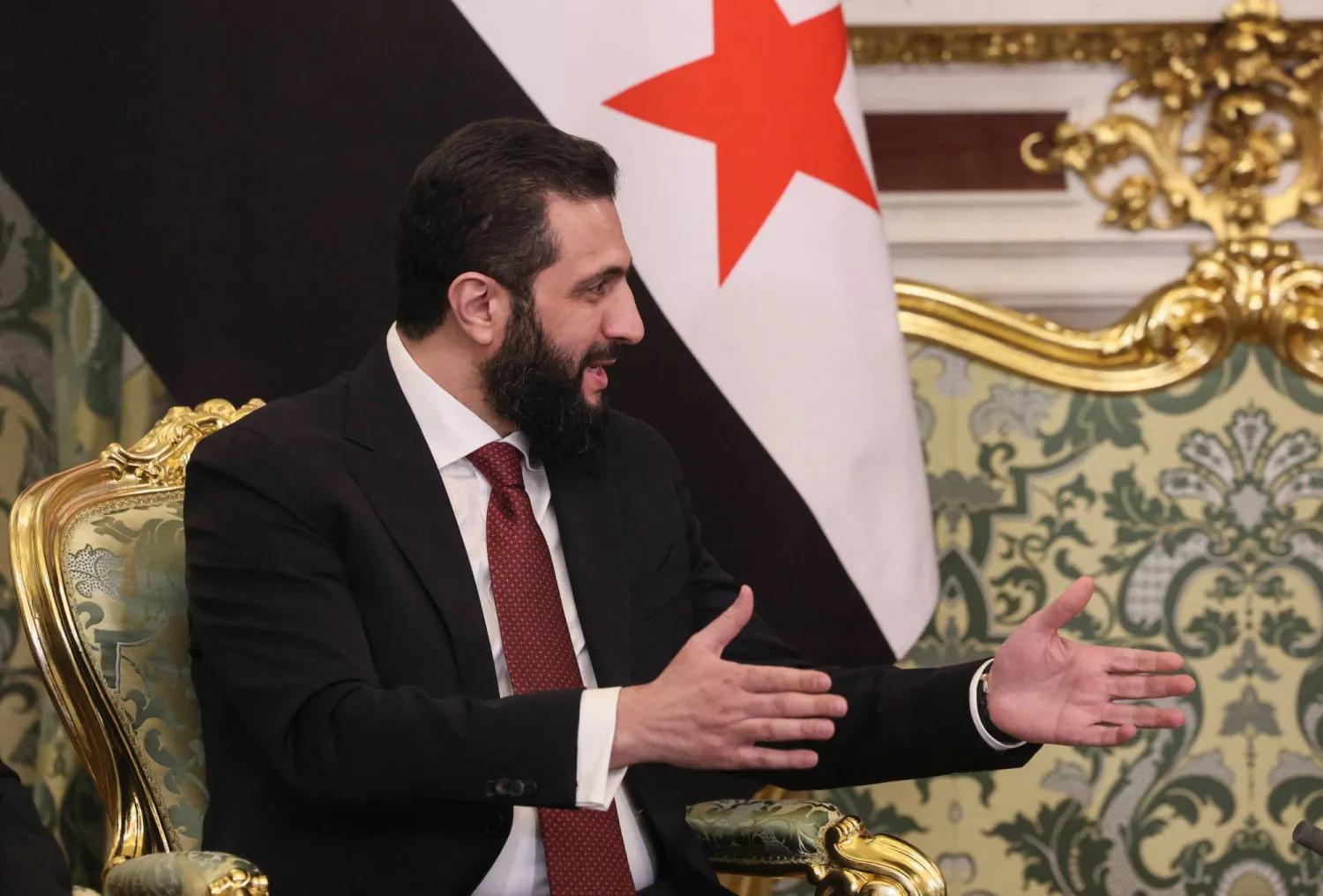
Ahmed al-Sharaa Meets SDF Leaders Mazloum Abdi and Ilham Ahmed To Complete Integration
14 sources compared

International Court Rejects Sudan's Genocide Case Against United Arab Emirates
11 sources compared
United Nations Condemns Sudan War As Neglected Crisis Amid Rising Atrocities
11 sources compared
Berlin Conference Co-Hosts Pledge €1.5 Billion Humanitarian Aid for Sudan Crisis
55 sources compared