Full Analysis Summary
Sudan war: 1,000 days
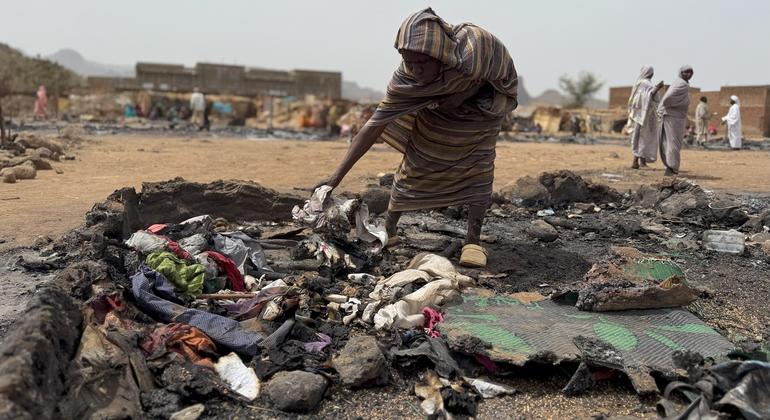
On January 9, the Sudan war reached its 1,000th day.
Sources describe the milestone as a prolonged national catastrophe with catastrophic human toll and widespread displacement.
Gulf News cites UN and aid-agency estimates that more than 150,000 people have been killed since fighting began on 15 April 2023, while noting the real toll is likely higher amid poor documentation and limited access.
It frames the conflict as producing the world’s largest internal displacement crisis, with over 11 million internally displaced and nearly 4 million refugees.
Al-Jazeera also marks the 1,000 days and relays UN warnings that this is one of the century’s worst humanitarian crises, noting large cross-border flight.
UN News emphasizes the nearly three-year span and the geographic spread of the fighting, describing a power struggle between SAF and RSF that has spread beyond Khartoum to Darfur, Kordofan and other regions, devastating infrastructure and state institutions.
Coverage Differences
Tone and emphasis
Gulf News (West Asian) emphasizes a national catastrophe and explicitly cites a high estimated death toll and very large displacement figures, portraying near state collapse; Al-Jazeera (West Asian) highlights UN agencies' warnings and the crisis framing while noting cross-border refugee flows; UN News (Western Mainstream) focuses on the conflict’s timeline, geographic spread and institutional devastation. Each source therefore emphasizes different aspects—casualty totals and state collapse (Gulf News), humanitarian-crisis framing and refugee strain (Al-Jazeera), and regional spread and institutional breakdown (UN News).
Sudan humanitarian needs
Multiple sources report differing humanitarian numbers for Sudan but converge on the conclusion that need is massive.
Gulf News cites over 11 million internally displaced people and nearly 4 million refugees, and says more than 30 million people (about two-thirds of the population) need humanitarian assistance while at least 21 million face severe food insecurity.
Al-Jazeera, citing UN data, reports about 9.3 million internally displaced and more than 4.3 million who have fled across borders, specifying that some 21 million people face acute food insecurity and flagging the disproportionate impact on households headed by women.
UN News projects an even broader requirement, estimating 33.7 million people—about two-thirds of the population—will need aid in 2026, with over 20 million requiring health assistance and 21 million facing acute food insecurity.
Despite variation in exact counts, the estimates consistently point to roughly two-thirds of the population needing aid and around 21 million people facing acute food insecurity.
Coverage Differences
Contradiction / differing figures
The three sources report different displacement totals and overall people-in-need estimates: Gulf News reports "over 11 million" internally displaced and nearly 4 million refugees; Al-Jazeera reports "about 9.3 million" internally displaced and "more than 4.3 million" fled abroad; UN News frames needs with a 2026 planning figure of "33.7 million" people needing aid. These differences reflect varying data snapshots and emphasis—Gulf News highlights internal displacement and state collapse, Al-Jazeera highlights UN data and refugee flows and vulnerable groups, and UN News centers planning figures for 2026.
Civilian toll and services
Reports document heavy civilian casualties and attacks on basic services.
Gulf News says the UN and aid agencies estimate more than 150,000 people have been killed since the fighting began and warn the real toll may be higher.
Al-Jazeera reports WHO Director-General Tedros says roughly 200 attacks on health facilities have been recorded since April 2023, resulting in about 1,900 deaths and 490 injuries.
UN News stresses that restricted humanitarian access and shrinking funding have left civilians exposed to widespread violence, displacement, and the collapse of basic services, worsening mortality and suffering.
Coverage Differences
Attribution and specificity
Gulf News attributes a high overall death estimate to "United Nations and aid agencies" and presents it as a broad conflict death toll; Al-Jazeera quotes WHO Director‑General Tedros on a specific subset of incidents—"roughly 200 attacks on health facilities" and the resulting casualties—thus focusing on attacks on medical infrastructure; UN News emphasizes systemic causes—"restricted humanitarian access and shrinking funding"—that increase civilian exposure. The sources therefore differ in whether they foreground aggregate death estimates, health-facility attack tallies, or structural drivers of deaths.
Sudan food and health crisis
Food insecurity and the risk of famine are central to all reports.
Gulf News warns that at least 21 million face severe food insecurity and cites the 2026 Humanitarian Response Plan identifying about 23 million people in host communities plus 8.1 million internally displaced people as directly in need.
Al-Jazeera highlights that some 21 million people in Sudan are facing acute food insecurity—the largest hunger crisis—and notes that women are disproportionately affected.
UN News similarly reports that 21 million face acute food insecurity and states that over 20 million will need health assistance.
Together these accounts present a combined picture of widespread hunger, growing health needs, and severe strain on services.
Coverage Differences
Narrative focus
All three sources report similar food-insecurity figures (around 21 million) but differ in emphasis: Gulf News pairs the food numbers with its portrayal of state collapse and large humanitarian response-plan tallies; Al-Jazeera spotlights the "largest hunger crisis" framing and the gendered impact on women-headed households; UN News situates food insecurity within broader 2026 planning and associated health-assistance needs. These editorial choices shape whether readers see the story as state failure, gendered humanitarian crisis, or planning-scale emergency.
Humanitarian protection and access
All sources report failures of protection, restricted access, and urgent appeals.
Gulf News accuses ruling authorities of failing to protect citizens and says there has been little meaningful effort to establish safe corridors or a national rescue response.
Al Jazeera reports WHO Director‑General Tedros urging the parties to stop fighting and secure peace, relaying the WHO's appeal.
UN News documents that restricted humanitarian access and shrinking funding are compounding the emergency and causing aid delivery and services to collapse.
Together, these reports present overlapping but distinct narratives about responsibility, international appeals, and operational constraints.
Coverage Differences
Blame and calls to action
Gulf News explicitly criticizes the ruling authorities for failing to protect citizens and highlights a lack of safe corridors (a more direct attribution of responsibility). Al-Jazeera reports WHO's plea—"urged the parties to stop fighting and secure peace"—which the article attributes to Tedros rather than expressing the outlet's own view. UN News concentrates on operational obstacles—"restricted humanitarian access and shrinking funding"—that limit responses. This shows Gulf News assigning blame to national actors, Al-Jazeera relaying international appeals, and UN News focusing on humanitarian-operational constraints.