Sudan28 December, 20252 min read
Sudanese Army and RSF Displace Over 10,000 People in Three Days, UN Says
This article is an automated aggregation of coverage from news outlets. Our editorials offer in-depth analysis curated by the NewsCord team.
More than 10,000 people were displaced across Sudan within three days. Fierce clashes between the Sudanese army and the Rapid Support Forces triggered the displacement.

8 outlets told this the same way.
Sudan displacement report
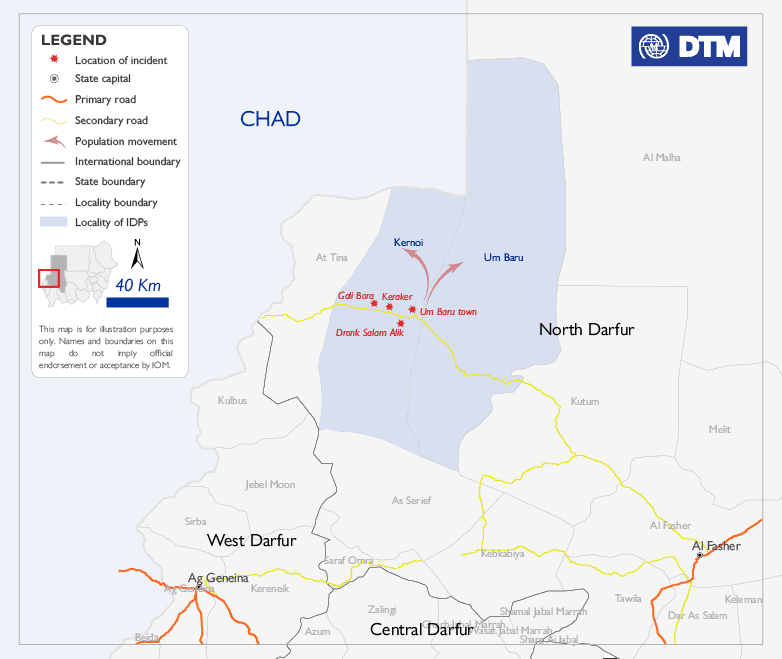
The UN's International Organization for Migration (IOM) reported that fierce fighting in Sudan's Kordofan and Darfur regions forced more than 10,000 people to flee over a three-day period in mid-to-late December. Attacks were concentrated around towns near the Chad border and the besieged city of Kadugli in South Kordofan.
“The UN migration agency (IOM) reported that renewed clashes between Sudan’s regular army and the paramilitary Rapid Support Forces (RSF) displaced more than 10,000 people in three days last week.”
Multiple outlets cited the IOM figure, saying over 7,000 people left towns in North Darfur while roughly 3,000-3,100 fled Kadugli. The movement underscores a rapid, localized wave of displacement tied to renewed clashes between Sudan's regular army and the paramilitary Rapid Support Forces (RSF).

Displacement and shelter damage
Displacement figures include concentrated movements from Kadugli in South Kordofan, an IOM-tracked besieged city where residents face famine. About 3,100 people were recorded leaving Kadugli and reaching towns across South and North Kordofan and even into White Nile state.
Field teams also noted smaller but meaningful flows from other localities, for example roughly 780 people from Daling/Dilling and about 510 from Al-Sanjoqi. Teams reported damage to displacement shelters, including a fire that destroyed dozens of tents in Abu Jubayha.

Clashes and displacement overview
Reporting across outlets ties the displacement to renewed clashes between Sudan's regular army and the RSF. Several pieces note strategic developments, including the RSF's expansion in Darfur—such as seizing El Fasher in October—and its push along corridors linking Darfur and Kordofan, which have intensified fighting in resource-rich areas. Some outlets also report local claims or social-media posts about RSF casualties and leadership losses, and coverage notes these claims are unverified.
“The RSF, which seized North Darfur’s capital al-Fashir in October, has been advancing into areas inhabited by the Zaghawa and against army-aligned militias.”
Media coverage of displacement
Coverage varies in scale and tone, with some outlets placing the three-day displacement within a national humanitarian catastrophe. These outlets report that more than 11–13 million people have been displaced since April 2023 and describe the conflict as one of the world's largest hunger and displacement crises.
Other outlets focus narrowly on the IOM three-day tally and localized impacts. All sources cite the IOM numbers for the recent surge, but national and historical totals and the overall crisis framing differ between outlets.