Full Analysis Summary
Secret graves and destruction
The Bahri Observatory for Human Rights reports that testimonies point to secret graves at a weapons camp in El Kadro and in the Jabal El Hamir area of Hattab.
These graves reportedly contain people believed to have died under torture.
The Observatory published the report to mark the 1,000th day since the outbreak of the war in Sudan.
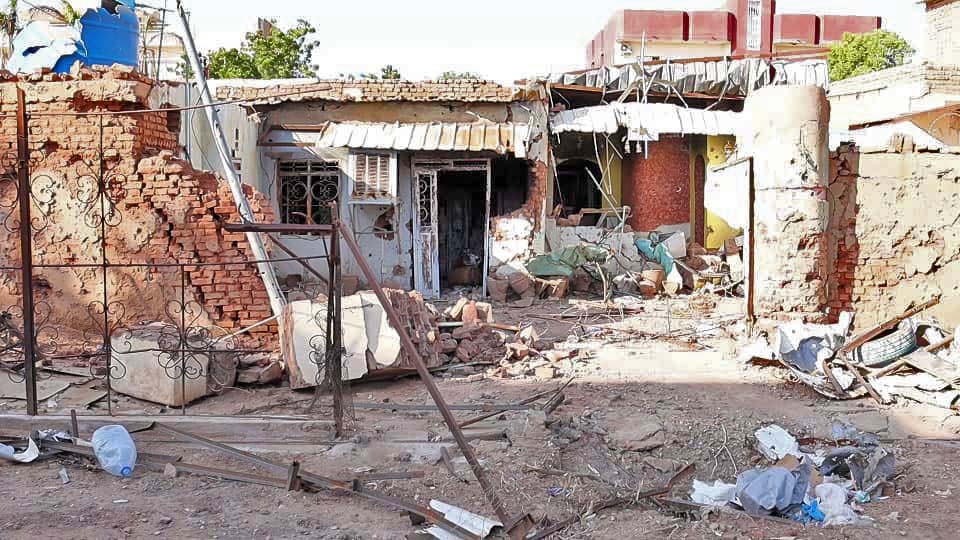
The report highlights alleged extrajudicial killings and widespread urban destruction, including homes and shops destroyed in Burri, Khartoum.
Coverage Differences
Emphasis/Tone
Radio Dabanga (Other) emphasizes the symbolic timing and the allegation of secret graves — reporting the Observatory’s claim about graves and noting the 1,000th day milestone — while Dabanga Radio TV Online (Other) provides a far more detailed account of systemic abuses, detention numbers and infrastructure destruction rather than centering only on the graves or anniversary. Radio Dabanga reports the graves and the anniversary; Dabanga Radio TV Online reports a longer set of violations and statistics.
Bahri detentions and disappearances
The Observatory’s report, as presented by Dabanga Radio TV Online, documents mass detention and disappearance.
After the army entered Bahri in January 2024, about 3,000 people were documented as detained in Soba prison and Dar El Taibat without fair trials.
Nearly 500 contested verdicts alleging cooperation were issued.
More than 1,000 people remain disappeared or forcibly disappeared, most reportedly held by the Rapid Support Forces.
The reporting frames these disappearances and detentions as ongoing and unresolved.
Coverage Differences
Narrative/Detail
Dabanga Radio TV Online (Other) supplies detailed numbers and names of detention sites and attributes many disappearances to the Rapid Support Forces — reporting concrete figures and alleged responsibility — whereas Radio Dabanga (Other) focuses more narrowly on the claim of secret graves and the 1,000-day framing, providing less numerical detention detail in its shorter item. The detailed detention figures and attribution appear in Dabanga Radio TV Online’s report.
Health and service destruction
Dabanga Radio TV Online’s account outlines widespread destruction of health and basic services beyond graves and detentions.
Health facilities were targeted, including the burning of El Baraha Hospital and the storming of El Darushab Hospital.
Pharmacies and water infrastructure were looted or destroyed.
Prolonged power cuts contributed to epidemics, and about 300 deaths from dengue and cholera were recorded amid what the Observatory describes as a health blockade.
These specifics frame the humanitarian toll as including epidemics and collapsed services, not only battlefield casualties.
Coverage Differences
Scope/Tone
Dabanga Radio TV Online (Other) details health-system collapse and epidemic deaths and expressly characterizes the violations as systemic, while Radio Dabanga (Other) in its shorter piece highlights graves and urban destruction but does not enumerate the same health crisis figures or the explicit ‘‘systemic’’ language; thus Dabanga Radio TV Online offers more granular humanitarian data and explicit causal framing.
Demanding disclosure and accountability
The Observatory, as quoted in Dabanga Radio TV Online, explicitly characterizes these patterns as "systemic grave violations, not collateral damage," and calls for disclosure of secret graves, release or fair trials for detainees, clarification of the fate of the disappeared, dignified burials, and accountability under international standards while pledging continued documentation and advocacy.
That call frames the abuses as deliberate and requiring legal accountability rather than incidental wartime loss.
Coverage Differences
Claim vs. Reporting
Dabanga Radio TV Online (Other) quotes the Observatory’s legal and advocacy demands verbatim and situates them amid detailed allegations; Radio Dabanga (Other) reports the Observatory’s claim about graves and destruction but does not, in the provided snippet, reproduce the full set of legal calls or the explicit quotation that these are ‘‘systemic grave violations, not collateral damage’’ — showing a difference between a brief report and a fuller reporting piece.
Dabanga reporting on Bahri crisis
Two related Dabanga items portray a crisis in Bahri and greater Khartoum.
They allege torture, secret burials, large-scale arbitrary detention and disappearance, and collapsing services accompanied by epidemics.
Both items urge disclosure and legal accountability.
However, they differ in scope and detail: one short piece highlights secret graves and anniversary context (Radio Dabanga), while the other provides extensive figures, named detention sites, and explicit advocacy language (Dabanga Radio TV Online).
The reporting is consistent in alleging severe abuses but differs in which facts each piece foregrounds.
Coverage Differences
Scope/Foregrounding
Both items are from the same outlet family but present different foregrounds: Radio Dabanga (Other) foregrounds the graves and the 1,000-day milestone, while Dabanga Radio TV Online (Other) foregrounds detailed detention figures, disappearances, health impacts and legal demands. That difference affects a reader’s sense of scale and which harms appear primary.