Full Analysis Summary
Fighting in Kordofan region
Sudanese army forces say they shelled Rapid Support Forces (RSF) positions in North Kordofan.
Army sources reported artillery struck RSF positions near Jabra al-Sheikh.
The wider conflict has seen drone strikes and shelling across Kordofan.
The army also reported an RSF drone hit in South Kordofan locations such as Samasem and Abu Jibaiha.
It said its forces cleared three fronts around Kadugli, the capital of South Kordofan.
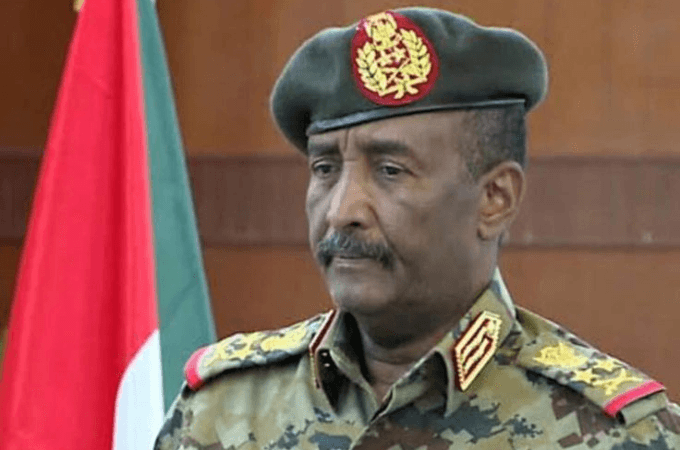
These frontline clashes form part of a broader campaign linking army-held northern, eastern and central areas with RSF-held Darfur.
Kordofan has become a strategic hotspot.
Coverage Differences
Narrative emphasis
Al‑Jazeera (West Asian) emphasizes battlefield movements and strategic geography, reporting that "artillery struck RSF positions near Jabra al‑Sheikh" and that Kordofan is "rich in oil, gold and farmland — is a strategic hotspot linking army‑held... with Darfur," whereas African Insider (Other) frames control lines and broader frontlines, stating the conflict "has left the army in control of the centre, east and north, while the RSF and allied groups hold the west and parts of the south." Mirage News (Western Mainstream) focuses more on humanitarian displacement and UN evacuations around Kadugli, citing evacuations of wounded peacekeepers and displacement figures rather than tactical details.
Source specificity vs. generalisation
Al‑Jazeera provides specific frontline claims attributed to "army sources" (artillery strikes and drone hits), while other outlets such as African Insider and Mirage News report the result of continued "drone strikes and shelling" and displacement without repeating the same battlefield claims verbatim; this highlights how West Asian outlets may publish detailed military claims while other outlets emphasise consequences.
Humanitarian crisis in Kordofan
The fighting in Kordofan is set against a dire humanitarian backdrop and a siege-like situation in parts of the region.
Journalists and aid agencies describe Kadugli and surrounding towns as facing severe shortages of food and medicine, with the UN's OCHA warning of a 'massive humanitarian need' and appealing for $2.9 billion to assist about 20 million people, including millions displaced.
Local reporting and AFP accounts cited in the Bangkok Post describe families surviving on minimal food, foraging and tending tiny vegetable plots under a communications blackout and constant fear as the city remains isolated and its only road is cut off.
Coverage Differences
Humanitarian focus vs. tactical reporting
Mirage News (Western Mainstream) and Bangkok Post (Asian) foreground humanitarian metrics and eyewitness suffering — Mirage noting displacement figures and WFP deliveries and Bangkok Post relaying AFP's 'dire humanitarian crisis' and firsthand accounts — while Al‑Jazeera (West Asian) includes humanitarian appeals by OCHA alongside battlefield reporting. African Insider emphasises large-scale displacement and calls this "the world’s largest hunger and displacement crisis," stressing scale more than individual stories.
Detail level and anecdote inclusion
Bangkok Post (Asian) republishes AFP eyewitness anecdotes (e.g., deaths from poisonous fruit after starvation) and descriptions of communications blackouts, while Mirage News (Western Mainstream) emphasises operational aid figures (WFP reached roughly 2 million people each month across Darfur) and evacuation details, showing variance between human-interest reporting and operational humanitarian reporting.
Attack on UN peacekeepers
The conflict has also seen deadly strikes on international personnel and facilities.
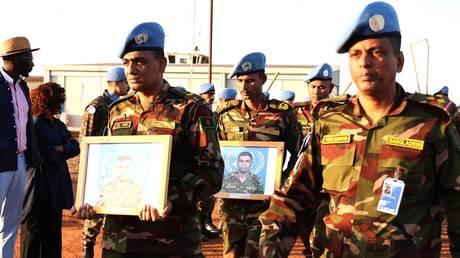
Multiple outlets report a drone strike on a UNISFA logistics base in Kadugli that killed six Bangladeshi peacekeepers and wounded eight.
UN Secretary-General António Guterres condemned the attack as horrific and warned that strikes on peacekeepers may amount to war crimes.
Sudan’s army blamed the RSF for the strike, while some reports note the RSF has not claimed responsibility and the UN had not attributed responsibility in cited statements.
Coverage Differences
Attribution and reported claims
Türkiye Today (West Asian) quotes Sudan’s army alleging the RSF used "a strategic drone fired three missiles" and reports the Transitional Sovereignty Council calling the attack a "terrorist act," explicitly relaying the army's attribution, whereas ChimpReports (Other) highlights that "the UN has not attributed responsibility," and Zoom Bangla (Asian) notes the RSF "has not claimed responsibility," showing variance between reporting army accusations and UN caution.
International response emphasis
United News of Bangladesh (Asian) foregrounds UN Secretary‑General Guterres's condemnation and diplomatic condolences to Bangladesh and notes Pakistan and Germany's reactions, while Mirage News (Western Mainstream) stresses legal framing — quoting UN officials that "attacks on UN peacekeepers may constitute war crimes" and detailing evacuations and repatriation of remains.
Media reporting contrasts
Reporting across outlets varies in tone and supplementary details.
Some emphasise military control lines and leadership moves, while others focus on legal and humanitarian consequences.
Azerbaycan24 situates the attack amid political manoeuvres.
It notes rival leaders named RSF commander Mohamed 'Hemedti' Dagalo chair of a new presidential council, a move rejected by the UN and African Union.
African Insider and Bangkok Post stress casualty totals, displaced populations and alleged atrocities.
Western mainstream outlets like Mirage foreground international law and aid statistics.
Local and regional outlets such as Zoom Bangla and Dabanga highlight siege conditions and specific strikes on civilian infrastructure.
Coverage Differences
Political framing vs. humanitarian/legal framing
Azerbaycan24 (Asian) links battlefield events to political developments, stating the naming of Hemedti to a new council "has been internationally rejected," while Mirage News (Western Mainstream) emphasises international humanitarian law and aid delivery, and African Insider (Other) stresses the scale of displacement and alleged atrocities — demonstrating how source type influences whether coverage highlights political legitimacy, legal accountability, or humanitarian scale.
Attribution and caution
Some outlets repeat government or military attributions (Türkiye Today quoting the army's blame) while others explicitly note the absence of an independent attribution by the UN (ChimpReports) or that the RSF "has not claimed responsibility" (Zoom Bangla), showing differences in how confidently outlets present blame versus caution or neutrality.
Escalating conflict and accountability
Taken together, the sources show heavy fighting, shelling and drone strikes — including army-reported artillery strikes in North Kordofan — are part of an escalating conflict.
The hostilities have severe humanitarian consequences, have drawn international condemnation, and reportedly resulted in the deaths of UN personnel.
Attribution for specific attacks remains contested: army statements blaming the RSF are widely reported, while several outlets note the UN had not assigned responsibility and the RSF had not claimed the strike.
Across source types the overall picture is intense combat, growing humanitarian need, and competing narratives over blame and political legitimacy, with international actors calling for accountability.
Coverage Differences
Consensus vs. contestation
Most sources agree on the facts of intensified fighting, displacement and the UN casualties (e.g., Al‑Jazeera, Zoom Bangla, United News of Bangladesh), but they differ on attribution: the Sudanese army's blame of the RSF is quoted in Türkiye Today and Al‑Jazeera, while ChimpReports and Zoom Bangla underscore the UN's non‑attribution or RSF's silence, marking a contested narrative across outlets.
Tone and severity
Some outlets adopt urgent, legalist language about possible war crimes and demand accountability (United News of Bangladesh, Mirage News, Türkiye Today quoting Guterres), while others focus on human stories and siege conditions (Bangkok Post), revealing tonal differences between outlets stressing legal accountability and those foregrounding lived civilian suffering.
