Full Analysis Summary
Khartoum airport humanitarian reopening
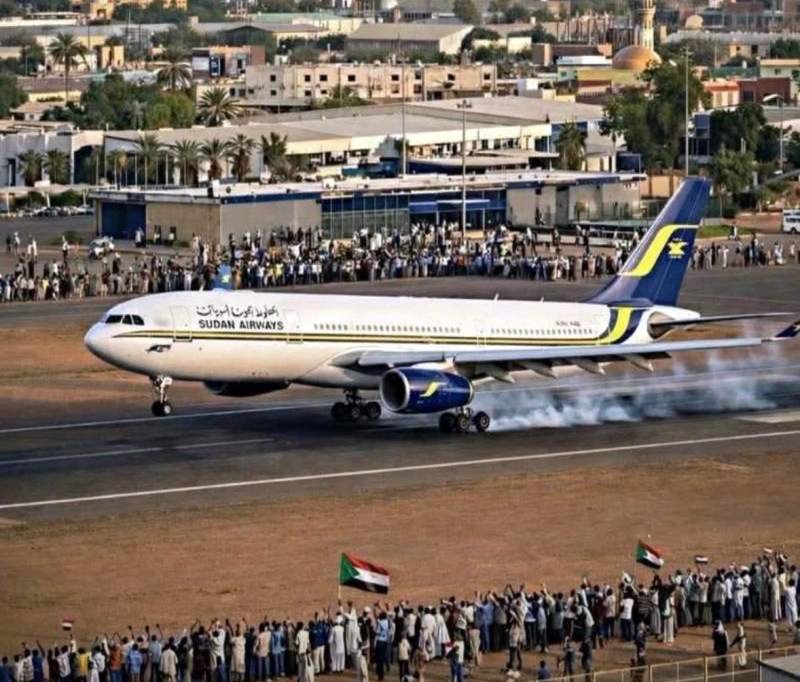
Sudanese authorities have moved to reopen Khartoum Airport to serve as the main UN humanitarian hub.
Aviation expert Ibrahim Adlan describes this as marking "a shift" toward using the airport as a neutral, sovereign institution under soft international oversight.
Radio Dabanga reports that the landing of a civilian commercial aircraft and the UN's request to use Khartoum Airport indicate the facility is effectively resuming operations as a humanitarian hub.
Dabanga says this signals "a move from a war city toward an administrative/recovery phase."
Dabanga Radio TV Online places the development in a broader conversation about reopening airports across Sudan and notes any reopening would be gradual, initially limited to daytime operations and partial services.
It adds that reopenings must involve Sudanese civil aviation personnel.
Coverage Differences
Tone and emphasis
Radio Dabanga (Other) frames the reopening of Khartoum Airport as an operational shift toward neutrality and recovery, reporting Adlan’s claim that the landing of a civilian plane and the UN request ‘mark a shift’. Dabanga Radio TV Online (Other) focuses more on procedural and sovereignty questions for reopening airports more widely (including Darfur), emphasising gradual, limited operations and the requirement to involve Sudanese civil aviation personnel rather than treating the reopening as a political victory. Each source reports Adlan’s views but emphasizes different aspects: Radio Dabanga quotes Adlan’s framing of the airport as a ‘neutral sovereign institution’, while Dabanga Radio TV Online quotes his caution that any reopening ‘must involve Sudanese civil aviation personnel’ and be ‘gradual and limited’.
Airport security considerations
Adlan cautions that safe, sustainable airport operations require effective security neutralisation, coordinated airspace control, and tacit acceptance by the warring parties.
Radio Dabanga notes that the Rapid Support Forces’ decision not to disrupt the reopening — even as drones operate elsewhere — indicates such tacit acceptance.
Both sources warn against shortcuts, with Dabanga Radio TV Online explicitly rejecting the long-term import of entirely foreign crews as the riskiest option because it could undermine professional sovereignty and sideline national staff.
They emphasize that local knowledge of terrain and security is essential, and therefore converge on the need for security guarantees and local involvement despite slightly different practical cautions.
Coverage Differences
Narrative focus and risk framing
Radio Dabanga (Other) emphasises the operational preconditions for safe flights — coordination of airspace control and tacit acceptance by combatants — and points to RSF choices as evidence. Dabanga Radio TV Online (Other) offers a structured risk-ranking of management options, calling the import of fully foreign crews ‘the riskiest’ because it ‘would likely fail in Darfur’ and would ‘undermine professional sovereignty’. Radio Dabanga reports Adlan’s operational prerequisites and cites RSF behaviour; Dabanga Radio TV Online reports the comparative costs and sovereignty implications of different management models.
Darfur airport management options
The two outlets present overlapping but distinct emphases on management models and institutional control.
Dabanga Radio TV Online summarizes Adlan’s three options for reopening Darfur’s airports.
The first option is international protection plus emergency funding and independent technical management, which is described as the preferred, least costly, and most sustainable approach.
The second option is joint or 'shadow' management in which Sudanese Civil Aviation retains legal authority while international teams provide technical support, and this is portrayed as the most likely scenario.
The third option involves fully foreign crews and is regarded as the riskiest choice.
Radio Dabanga separately outlines three scenarios for airspace and navigation control and states that the first scenario would leave Sudan’s Civil Aviation Authority in charge.
Radio Dabanga also highlights that the Civil Aviation Authority is fragmented, lacks protection, and suffers damaged infrastructure.
Together the reports map a continuum from national-led to externally supported solutions while foregrounding sovereignty and capacity concerns.
Coverage Differences
Detail versus institutional emphasis
Dabanga Radio TV Online (Other) provides a ranked list of specific management options for reopening regional (Darfur) airports and explicitly labels them ‘preferred’, ‘most likely’, and ‘riskiest’, stressing costs and sovereignty implications. Radio Dabanga (Other) underscores scenarios for airspace/navigation control and stresses the reality that the Sudan Civil Aviation Authority has qualified staff but faces fragmentation and lack of protection. The sources quote Adlan in each respect but emphasise different institutional questions: Dabanga Radio TV Online on external management models and cost, Radio Dabanga on the feasibility of leaving national authorities in charge amid fragmentation.
Humanitarian airport network
Both sources stress that Khartoum's reopening must be part of a wider network of functional airports for humanitarian logistics, not a lone island of relief.
Radio Dabanga explicitly names El Fasher, El Geneina and Nyala as key regional nodes to be integrated with Khartoum.
Dabanga Radio TV Online uses Darfur-specific examples and precedents from the Balkans, Afghanistan and Iraq to question who can restore state functions and who benefits from international involvement.
Both outlets therefore highlight the dual reality that reopening can enable humanitarian access while raising complex sovereignty and sustainability questions that will shape how the hub operates over time.
Coverage Differences
Scope and historical framing
Radio Dabanga (Other) emphasises practical network design, naming regional nodes such as El Fasher, El Geneina and Nyala and urging Khartoum be part of a wider network. Dabanga Radio TV Online (Other) frames the reopening in comparative terms (Balkans, Afghanistan, Iraq) and foregrounds broader political questions about restoring state functions, costs to sovereignty, and who stands to benefit, thereby taking a more structural, sovereignty-focused viewpoint. Both report Adlan’s comparisons and cautions but highlight different implications—operational networking versus political-institutional consequences.