Full Analysis Summary
Darfur measles outbreak
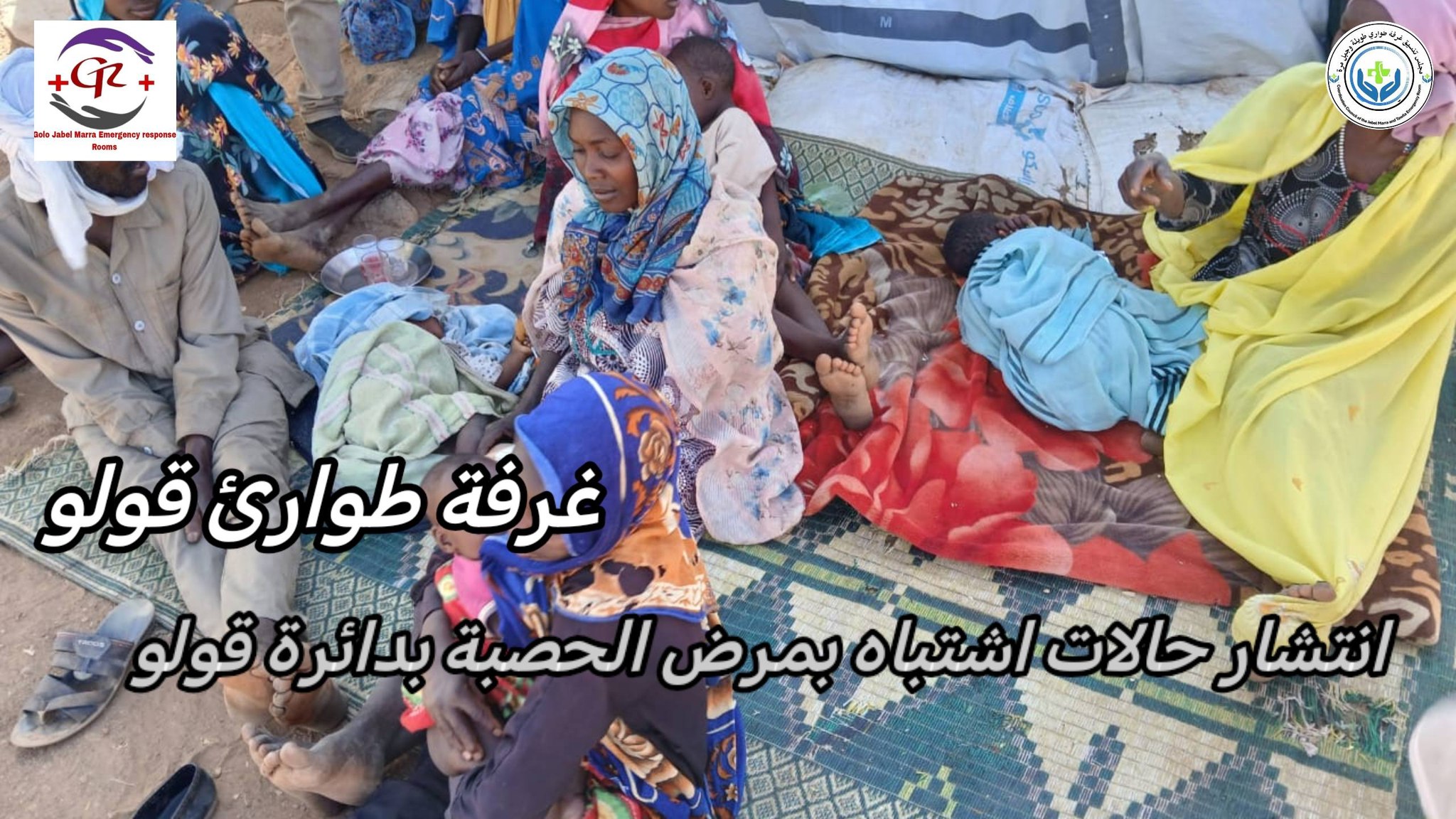
A severe measles outbreak has been reported in Jebel Marra, Central Darfur.
Health services in Golo (Rokuro locality) documented more than 300 cases and six deaths in the Burgo area and neighbouring villages over two days.
Most of the victims were unvaccinated children.
Local emergency teams issued urgent appeals for immediate intervention as routine vaccination coverage has collapsed amid broader humanitarian breakdowns.
Public-health authorities and responders warn that the surge in vaccine-preventable illnesses is part of a wider deterioration of services across the country.
Coverage Differences
Emphasis/Tone
Radio Dabanga (Other) focuses on clinical figures and the immediate public-health emergency—citing case counts, deaths and the unvaccinated status of victims—while Dabanga Radio TV Online (Other) frames the problem primarily as a consequence of the ongoing war and makes an explicit political plea to stop fighting and pressure parties to end the conflict. Radio Dabanga reports specifics: numbers and medical appeals; Dabanga Radio TV Online reports the epidemiologist’s political call (“stop the ‘deadly war’”) and appeal to the international community.
Narrative
Both sources report Dr. Adiba Ibrahim El Sayed’s assessments, but Radio Dabanga highlights technical public-health recommendations (declaration of outbreaks, unified protocols, lab rehabilitation), whereas Dabanga Radio TV Online emphasizes her call for political action and international pressure.
Measles resurgence and response
Officials and epidemiologists link the measles resurgence to collapsed infrastructure and a failing health system.
Dr. Adiba Ibrahim El Sayed attributes multiple epidemics to collapsed environmental infrastructure, including accumulated waste, sewage overflows, and stagnant water, along with reduced functioning health centres, displacement, food shortages, and declining immunity.
She warned that critical medical supplies are scarce and are even appearing on the black market.
She called for immediate rehabilitation of laboratories and the adoption of unified diagnostic and treatment protocols to restore basic disease control.
Coverage Differences
Detail/Omission
Radio Dabanga provides detailed epidemiological drivers (waste, sewage overflows, stagnant water, displacement, food shortages, declining immunity) and operational asks (labs, protocols, medicines). Dabanga Radio TV Online repeats the link to war but emphasizes political action rather than specific technical interventions—less detail on operational steps appears in the latter. Radio Dabanga’s piece lists explicit technical needs; Dabanga Radio TV Online foregrounds the wartime root cause and appeals.
Tone
Radio Dabanga’s coverage reads as an urgent public-health alert with practical recommendations and quantified disease counts, while Dabanga Radio TV Online carries a more political and advocacy-oriented tone urging cessation of hostilities and international pressure.
Resurgent infectious diseases in Sudan
Beyond measles, sources report a wider pattern of resurging infectious diseases across Sudan.
Radio Dabanga lists 2,576 malaria cases and 211 new dengue cases, with 39 dengue deaths in the capital, including 22 women and six children.
The outlet also raises alarm over widespread rodent deaths and warns they could signal a possible plague outbreak.
Health professionals quoted in the coverage link these overlapping epidemics to environmental breakdown and to war-driven displacement and shortages.
Coverage Differences
Scope
Radio Dabanga provides specific additional disease figures (malaria, dengue, dengue deaths) and mentions rodent die-offs as a separate alarm. Dabanga Radio TV Online focuses less on these specific figures and more on the causal narrative tying disease spread to the conflict and a plea for ending the war; the latter omits many of the numeric details Radio Dabanga supplies.
Severity/Tone
Radio Dabanga’s inclusion of detailed counts and the phrase ‘possible plague outbreak’ increases the sense of imminent biological risk; Dabanga Radio TV Online retains a grave tone but frames severity through the lens of conflict and humanitarian catastrophe rather than enumerated public-health statistics.
Conflict-driven health crisis
Both sources attribute the breakdown in vaccination and rising disease burden to the conflict and its knock-on effects, including displacement, supply shortages and collapsing services.
Both sources quote or paraphrase Dr. El Sayed calling for urgent action.
Radio Dabanga provides granular operational details such as vaccines, medicines and laboratory rehabilitation, while Dabanga Radio TV Online focuses on advocacy and appeals to the international community to pressure warring parties to stop fighting to prevent the unfolding health catastrophe.
Coverage Differences
Focus
Radio Dabanga centers on public-health operational responses and specific technical needs, whereas Dabanga Radio TV Online emphasizes political solutions and international advocacy. Both report Dr. El Sayed’s views but with differing emphases; Radio Dabanga quotes operational recommendations and statistics, Dabanga Radio TV Online quotes the plea to stop the ‘deadly war’ and international pressure requests.
Assessment and evidence gaps
The two available items come from related outlets (Radio Dabanga and Dabanga Radio TV Online), so their core factual claims are consistent.
Both reports indicate a measles outbreak, high numbers of unvaccinated children, multiple concurrent epidemics, and a link to war and famine.
Their main difference is emphasis: one focuses on technical operational details while the other emphasizes political advocacy.
Important context is missing because other independent source types—such as international health agencies, government statements, or independent investigative reports—were not provided.
This absence limits cross-source verification and prevents meeting the requested diversity of source types.
The materials do not include a government response or independent vaccination-coverage surveys.
They also lack a full timeline of the vaccine program's collapse, leaving those details unreported or unavailable in the supplied snippets.
Coverage Differences
Source-limitation
Both items come from related 'Other' outlets and largely share the same expert (Dr. El Sayed); there is no coverage from other source types in the supplied material to corroborate, contest, or expand the narrative (for example, no government statement or WHO/UN reporting). This gap affects the ability to confirm figures, timelines, and official accountability beyond the epidemiologist’s claims and the reporters’ counts.