Full Analysis Summary
Sudan 2026 outlook
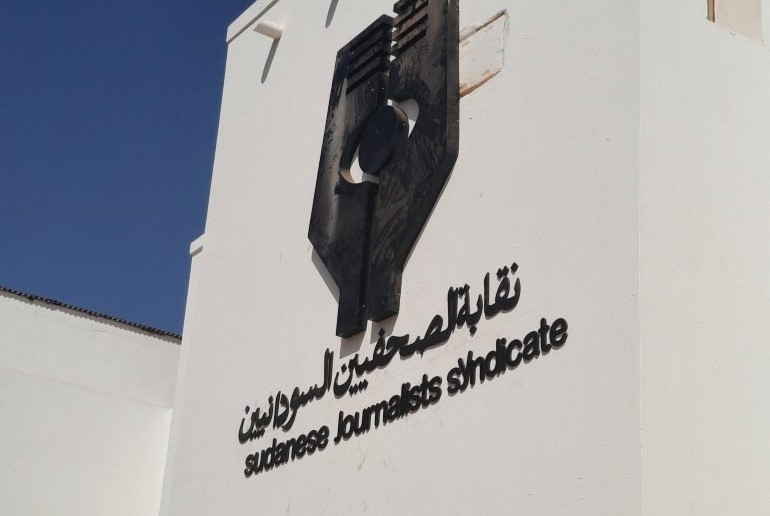
Mohamed Abdelaziz, secretary-general of the Sudanese Journalists Syndicate, warned that ongoing war dynamics make Sudan's prospects for 2026 bleak and could push the country toward state collapse, widespread famine, or renewed military rule.
Radio Dabanga reports Abdelaziz saying he is not optimistic about Sudan's prospects in 2026 given complex internal dynamics and overlapping regional and international factors.
The outlet records him outlining three distinct outcomes that range from a military stalemate to total disintegration.
Dabanga Radio TV Online warns that the conflict has fragmented Sudan's central authority, leaving no single power able to control armed groups.
It cautions the country risks collapsing into a Somalia-style break-up and says peace is in grave danger next year.
Coverage Differences
Tone and framing
Radio Dabanga reports Abdelaziz’s view by quoting him directly and presenting three specific scenarios, framing the analysis as a reported expert assessment. Dabanga Radio TV Online frames the situation more as an editorial warning about fragmentation and a Somalia‑style collapse, using broader language about state breakdown rather than listing discrete possible outcomes. Radio Dabanga thus communicates Abdelaziz’s personal assessment and scenarios, while Dabanga Radio TV Online emphasizes the systemic risk of fragmentation.
Sudan conflict scenarios
Abdelaziz outlined three possible outcomes for Sudan, ranging from a frozen military stalemate to a negotiated political process or, in the worst case, state disintegration.
In the 'military stalemate / regional entrenchment' scenario he says the army holds the north, east and centre while the Rapid Support Forces (RSF) control Darfur and Kordofan, creating parallel power centres.
The 'political process' scenario begins with a ceasefire and is described as the least costly and preferable option, but it depends on difficult internal and external arrangements.
The worst-case 'disintegration and fragmentation' scenario envisions militias—the 'small guns'—gaining influence, resisting control and further eroding central authority.
Dabanga Radio TV Online's analysis complements these scenarios by stressing fragmentation of central authority and warning of a Somalia-style break-up if current trends continue.
Coverage Differences
Narrative detail vs. systemic warning
Radio Dabanga provides detailed, attributed scenarios that explain how different territorial and political outcomes might play out, directly quoting Abdelaziz’s categorisation. Dabanga Radio TV Online, while echoing concerns about fragmentation, offers a more systemic warning of a Somalia‑style breakup without the stepwise scenario framing. Thus Radio Dabanga focuses on Abdelaziz’s forecasted trajectories; Dabanga Radio TV Online emphasizes the overarching systemic risk.
Obstacles to Peace Negotiations
Abdelaziz identifies several drivers and risks that make negotiation harder.
He cites the April 15 outbreak in the central region and the central state's long reliance on patronage to manage peripheries.
He also notes overlapping regional and international influences that further complicate settlement.
Radio Dabanga reports Abdelaziz warning that continued fighting risks dangerous scenarios if no clear path to resolution emerges.
Dabanga Radio TV Online warns that fragmentation of central authority would prevent any single power from controlling armed groups, worsening the negotiating environment and undermining peace prospects in 2026.
Coverage Differences
Source perspective and emphasis
Radio Dabanga focuses on Abdelaziz’s attribution of causes—central-region outbreak, patronage systems and external entanglements—quoting him directly. Dabanga Radio TV Online emphasizes the result—fragmentation of authority and the resulting inability to control armed groups—rather than enumerating internal drivers. Radio Dabanga therefore foregrounds Abdelaziz’s analytical breakdown of causes; Dabanga Radio TV Online foregrounds the systemic consequence of those causes.
Near-term fragmentation risks
Taken together, the sources present a consistent alarm: Abdelaziz's reported scenarios and the outlet's editorial framing converge on a near-term risk of fragmentation that could produce local warlordism, humanitarian collapse, or entrenched military divisions.
Radio Dabanga reports the concrete risks Abdelaziz lists — military entrenchment, a fragile ceasefire path, and disintegration into militia rule — while Dabanga Radio TV Online frames the consequence as a potential Somalia-style break-up that would render peace prospects bleak in 2026.
The available reporting is limited to these Dabanga outlets and therefore reflects Abdelaziz's perspective and the outlet's framing; other voices or international analyses are not present in the provided material, leaving broader corroboration or alternative forecasts unclear.
Coverage Differences
Scope and sourcing
Both pieces sound the alarm, but Radio Dabanga attributes the scenarios directly to Abdelaziz and gives granular outcomes, while Dabanga Radio TV Online issues a broader warning about fragmentation without attributing a multi-option forecast. Importantly, both sources come from the same media family and no other outlet perspectives are included in the provided material, so cross‑source corroboration from distinct media types is absent.