Full Analysis Summary
RSF advances in Sudan conflict
Sudan’s conflict has intensified nationwide as the Rapid Support Forces (RSF) press into Blue Nile and other regions in what analysts say is an effort to reopen routes toward central Sudan and alter frontline dynamics.
ACLED’s assessment, reported by local outlets, frames the RSF advance as strategically aimed at linking Blue Nile with Khartoum, Sennar and Gezira, a move that could reconfigure control over major supply and transit corridors.
Satellite analysis from Yale’s Humanitarian Research Lab has raised alarms about preparations that could presage a siege of El Obeid in North Kordofan, underscoring the potential for wider, coordinated offensives that might shift the war’s balance.
Observers quoted by the reporting say the territorial changes seen in late 2025 mark a new, more dangerous phase of the conflict and signal expanding ambitions by combatants on multiple fronts.
Coverage Differences
Missed Information
Only Dabanga Radio TV Online is available for this compilation; therefore no contrasting accounts from sources of different types (e.g., Western mainstream, West Asian, Western alternative) are present to show alternative strategic readings or disputes about intent. The available reporting attributes strategic aims to the RSF and cites external analysis (ACLED; Yale Humanitarian Research Lab) but does not include alternative interpretations, official statements from the RSF or Sudanese military, or independent on-the-ground corroboration from other outlets. As a result, comparisons between source narratives cannot be made beyond what Dabanga reports.
Civilian toll in Sudan conflict
Civilians have borne a growing and deadly toll as the fighting spreads.
Drone strikes in South Kordofan, attributed to both sides in the fragmented battlefield, have killed and injured non-combatants, including women and children.
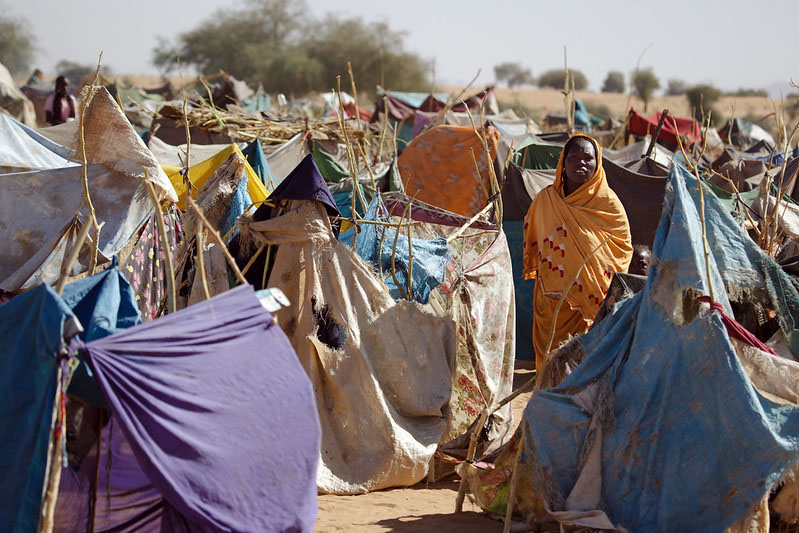
Intense fighting has forced thousands to flee their homes.
Human rights organizations cited in the reporting warn of a sharp escalation in killings and rapidly deteriorating humanitarian conditions, particularly across Darfur.
In Darfur, displacement and access restrictions have compounded risks for civilians already affected by years of instability.
Coverage Differences
Tone
Dabanga’s coverage emphasizes civilian harm and humanitarian deterioration, quoting human rights organisations and casualty descriptions. With only this source available, there is no balancing or contrasting coverage from military spokespeople, alternative independent monitors, or international agencies providing differing casualty figures or contesting responsibility for specific attacks. This absence limits the ability to contrast narratives about responsibility or to present alternative casualty assessments.
Regional spillover and refugees
The UN refugee commissioner warned the war risks spilling into neighbouring countries and urged unified international action to prevent wider destabilization.
Critics say some measures taken during the conflict could breach international refugee protocols, creating legal and humanitarian concerns and straining neighbouring states and aid systems.
Coverage Differences
Narrative Framing
Dabanga frames the crisis through international-risk and legal-standards lenses by citing the UN refugee commissioner and critics of policy measures. With no other source types provided, we cannot compare whether other outlets foreground diplomatic responses, military rationales, or regional security analyses instead. The available reporting therefore emphasizes external alarm and calls for unified action rather than presenting counter-arguments from states or actors implicated in alleged protocol breaches.
RSF tactics and risks
Analysts referenced by the report view RSF moves as attempts to seize or control transport and logistical hubs, enabling sustained operations deep into central Sudan.
These moves could potentially surround or besiege urban centres such as El Obeid.
The use of drones and mobile operations, the attribution of strikes to multiple sides, and satellite evidence indicate increasingly sophisticated and dangerous campaign methods that risk drawing civilians into protracted urban sieges and denying humanitarian access.
Coverage Differences
Unique Coverage
Dabanga uniquely combines ACLED analysis, satellite assessments from Yale’s Humanitarian Research Lab, and human-rights reporting in a single narrative; however, without additional sources it is not possible to determine how this mix compares with specialized military analysis, regional state media, or international press coverage that might provide alternate operational details, timelines, or contested responsibility for strikes.
Sudan humanitarian crisis
Reporting paints a stark humanitarian picture: a widening conflict footprint, repeated civilian casualties, mass displacement, and warnings of regional spillover that together call for coordinated international intervention.
Observers and rights groups describe a rapid deterioration that risks long-term harm to Sudanese civilians and neighboring states unless access, protection, and refugee safeguards are better enforced.
However, because this summary relies on a single source, crucial perspectives—such as official responses from the Sudanese military or the RSF, detailed UN agency field data, and independent casualty tallies—are missing, leaving important verification gaps.
Coverage Differences
Missed Information
Because only Dabanga Radio TV Online’s reporting is provided, we cannot cross-check casualty figures, operational claims, or political statements that would normally appear across diverse source types. This creates clear gaps: no direct RSF or military statements are quoted, no UN agency field reports or Western mainstream investigative pieces are available here, and no regional state media perspectives are present to offer competing explanations or policy positions.