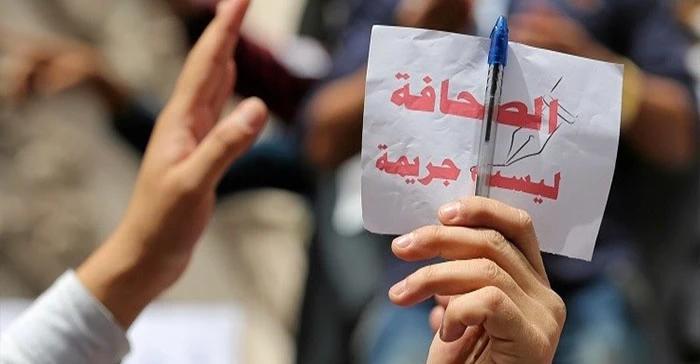
Sudan’s Army And Hemeti Fighters Kill Civilians In Khartoum As Jets Strike Airport
Key Takeaways
- About a hundred civilians were killed as fighting raged in Khartoum.
- Clashes pitted the army against RSF led by General Hemeti.
- It marked the third day of renewed hostilities.
Sudan’s fighting and toll
Sudan’s current war has been marked by sustained fighting that has killed civilians and disrupted daily life in Khartoum, according to Radio France.
“Nicknamed 'the forgotten crisis' by Time magazine, the conflict in Sudan is one of the largest humanitarian crises known to date”
The outlet says “About a hundred civilians have been killed in Sudan” and that “gunfire and explosions have shaken Khartoum nonstop this Monday” on the “third day of fighting between the army” led by General Abdel Fattah al-Burhane and the paramilitary force led by General Mohamed Hamdan Dagalo, known as Hemeti.
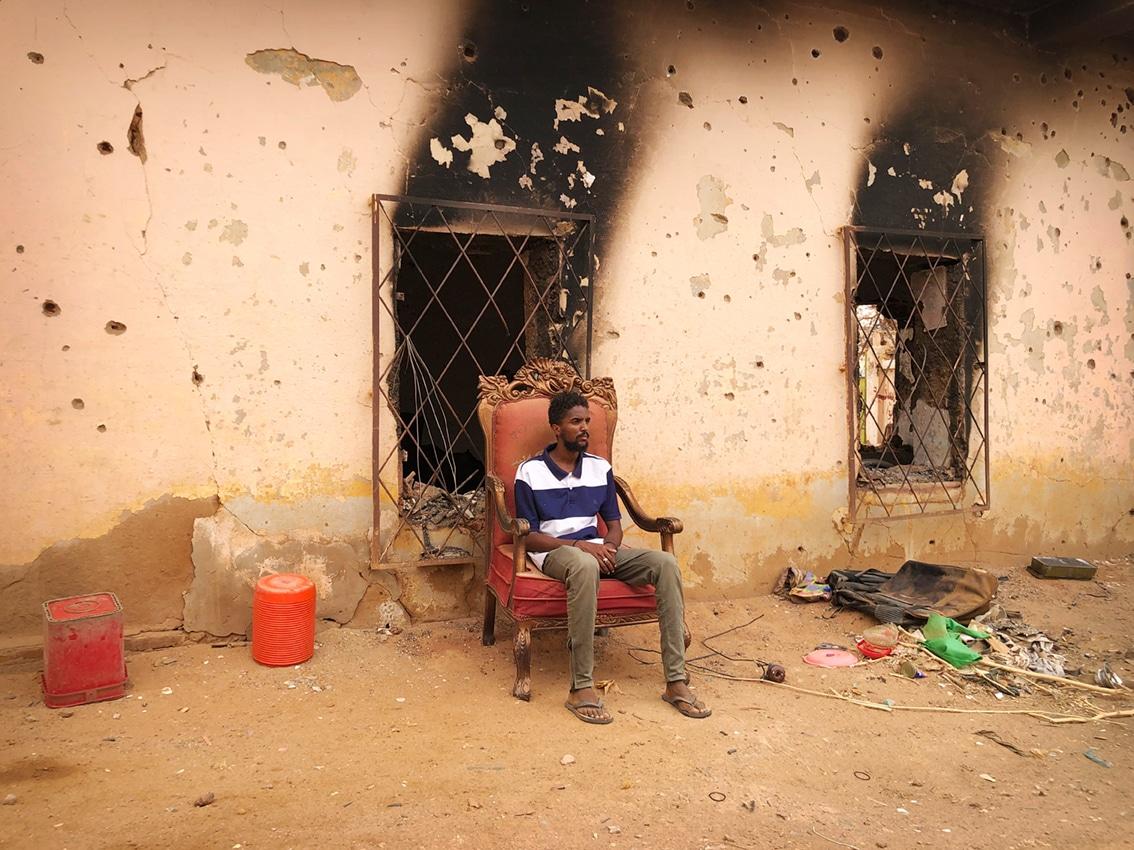
Radio France adds that “fighter jets roared over Khartoum, the capital, on Sunday, firing rockets at a city of millions,” and that “Artillery barrages struck the military headquarters, reducing it to a tower of flames.”
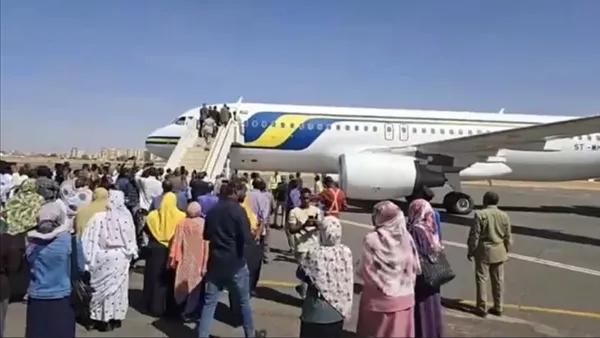
It also reports that “Civilian planes were bombed at the city’s airport, where terrified passengers crouched on the floors of the terminals.”
In a BBC video described by Radio France, a presenter insisted “at the headquarters of the Sudanese television, the situation is calm,” before “gunfire could be heard in the background” and “a blue screen; the program was interrupted, in Sudan.”
The same Radio France report frames the fighting as a power struggle with roots in the years before the 2019 uprising that toppled Omar el-Béchir, and it says the conflict has dragged Sudan into “a chaotic spiral that many fear will end in a true civil war.”
While Radio France cites “about a hundred civilians killed” in a “provisional tally,” it also notes “Seven civilians killed, according to the latest tally,” and it attributes the discrepancy to different tallies rather than a single agreed figure.
How the war escalated
Multiple sources connect Sudan’s current violence to earlier political ruptures and to the way armed actors were positioned against each other.
Radio France traces the “power struggle” back to “the years preceding the 2019 uprising that toppled the president-dictator Omar el-Béchir,” saying that in his “30 years at the helm of Sudan, he had built immense security forces that he deliberately pit against one another.”
It then describes how the 2019 ouster produced a transitional government and a new constitution, and it says that “the army had promised to hand over power last Tuesday, the fourth anniversary of the eviction of M. el-Béchir,” but that “this transition depended on the two generals who lead the country — the army chief, General Abdel Fattal al-Burhan; and his deputy, the paramilitary commander, General Mohamed Hamdan Daglo.”
Radio France reports that “Instead, they began fighting, dragging the third-largest country in Africa into a chaotic spiral that many fear will end in a true civil war,” and it links the paramilitary force to the Rapid Support Forces, “founded by Omar el-Béchir to crush a rebellion in Darfur.”
It adds that these troops, also known as the “Janjaweed,” have been associated with “widespread atrocities,” and that the RSF was sent “to fight in the war in Yemen,” linking Hemeti to Saudi Arabia.
Blind Magazine provides a longer arc, saying the conflict in Sudan has roots in “late 2018” when “a popular uprising erupted in Sudan,” culminating in “April 2019 with the ouster of President Omar al-Bashir in a coup.”
Blind Magazine then states that “In October 2021, the SAF and the RSF staged a new coup, ousted Hamdok and suspended the constitution,” and that “In 2023, the power-sharing agreement between Dagalo and Burhan collapsed — each side accusing the other of breaking the pact first — and the current cycle of fighting began.”
Voices, accusations, and press freedom
As fighting intensified, the sources also document how information and journalism were pulled into the conflict, with named individuals describing threats, detention, and censorship.
“This report was written by Hilary Leung and first published in the Hong Kong Free Press (HKFP) on May 3, 2024”
Blind Magazine says that “Covering the situation in Sudan is also an extremely dangerous undertaking,” and it cites the Committee to Protect Journalists, stating that “in 2025, 9 journalists were killed in the country, bringing the death toll to 15 since the start of the war in 2023.”
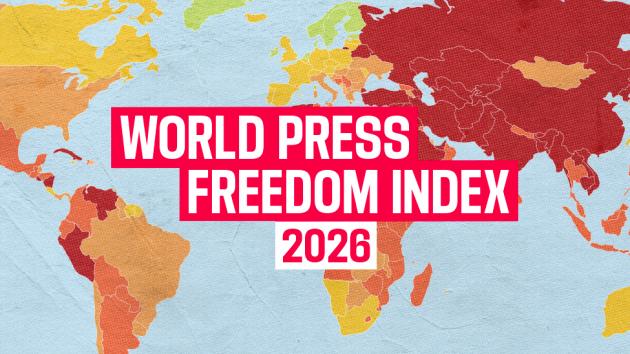
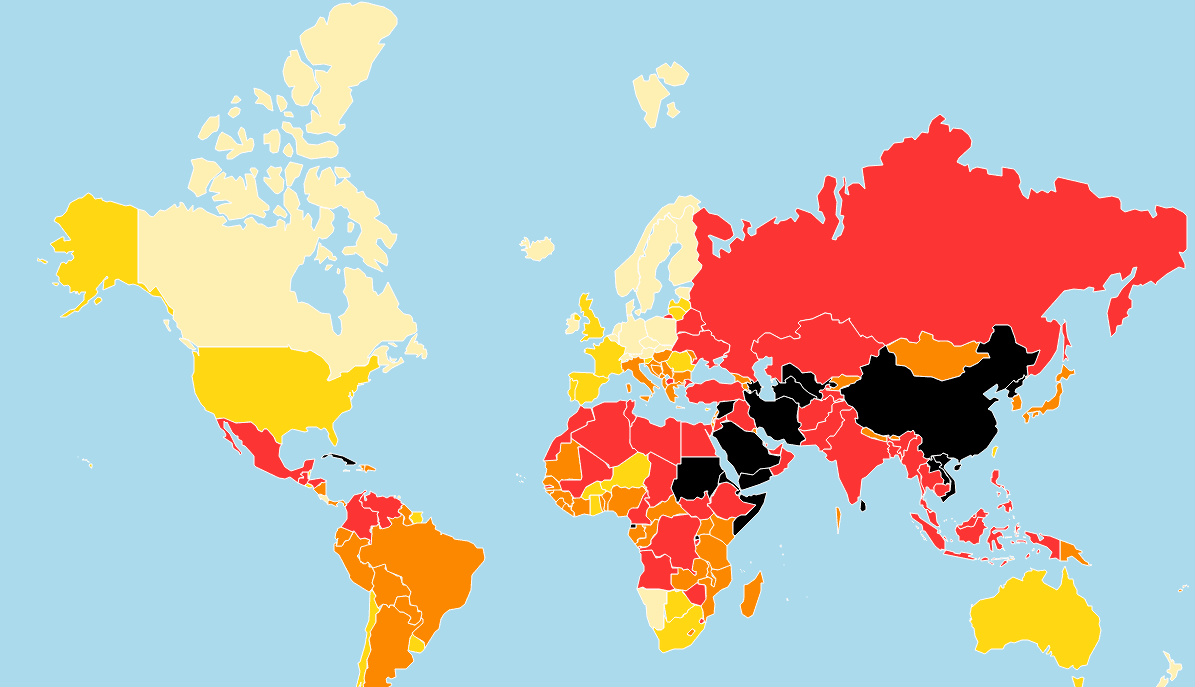
It further reports that “Reporters Without Borders, which ranks Sudan 156th out of 180 in its World Press Freedom Index, reports a rising tide of threats, attacks, and violence against journalists,” and it adds that “Many independent media outlets have ceased operating, while state media serve as the government's megaphone and broadcast propaganda.”
Blind Magazine includes a testimony from Marwan Mohamed, who says: “On assignment, I faced immense pressure and was harassed and detained by various parties to the conflict,” and it continues: “I was detained by the RSF, under whose guard I was subjected to torture and assaults.”
The same testimony adds that “Much of my equipment was confiscated, including files from a project documenting the reality of Darfur, footage from El Fasher, the chaos there, the army's dismantling of the city, the last siege, and the heavy human toll.”
Radio France also describes how Sudanese television itself was disrupted during the fighting, recounting the BBC video where the presenter claimed “at the headquarters of the Sudanese television, the situation is calm,” before “the program was interrupted, in Sudan.”
Radio Dabanga adds a separate ranking and timeline, saying Sudan is “rated 161st out of 180 countries” in the “25th World Press Freedom Index” and that it “having dropped to 156th in 2025 from 149th in 2024,” while also describing government pressure on media licensing.
Competing narratives and rankings
The sources present Sudan through different lenses—battlefield reporting, press-freedom indices, and broader media-safety assessments—creating clear divergences in emphasis even when they share some underlying facts.
Shafaq News frames Sudan’s press-freedom position in the “2025 World Press Freedom Index released by Reporters without Borders (RSF) on Thursday,” stating “Sudan stood at 161st” and placing it alongside “Iraq 162nd, Yemen 164th, Egypt 169th, and Bahrain 170th.”
It also says RSF linked the decline to “persistent conflicts and deteriorating conditions for journalists,” and it notes that “The organization classifies countries into four categories: good, satisfactory, problematic, and very serious.”
Radio Dabanga, meanwhile, reports on the “25th World Press Freedom Index” and says Sudan is “rated 161st out of 180 countries,” but it adds a different recent trajectory: “having dropped to 156th in 2025 from 149th in 2024.”
Radio Dabanga also includes a specific government action affecting media operations, saying Sudan’s Ministry of Culture, Information, Antiquities and Tourism issued a directive giving outlets “a one-month deadline to obtain official operating licences or “face legal action”.”
It further states that “The Sudanese Journalists Syndicate has recorded 110 violations in just one year,” and that “since the outbreak of the conflict in April 2023,” journalists and media outlets have been subjected to “more than 500 violations.”
RSF’s own 2015 ranking description provides a framework for how RSF measures press freedom and how conflicts and non-state actors can drive deterioration, describing “respect de la sécurité et de la liberté des journalistes.”
What comes next
The sources describe immediate and longer-term consequences for Sudan’s civilians and for the media environment, with particular attention to how restrictions and violence can compound during conflict.
“Classement mondial 2015 Une détérioration générale”
Radio France reports that hospitals in Khartoum are “lacking blood, transfusion equipment and other medical supplies,” and it says “Water and electricity outages, as well as the lack of fuel for hospital generators, have made operations even more difficult.”
It also notes that “doctors are counting the dead,” with “about a hundred civilians killed” in a “provisional tally” and “Seven civilians killed, according to the latest tally,” underscoring how uncertainty persists as the fighting continues.
In the press-freedom domain, Radio Dabanga says the “25th World Press Freedom Index comes at a time when “political pressure on the press is intensifying, authoritarian tendencies are growing and the media market is heavily weakened,” Reporters Without Borders laments.”
It adds that “attacks on journalists have become systematic and organised,” and it quotes Kamal Elsadig saying: “The war in Sudan is not just a conflict of arms, but a battle for truth. The silencing of the pen is a tragedy for the Sudanese people and a threat to democracy everywhere.”
The same Radio Dabanga account also points to a concrete administrative step—licensing deadlines—stating the Ministry directive sets “a one-month deadline to obtain official operating licences or “face legal action”.”
Blind Magazine, focusing on documentation and the aftermath of violence, describes how the exhibition “Resistance in Memory: Visions of Sudan” is on view at The Africa Center in New York through “March 22, 2026,” and it says the exhibition features “42 works by 12 emerging Sudanese photographers.”
More on Sudan

UNICEF Warns Five Million Children Face Extreme Deprivation in Sudan’s Darfur
10 sources compared
UNICEF Warns Darfur Children Face New Humanitarian Catastrophe, Homes Schools Hospitals Under Fire
20 sources compared
Egypt Launches 21 Free Return Journeys for Sudanese Refugees From Cairo to Sudan
11 sources compared
UNICEF Issues Child Alert as Sudan’s Darfur Children Face Rapidly Worsening Humanitarian Catastrophe
18 sources compared